
Dynamic reprogramming of sugar metabolism mediates salt stress adaptation in Sophora alopecuroides roots
IF 8.1
Q1 PLANT SCIENCES
引用次数: 0
Abstract
Soil salinization severely constrains agricultural production. Sophora alopecuroides L., a salt-tolerant wild legume, is an ideal model for investigating plant salt adaptation mechanisms. However, the dynamic reprogramming of sugar metabolism in its roots under salt stress remains poorly understood. Here, we conducted an integrated transcriptomic and metabolomic analysis of S. alopecuroides roots subjected to 200 mM NaCl over a time course (0, 4, 24, 48, and 72 h). Our results revealed that salt stress triggered a three-phase response: early osmotic stress (0 - 4 h), intermediate adjustment (4 - 48 h), and late ionic stress (48 - 72 h). Integrated multi-omics analysis identified 303 differentially expressed genes (DEGs) and 16 differentially accumulated metabolites (DAMs) from seven core sugar metabolic pathways. Both the DEGs and DAMs were significantly enriched in the starch and sucrose metabolism pathway, and the DEGs exhibited five distinct temporal expression profiles. Coupling analysis of genes and metabolites uncovered a precise "sugar-energy axis" regulatory model: during the early stage, β-amylase (AMY)-mediated starch degradation fueled glycolysis (PFK, GAPDH) for rapid energy production; at the intermediate stage, carbon flux was redirected to the synthesis of osmoprotectants, including sucrose, raffinose, and trehalose (SUS, Rafs, TPS), while the pentose phosphate pathway (PPP) was enhanced to supply NADPH; during the late stage, the TCA cycle (IDH, ACO) was reactivated to restore energy homeostasis, whereas starch synthesis (glgA) was persistently suppressed to conserve carbon sources. This dynamic equilibrium of the "sugar-energy axis" constitutes a central mechanism enabling its efficient salt tolerance. To functionally validate a key node within this axis, we cloned a highly induced enolase gene (SaENO2) from the glycolytic pathway. Heterologous overexpression of SaENO2 significantly enhanced salt tolerance in both yeast (Saccharomyces cerevisiae) and Arabidopsis (Arabidopsis thaliana), confirming its pivotal role in mediating salt adaptation. Our study not only elucidates a dynamic metabolic reprogramming model but also provides a verified genetic resource for improving crop salt tolerance.
糖代谢的动态重编程介导苦豆子根对盐胁迫的适应
土壤盐碱化严重制约农业生产。苦豆子是一种耐盐野生豆科植物,是研究植物盐适应机制的理想模型。然而,在盐胁迫下,糖代谢在其根部的动态重编程仍然知之甚少。在此,研究人员对200 mM NaCl处理下(0、4、24、48和72 h)的苦荞麦根进行了综合转录组学和代谢组学分析。结果表明,盐胁迫引发了一个三相反应:早期渗透胁迫(0 ~ 4 h)、中期调节(4 ~ 48 h)和后期离子胁迫(48 ~ 72 h)。综合多组学分析从7个核心糖代谢途径中鉴定出303个差异表达基因(DEGs)和16个差异积累代谢产物(dam)。deg和dam在淀粉和蔗糖代谢途径中均显著富集,且deg表现出5种不同的时间表达谱。基因和代谢物的耦合分析揭示了一个精确的“糖-能量轴”调节模型:在早期,β-淀粉酶(AMY)介导的淀粉降解促进糖酵解(PFK, GAPDH)快速产生能量;在中间阶段,碳通量被重定向到渗透保护剂的合成,包括蔗糖、棉子糖和海藻糖(SUS、Rafs、TPS),而戊糖磷酸途径(PPP)被增强以供应NADPH;在后期,TCA循环(IDH, ACO)被重新激活以恢复能量稳态,而淀粉合成(glgA)被持续抑制以保存碳源。这种“糖-能量轴”的动态平衡构成了使其高效耐盐的核心机制。为了从功能上验证该轴上的关键节点,我们从糖酵解途径克隆了一个高度诱导的烯醇化酶基因(SaENO2)。SaENO2的异源过表达显著增强了酵母(Saccharomyces cerevisiae)和拟南芥(Arabidopsis thaliana)的耐盐性,证实了其在调节盐适应中的关键作用。本研究不仅阐明了一种动态代谢重编程模型,而且为提高作物耐盐性提供了可靠的遗传资源。
本文章由计算机程序翻译,如有差异,请以英文原文为准。
求助全文
约1分钟内获得全文
求助全文
来源期刊
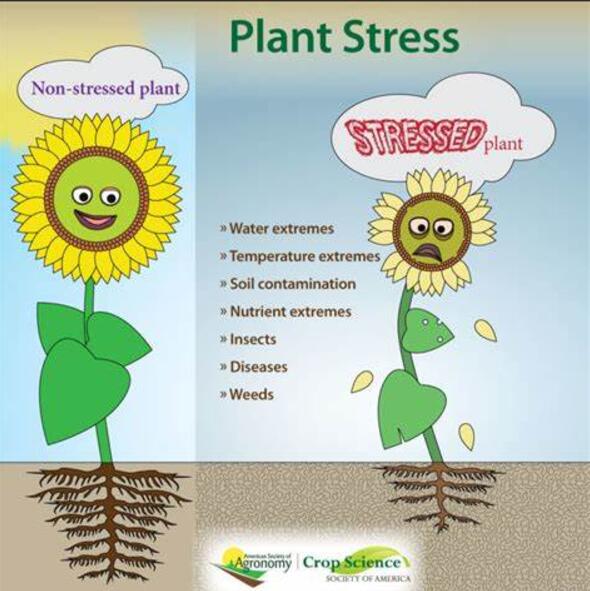
Plant Stress
PLANT SCIENCES-
CiteScore
5.20
自引率
8.00%
发文量
76
审稿时长
63 days
期刊介绍:
The journal Plant Stress deals with plant (or other photoautotrophs, such as algae, cyanobacteria and lichens) responses to abiotic and biotic stress factors that can result in limited growth and productivity. Such responses can be analyzed and described at a physiological, biochemical and molecular level. Experimental approaches/technologies aiming to improve growth and productivity with a potential for downstream validation under stress conditions will also be considered. Both fundamental and applied research manuscripts are welcome, provided that clear mechanistic hypotheses are made and descriptive approaches are avoided. In addition, high-quality review articles will also be considered, provided they follow a critical approach and stimulate thought for future research avenues.
Plant Stress welcomes high-quality manuscripts related (but not limited) to interactions between plants and:
Lack of water (drought) and excess (flooding),
Salinity stress,
Elevated temperature and/or low temperature (chilling and freezing),
Hypoxia and/or anoxia,
Mineral nutrient excess and/or deficiency,
Heavy metals and/or metalloids,
Plant priming (chemical, biological, physiological, nanomaterial, biostimulant) approaches for improved stress protection,
Viral, phytoplasma, bacterial and fungal plant-pathogen interactions.
The journal welcomes basic and applied research articles, as well as review articles and short communications. All submitted manuscripts will be subject to a thorough peer-reviewing process.
 求助内容:
 应助结果提醒方式:


 京公网安备 11010802042870号


