
Metabolic network homeostasis and antagonistic stress response drive rootstock-mediated tolerance to combined salinity and water-deficit in grapevine cv. Syrah
IF 8.1
Q1 PLANT SCIENCES
引用次数: 0
Abstract
Water deficit and salinity are major stresses that rarely occur in isolation, yet their combined effects on grapevine remain poorly understood. In a 3-year study, we dissected the response of Vitis vinifera cv. Syrah, a cultivar known for its sensitivity to water-deficit and salinity stress, grafted onto 1103 Paulsen (PL1103) and Sélection Oppenheim 4 (SO4) rootstocks to salinity (2.5 dS m−1) combined with irrigation regimes (66%, 100%, and 133% of control). Water availability primarily defined physiological responses, with subtle rootstock-specific differences. Under water deficit, both rootstocks exhibited substantial physiological impairment (stem water potential < −2.0 MPa, leaf relative water content < 75%, and reduced stomatal conductance). In contrast, salinity induced ion imbalance, with superior Cl⁻ exclusion in SO4-grafts conferring improved physiological performance. Using a comparative framework classifying interactions as additive, synergistic, or antagonistic, we found that SO4-grafts employ an antagonistic mitigation strategy, whereas PL1103-grafts engage in synergistic amplification of stress impacts. This was reflected in a 28% yield advantage of SO4-grafts under combined stress. Central metabolite profiling revealed rootstock-specific divergence. PL1103-grafts displayed condition-driven alterations (up to ±10-fold) in the accumulation of osmoprotective amino acids (proline and GABA) and sugars (glucose and fructose), whereas SO4-grafts showed phenologically regulated, homeostatic stability. Network analysis suggests that tolerance is driven by reduced network connectivity of metabolic architecture rather than increased levels of a few metabolites. Less perturbed network in SO4 (edges reduced from 194 to 168) reflected SO4-grafts’ resilience. Conversely, PL1103-grafts exhibited network expansion under salinity, with increased connectivity from 196 to 267 edges and centrality, indicative of heightened stress perception. Overall, rootstocks appear to actively modulate scion resource allocation rather than passively buffering stress, likely through long-distance signals across the graft union.

代谢网络稳态和拮抗胁迫响应驱动砧木介导的葡萄对盐和水联合亏缺的耐受。席拉
缺水和盐度是主要的胁迫,很少单独发生,但它们对葡萄藤的综合影响仍然知之甚少。在一项为期3年的研究中,我们分析了葡萄的反应。以对缺水和盐胁迫敏感而闻名的西拉(Syrah)品种,嫁接到1103 Paulsen (PL1103)和ssamlection Oppenheim 4 (SO4)砧木上,接受盐度(2.5 dS m−1)和灌溉(对照66%、100%和133%)。水分有效性主要定义生理反应,具有微妙的砧木特异性差异。缺水条件下,两种砧木均表现出明显的生理损伤(茎水势- 2.0 MPa,叶片相对含水量- 75%,气孔导度降低)。相反,盐会引起离子失衡,在so4移植物中,Cl -毒血症会提高生理性能。通过将相互作用分类为加性、协同性或拮抗性的比较框架,我们发现so4接枝采用拮抗缓解策略,而pl1103接枝则参与了应激影响的协同放大。这反映在复合胁迫下so4接枝的产量优势28%。中心代谢物谱显示了砧木特异性差异。pl1103移植物在渗透保护氨基酸(脯氨酸和GABA)和糖(葡萄糖和果糖)的积累方面表现出条件驱动的改变(高达±10倍),而so4移植物则表现出物候调节的稳态稳定性。网络分析表明,耐受性是由代谢结构的网络连通性降低驱动的,而不是少数代谢物水平的增加。SO4中受干扰较少的网络(边缘从194减少到168)反映了SO4接枝的弹性。相反,pl1103接枝在盐度下表现出网络扩张,连通性从196个边增加到267个边,中心性增加,表明应力感知增强。总的来说,砧木似乎主动调节接穗资源分配,而不是被动缓冲压力,这可能是通过嫁接体之间的长距离信号。
本文章由计算机程序翻译,如有差异,请以英文原文为准。
求助全文
约1分钟内获得全文
求助全文
来源期刊
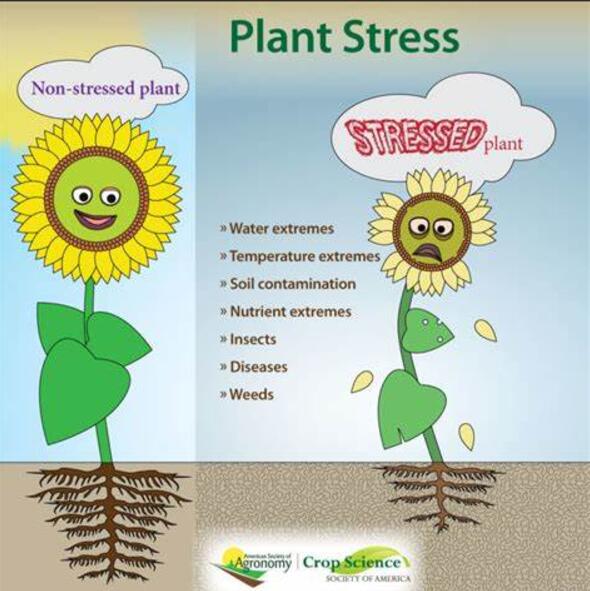
Plant Stress
PLANT SCIENCES-
CiteScore
5.20
自引率
8.00%
发文量
76
审稿时长
63 days
期刊介绍:
The journal Plant Stress deals with plant (or other photoautotrophs, such as algae, cyanobacteria and lichens) responses to abiotic and biotic stress factors that can result in limited growth and productivity. Such responses can be analyzed and described at a physiological, biochemical and molecular level. Experimental approaches/technologies aiming to improve growth and productivity with a potential for downstream validation under stress conditions will also be considered. Both fundamental and applied research manuscripts are welcome, provided that clear mechanistic hypotheses are made and descriptive approaches are avoided. In addition, high-quality review articles will also be considered, provided they follow a critical approach and stimulate thought for future research avenues.
Plant Stress welcomes high-quality manuscripts related (but not limited) to interactions between plants and:
Lack of water (drought) and excess (flooding),
Salinity stress,
Elevated temperature and/or low temperature (chilling and freezing),
Hypoxia and/or anoxia,
Mineral nutrient excess and/or deficiency,
Heavy metals and/or metalloids,
Plant priming (chemical, biological, physiological, nanomaterial, biostimulant) approaches for improved stress protection,
Viral, phytoplasma, bacterial and fungal plant-pathogen interactions.
The journal welcomes basic and applied research articles, as well as review articles and short communications. All submitted manuscripts will be subject to a thorough peer-reviewing process.
 求助内容:
 应助结果提醒方式:


 京公网安备 11010802042870号


