
Crosstalk between abscisic acid (ABA) and salicylic acid (SA) regulates susceptibility of tomato to the specialist spider mite Tetranychus evansi Baker & Pritchard
IF 8.1
Q1 PLANT SCIENCES
引用次数: 0
Abstract
In plants, jasmonic acid (JA) is traditionally seen as the key regulator of plant defense against spider mites although indirect evidence suggests that abscisic acid (ABA) might also be involved. This study examined this possibility using an ABA-deficient tomato genotype (notabilis) and the specialist T. evansi which is known to suppress JA-dependent defenses. Wild type cv. Lukullus showed enhanced leaf damage than notabilis, showing that ABA influences susceptibility to specialist spider mites potentially modulating jasmonate levels and dependent defenses. Among the upregulated genes, cv. Lukullus displayed GO enrichment in JA-dependent defense, regulation of ROS production, SA-biosynthesis and the negative regulation of defense whereas in notabilis, these mechanisms were less prominent and all GO terms related to photosynthesis were severely repressed, suggesting that these could be crucial in restricting progression of T. evansi infestation in tomato. At the metabolic level, reduced susceptibility to T. evansi in notabilis accompanied an increased accumulation of free fatty acids and phenylpropanoids mirrored by enhanced gene expression of lipid, phenylpropanoid and lignin metabolic genes as well as genes related to ABA/dehydration and JA signaling. A gene co-expression analysis identified modules correlated with ABA and SA levels which included defense and photosynthesis responses among the up- and downregulated genes, respectively, suggesting their potential crosstalk in the regulation of tomato responses to T. evansi infestation. This extent was further investigated with feeding assays in tomato mutants spr2 (JA-deficient) and NahG (SA-deficient) with T. evansi confirming their role as positive and negative regulators of susceptibility to spider mites, respectively.

脱落酸(ABA)和水杨酸(SA)之间的串音调控番茄对伊氏叶螨的敏感性
在植物中,茉莉酸(jasmonic acid, JA)传统上被认为是植物防御蜘蛛螨的关键调节剂,尽管间接证据表明脱落酸(ABA)也可能参与其中。本研究利用aba缺乏的番茄基因型(notabilis)和已知抑制ja依赖性防御的专家T. evansi来检验这种可能性。野生型cv。芦竹的叶片损伤程度高于白杨,表明ABA影响了对特殊蜘蛛螨的敏感性,可能调节茉莉酸水平和依赖防御。在上调的基因中,cv。Lukullus在ja依赖性防御、ROS产生调节、sa生物合成和防御负调控中表现出GO富集,而在tabilis中,这些机制不太突出,所有与光合作用相关的GO项都受到严重抑制,表明这些可能是限制伊氏番茄侵染进展的关键。在代谢水平上,显著菌株对伊文氏霉的敏感性降低,游离脂肪酸和苯丙素的积累增加,反映在脂质、苯丙素和木质素代谢基因以及ABA/脱水和JA信号相关基因的表达增强。基因共表达分析鉴定出ABA和SA水平与上调基因和下调基因的防御和光合响应相关的模块,表明它们可能相互作用,调控番茄对伊氏夜蛾侵染的反应。通过对番茄突变体spr2 (ja缺乏)和NahG (sa缺乏)与伊文氏t虫的取食实验进一步研究了这一程度,证实了它们分别是对蜘蛛螨敏感性的正调节因子和负调节因子。
本文章由计算机程序翻译,如有差异,请以英文原文为准。
求助全文
约1分钟内获得全文
求助全文
来源期刊
Plant Stress
PLANT SCIENCES-
CiteScore
5.20
自引率
8.00%
发文量
76
审稿时长
63 days
期刊介绍:
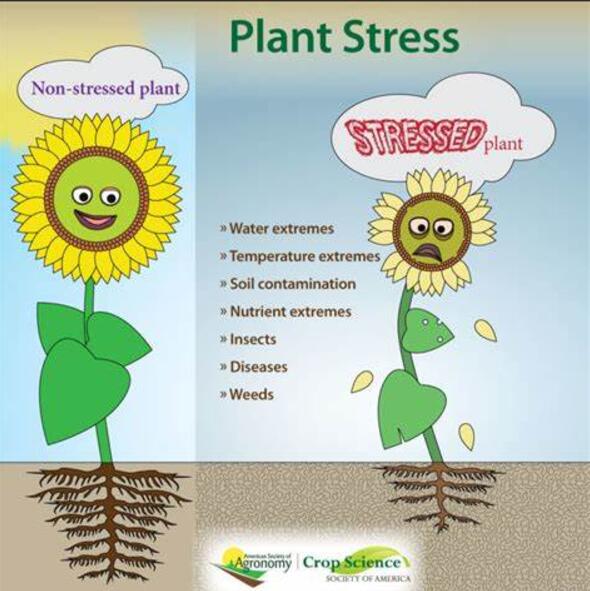
The journal Plant Stress deals with plant (or other photoautotrophs, such as algae, cyanobacteria and lichens) responses to abiotic and biotic stress factors that can result in limited growth and productivity. Such responses can be analyzed and described at a physiological, biochemical and molecular level. Experimental approaches/technologies aiming to improve growth and productivity with a potential for downstream validation under stress conditions will also be considered. Both fundamental and applied research manuscripts are welcome, provided that clear mechanistic hypotheses are made and descriptive approaches are avoided. In addition, high-quality review articles will also be considered, provided they follow a critical approach and stimulate thought for future research avenues.
Plant Stress welcomes high-quality manuscripts related (but not limited) to interactions between plants and:
Lack of water (drought) and excess (flooding),
Salinity stress,
Elevated temperature and/or low temperature (chilling and freezing),
Hypoxia and/or anoxia,
Mineral nutrient excess and/or deficiency,
Heavy metals and/or metalloids,
Plant priming (chemical, biological, physiological, nanomaterial, biostimulant) approaches for improved stress protection,
Viral, phytoplasma, bacterial and fungal plant-pathogen interactions.
The journal welcomes basic and applied research articles, as well as review articles and short communications. All submitted manuscripts will be subject to a thorough peer-reviewing process.
 求助内容:
 应助结果提醒方式:


 京公网安备 11010802042870号


