{"title":"Regulatory mechanism of Pabpc1a during zebrafish vasculogenesis.","authors":"Yu-Qin Hu, Fan Liu, Ying Li, Lu Wang","doi":"10.16288/j.yczz.26-042","DOIUrl":null,"url":null,"abstract":"<p><p>Vascular development begins with vasculogenesis during early embryogenesis. This process is controlled by a highly integrated, multi-layered molecular network. However, the role of post-transcriptional regulation in this context remains poorly understood. Cytoplasmic poly(A) binding protein 1a (Pabpc1a<i>)</i> is a key RNA-binding protein that regulates gene expression at the post-transcriptional level and participates in many physiological and pathological processes. Its role in vascular development, however, is still unclear. In this study, we first found that <i>pabpc1a</i> is highly expressed in endothelial cells during the critical window of vasculogenesis. We then generated a <i>pabpc1a</i> knockout model using CRISPR/Cas9. Functional analyses showed that loss of <i>pabpc1a</i> disrupted the expression of genes involved in arterial-venous specification and altered the arterial-to-venous diameter ratio. In contrast, overexpression of <i>pabpc1a</i> effectively rescued the vascular defects. Mechanistically, transcriptomic analysis revealed widespread gene expression changes in endothelial cells lacking <i>pabpc1a</i>. Pathways related to translation, ribosome biogenesis, and energy metabolism were significantly downregulated. These findings suggest that Pabpc1a regulates vasculogenesis by coordinating protein synthesis and metabolic homeostasis. In summary, our study demonstrates Pabpc1a as an essential post-transcriptional regulator during vasculogenesis and provides new insight into the regulatory network governing vascular development.</p>","PeriodicalId":35536,"journal":{"name":"遗传","volume":"48 7","pages":"714-725"},"PeriodicalIF":0.0000,"publicationDate":"2026-07-01","publicationTypes":"Journal Article","fieldsOfStudy":null,"isOpenAccess":false,"openAccessPdf":"","citationCount":"0","resultStr":null,"platform":"Semanticscholar","paperid":null,"PeriodicalName":"遗传","FirstCategoryId":"1091","ListUrlMain":"https://doi.org/10.16288/j.yczz.26-042","RegionNum":0,"RegionCategory":null,"ArticlePicture":[],"TitleCN":null,"AbstractTextCN":null,"PMCID":null,"EPubDate":"","PubModel":"","JCR":"Q3","JCRName":"Medicine","Score":null,"Total":0}
引用次数: 0
Abstract
Vascular development begins with vasculogenesis during early embryogenesis. This process is controlled by a highly integrated, multi-layered molecular network. However, the role of post-transcriptional regulation in this context remains poorly understood. Cytoplasmic poly(A) binding protein 1a (Pabpc1a) is a key RNA-binding protein that regulates gene expression at the post-transcriptional level and participates in many physiological and pathological processes. Its role in vascular development, however, is still unclear. In this study, we first found that pabpc1a is highly expressed in endothelial cells during the critical window of vasculogenesis. We then generated a pabpc1a knockout model using CRISPR/Cas9. Functional analyses showed that loss of pabpc1a disrupted the expression of genes involved in arterial-venous specification and altered the arterial-to-venous diameter ratio. In contrast, overexpression of pabpc1a effectively rescued the vascular defects. Mechanistically, transcriptomic analysis revealed widespread gene expression changes in endothelial cells lacking pabpc1a. Pathways related to translation, ribosome biogenesis, and energy metabolism were significantly downregulated. These findings suggest that Pabpc1a regulates vasculogenesis by coordinating protein synthesis and metabolic homeostasis. In summary, our study demonstrates Pabpc1a as an essential post-transcriptional regulator during vasculogenesis and provides new insight into the regulatory network governing vascular development.
期刊介绍:
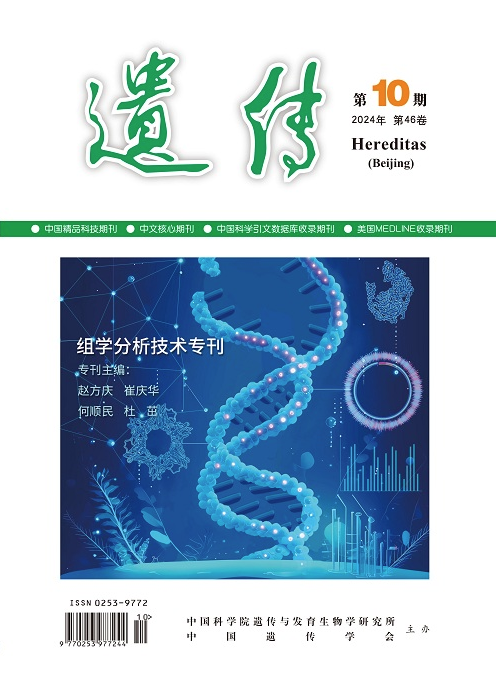
Hereditas is a national academic journal sponsored by the Institute of Genetics and Developmental Biology of the Chinese Academy of Sciences and the Chinese Society of Genetics and published by Science Press. It is a Chinese core journal and a Chinese high-quality scientific journal. The journal mainly publishes innovative research papers in the fields of genetics, genomics, cell biology, developmental biology, biological evolution, genetic engineering and biotechnology; new technologies and new methods; monographs and reviews on hot issues in the discipline; academic debates and discussions; experience in genetics teaching; introductions to famous geneticists at home and abroad; genetic counseling; information on academic conferences at home and abroad, etc. Main columns: review, frontier focus, research report, technology and method, resources and platform, experimental operation guide, genetic resources, genetics teaching, scientific news, etc.

 求助内容:
 应助结果提醒方式:


 京公网安备 11010802042870号


