Hailey R Banack, Jay S Kaufman, Jacqueline E McLaughlin, Michael B Jarstfer, Lynne C Messer, Matthew P Fox
{"title":"The complexities of comprehensive exams in epidemiology.","authors":"Hailey R Banack, Jay S Kaufman, Jacqueline E McLaughlin, Michael B Jarstfer, Lynne C Messer, Matthew P Fox","doi":"10.1093/aje/kwag158","DOIUrl":null,"url":null,"abstract":"<p><p>Comprehensive exams are a standard component of doctoral-level training programs in epidemiology. In this manuscript, we describe current practices in the administration of comprehensive examinations across doctoral programs in epidemiology and discuss variation in the content, format, and structure of these exams. We present results from a survey of 33 epidemiology programs about the comprehensive exam process. We also discuss a symposium focused on comprehensive exams that was part of the 2025 Society for Epidemiologic Research annual meeting. The symposium included speakers with specific expertise in designing comprehensive exams, as well as faculty from several different epidemiology programs across North America. The survey found important differences in format (ie, written, oral, general epidemiology, substantive topics), when the exams are administered, and the level of epidemiology knowledge targeted. In this manuscript, we also discuss common challenges programs face, including developing and grading exams. By sharing this information with a wide audience of epidemiologists, we aim to facilitate discussion to improve the comprehensive exam process for doctoral students in our field. This work also fits with a broader goal to initiate discussion about doctoral-level training in epidemiology.</p>","PeriodicalId":7472,"journal":{"name":"American journal of epidemiology","volume":" ","pages":"2616-2621"},"PeriodicalIF":4.1000,"publicationDate":"2026-10-07","publicationTypes":"Journal Article","fieldsOfStudy":null,"isOpenAccess":false,"openAccessPdf":"https://www.ncbi.nlm.nih.gov/pmc/articles/PMC13642361/pdf/","citationCount":"0","resultStr":null,"platform":"Semanticscholar","paperid":null,"PeriodicalName":"American journal of epidemiology","FirstCategoryId":"3","ListUrlMain":"https://doi.org/10.1093/aje/kwag158","RegionNum":2,"RegionCategory":"医学","ArticlePicture":[],"TitleCN":null,"AbstractTextCN":null,"PMCID":null,"EPubDate":"","PubModel":"","JCR":"Q1","JCRName":"PUBLIC, ENVIRONMENTAL & OCCUPATIONAL HEALTH","Score":null,"Total":0}
引用次数: 0
Abstract
Comprehensive exams are a standard component of doctoral-level training programs in epidemiology. In this manuscript, we describe current practices in the administration of comprehensive examinations across doctoral programs in epidemiology and discuss variation in the content, format, and structure of these exams. We present results from a survey of 33 epidemiology programs about the comprehensive exam process. We also discuss a symposium focused on comprehensive exams that was part of the 2025 Society for Epidemiologic Research annual meeting. The symposium included speakers with specific expertise in designing comprehensive exams, as well as faculty from several different epidemiology programs across North America. The survey found important differences in format (ie, written, oral, general epidemiology, substantive topics), when the exams are administered, and the level of epidemiology knowledge targeted. In this manuscript, we also discuss common challenges programs face, including developing and grading exams. By sharing this information with a wide audience of epidemiologists, we aim to facilitate discussion to improve the comprehensive exam process for doctoral students in our field. This work also fits with a broader goal to initiate discussion about doctoral-level training in epidemiology.
期刊介绍:
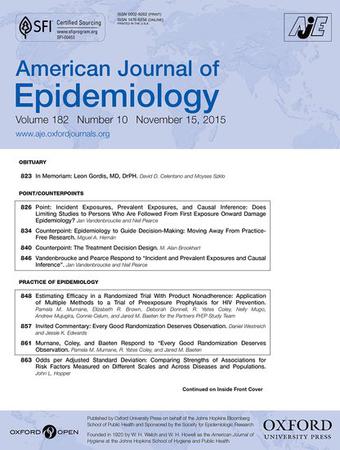
The American Journal of Epidemiology is the oldest and one of the premier epidemiologic journals devoted to the publication of empirical research findings, opinion pieces, and methodological developments in the field of epidemiologic research.
It is a peer-reviewed journal aimed at both fellow epidemiologists and those who use epidemiologic data, including public health workers and clinicians.

 求助内容:
 应助结果提醒方式:


 京公网安备 11010802042870号


