Nontarget Discovery of Organophosphite Antioxidant (OPA) Methyl Analogues in the Pearl River Estuary Sediments: Source Tracking to Commercial OPA Byproducts
Xiwei Chen, Yanhao Chen, Mingdeng Yuan, Zhanpeng Su, Kaiyuan Wang, Tao Zhang, Lei Wang
{"title":"Nontarget Discovery of Organophosphite Antioxidant (OPA) Methyl Analogues in the Pearl River Estuary Sediments: Source Tracking to Commercial OPA Byproducts","authors":"Xiwei Chen, Yanhao Chen, Mingdeng Yuan, Zhanpeng Su, Kaiyuan Wang, Tao Zhang, Lei Wang","doi":"10.1021/acs.est.6c08845","DOIUrl":null,"url":null,"abstract":"<p>Recent nontarget analyses have uncovered numerous novel\r\norganophosphate\r\nesters (OPEs) and organophosphite antioxidants (OPAs) in the environment,\r\nyet the origins of most newly identified contaminants remain elusive.\r\nIn this study, we applied suspect and nontarget screening utilizing\r\nhigh-resolution mass spectrometry to identify eight novel OPA analogues\r\n(including parent OPAs along with mono- and dioxidized derivatives)\r\nstructurally related to the commercial antioxidants AO626 and AO168,\r\nin sediments from the Pearl River Estuary. Their concentrations showed\r\nstrong correlations with oxidation products of AO626/AO168. Further\r\nanalysis revealed that seven of these compounds, termed OPA methyl\r\nanalogues (OPAMAs), were present in commercial AO626 and AO168 products\r\nas OPAs and mono-oxidized derivatives, collectively accounting for\r\n12–15% by mass. Laboratory photolysis experiments demonstrated\r\nthat these OPAs and mono-oxidized derivatives can be oxidized in river\r\nwater to form the corresponding mono- and dioxidized derivatives.\r\nThus, sediment OPAMAs may originate from byproducts formed during\r\nindustrial OPA synthesis using trimethyl phosphite and phenols via\r\ntransesterification reaction. Retrospective screening confirmed OPAMA\r\npresence in food contact materials, corroborating a commercial-to-environment\r\npathway. This study underscores that impurities and byproducts from\r\ncommercial OPA products, together with environmental transformation,\r\nrepresent a significant source of emerging OPE contaminants in aquatic\r\nsystems.</p>","PeriodicalId":36,"journal":{"name":"环境科学与技术","volume":"60 29","pages":"20637–20648"},"PeriodicalIF":12.2000,"publicationDate":"2026-07-28","publicationTypes":"Journal Article","fieldsOfStudy":null,"isOpenAccess":false,"openAccessPdf":"","citationCount":"0","resultStr":null,"platform":"Semanticscholar","paperid":null,"PeriodicalName":"环境科学与技术","FirstCategoryId":"1","ListUrlMain":"https://pubs.acs.org/doi/10.1021/acs.est.6c08845","RegionNum":1,"RegionCategory":"环境科学与生态学","ArticlePicture":[],"TitleCN":null,"AbstractTextCN":null,"PMCID":null,"EPubDate":"2026/7/16 0:00:00","PubModel":"Epub","JCR":"Q1","JCRName":"ENGINEERING, ENVIRONMENTAL","Score":null,"Total":0}
引用次数: 0
Abstract
Recent nontarget analyses have uncovered numerous novel
organophosphate
esters (OPEs) and organophosphite antioxidants (OPAs) in the environment,
yet the origins of most newly identified contaminants remain elusive.
In this study, we applied suspect and nontarget screening utilizing
high-resolution mass spectrometry to identify eight novel OPA analogues
(including parent OPAs along with mono- and dioxidized derivatives)
structurally related to the commercial antioxidants AO626 and AO168,
in sediments from the Pearl River Estuary. Their concentrations showed
strong correlations with oxidation products of AO626/AO168. Further
analysis revealed that seven of these compounds, termed OPA methyl
analogues (OPAMAs), were present in commercial AO626 and AO168 products
as OPAs and mono-oxidized derivatives, collectively accounting for
12–15% by mass. Laboratory photolysis experiments demonstrated
that these OPAs and mono-oxidized derivatives can be oxidized in river
water to form the corresponding mono- and dioxidized derivatives.
Thus, sediment OPAMAs may originate from byproducts formed during
industrial OPA synthesis using trimethyl phosphite and phenols via
transesterification reaction. Retrospective screening confirmed OPAMA
presence in food contact materials, corroborating a commercial-to-environment
pathway. This study underscores that impurities and byproducts from
commercial OPA products, together with environmental transformation,
represent a significant source of emerging OPE contaminants in aquatic
systems.
期刊介绍:
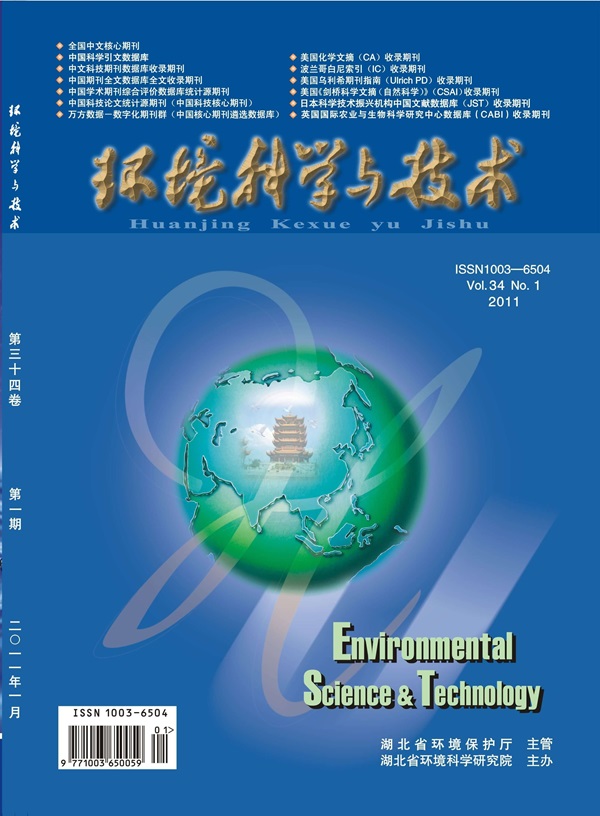
Environmental Science & Technology (ES&T) is a co-sponsored academic and technical magazine by the Hubei Provincial Environmental Protection Bureau and the Hubei Provincial Academy of Environmental Sciences.
Environmental Science & Technology (ES&T) holds the status of Chinese core journals, scientific papers source journals of China, Chinese Science Citation Database source journals, and Chinese Academic Journal Comprehensive Evaluation Database source journals. This publication focuses on the academic field of environmental protection, featuring articles related to environmental protection and technical advancements.


 求助内容:
 应助结果提醒方式:


 京公网安备 11010802042870号


