{"title":"[Chinese Expert Consensus on Diagnosis and Treatment of Non-small Cell Lung Cancer with MET Abnormality (2026 Version)].","authors":"Jun Chen, Baohui Han, Yi Hu, Jian Hu, Yuankai Shi","doi":"10.3779/j.issn.1009-3419.2026.102.13","DOIUrl":null,"url":null,"abstract":"<p><p>The mesenchymal-epithelial transition factor (MET) gene, located on human chromosome 7, exerts critical regulatory roles in cellular processes including proliferation, migration, invasion, and angiogenesis. As a key driver gene in non-small cell lung cancer (NSCLC), MET abnormalities encompass MET exon 14 (METex14) skipping mutations, gene amplification, protein overexpression, gene fusions, and activating mutations. This consensus, developed by the Lung Cancer Specialty Committee of the Chinese Elderly Health Care Association, updates the 2025 version with several key modifications: elevating the recommendation level for MET amplification and protein overexpression testing, advocating routine testing for all newly diagnosed NSCLC patients and those with acquired resistance to epidermal growth factor receptor-tyrosine kinase inhibitors (EGFR-TKIs); standardizing targeted therapy approaches for MET amplification in driver gene-negative settings and following EGFR-TKIs resistance; and subdividing MET protein overexpression-related management into post-EGFR-TKIs resistance and driver gene-negative categories with corresponding treatment protocols, thereby offering more actionable guidance for precise clinical decision-making.\u2029.</p>","PeriodicalId":39317,"journal":{"name":"中国肺癌杂志","volume":"29 5","pages":"332-347"},"PeriodicalIF":0.0000,"publicationDate":"2026-05-20","publicationTypes":"Journal Article","fieldsOfStudy":null,"isOpenAccess":false,"openAccessPdf":"https://www.ncbi.nlm.nih.gov/pmc/articles/PMC13494948/pdf/","citationCount":"0","resultStr":null,"platform":"Semanticscholar","paperid":null,"PeriodicalName":"中国肺癌杂志","FirstCategoryId":"3","ListUrlMain":"https://doi.org/10.3779/j.issn.1009-3419.2026.102.13","RegionNum":0,"RegionCategory":null,"ArticlePicture":[],"TitleCN":null,"AbstractTextCN":null,"PMCID":null,"EPubDate":"","PubModel":"","JCR":"Q4","JCRName":"Medicine","Score":null,"Total":0}
引用次数: 0
Abstract
The mesenchymal-epithelial transition factor (MET) gene, located on human chromosome 7, exerts critical regulatory roles in cellular processes including proliferation, migration, invasion, and angiogenesis. As a key driver gene in non-small cell lung cancer (NSCLC), MET abnormalities encompass MET exon 14 (METex14) skipping mutations, gene amplification, protein overexpression, gene fusions, and activating mutations. This consensus, developed by the Lung Cancer Specialty Committee of the Chinese Elderly Health Care Association, updates the 2025 version with several key modifications: elevating the recommendation level for MET amplification and protein overexpression testing, advocating routine testing for all newly diagnosed NSCLC patients and those with acquired resistance to epidermal growth factor receptor-tyrosine kinase inhibitors (EGFR-TKIs); standardizing targeted therapy approaches for MET amplification in driver gene-negative settings and following EGFR-TKIs resistance; and subdividing MET protein overexpression-related management into post-EGFR-TKIs resistance and driver gene-negative categories with corresponding treatment protocols, thereby offering more actionable guidance for precise clinical decision-making. .
期刊介绍:
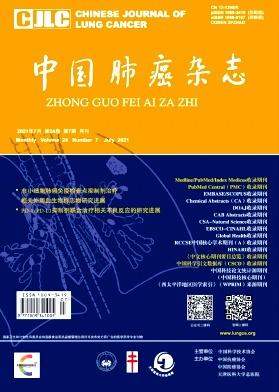
Chinese Journal of Lung Cancer(CJLC, pISSN 1009-3419, eISSN 1999-6187), a monthly Open Access journal, is hosted by Chinese Anti-Cancer Association, Chinese Antituberculosis Association, Tianjin Medical University General Hospital. CJLC was indexed in DOAJ, EMBASE/SCOPUS, Chemical Abstract(CA), CSA-Biological Science, HINARI, EBSCO-CINAHL,CABI Abstract, Global Health, CNKI, etc. Editor-in-Chief: Professor Qinghua ZHOU.

 求助内容:
 应助结果提醒方式:


 京公网安备 11010802042870号


