
The missing big idea: Brand-differentiating messages and advertising effectiveness across the brand funnel
IF 8.8
1区 管理学
Q1 BUSINESS
引用次数: 0
Abstract
While strategy research emphasizes the importance of product differentiation, research on advertising effectiveness has paid limited attention to whether advertising communicates a clear point of brand difference. This study examines the role of brand-differentiating messages (BDMs) in advertising effectiveness across the brand funnel. Using ten years of Super Bowl advertising, we analyze 280 brand-level advertising events and 17,080 daily observations of ad awareness, brand liking, brand consideration, brand purchase intention, and brand purchase. The findings show that BDM has direct positive effects on the earlier stages of the brand funnel, particularly ad awareness and brand liking. In addition, ad liking strengthens the effects of BDM on ad awareness, brand liking, and brand consideration, indicating that positive affect toward the ad amplifies the impact of communicated differentiation. Finally, BDM strengthens the relationships between consideration and purchase intention and between purchase intention and purchase, suggesting that communicated differentiation facilitates conversion across later funnel stages. These results clarify the role of ad liking in advertising effectiveness, identify BDM as an important form of diagnostic advertising content, and show how communicated differentiation influences both level and transition effects across the brand funnel.缺失的大创意:品牌差异化信息和跨品牌渠道的广告效果
战略研究强调产品差异化的重要性,而广告有效性研究却很少关注广告是否传达了一个明确的品牌差异点。本研究考察了品牌差异化信息(bdm)在整个品牌渠道的广告效果中的作用。利用十年的超级碗广告,我们分析了280个品牌层面的广告事件和17080个广告意识、品牌喜爱、品牌考虑、品牌购买意愿和品牌购买的日常观察。研究结果表明,BDM对品牌漏斗的早期阶段有直接的积极影响,尤其是广告意识和品牌喜爱。此外,广告喜欢强化了BDM对广告认知度、品牌喜欢度和品牌考虑的影响,表明对广告的积极影响放大了传播差异化的影响。最后,BDM强化了考虑与购买意愿、购买意愿与购买之间的关系,表明沟通差异化促进了后续漏斗阶段的转化。这些结果阐明了广告喜好在广告效果中的作用,确定了BDM是诊断广告内容的一种重要形式,并显示了沟通差异化如何影响整个品牌渠道的水平和过渡效应。
本文章由计算机程序翻译,如有差异,请以英文原文为准。
求助全文
约1分钟内获得全文
求助全文
来源期刊
CiteScore
30.00
自引率
7.10%
发文量
82
期刊介绍:
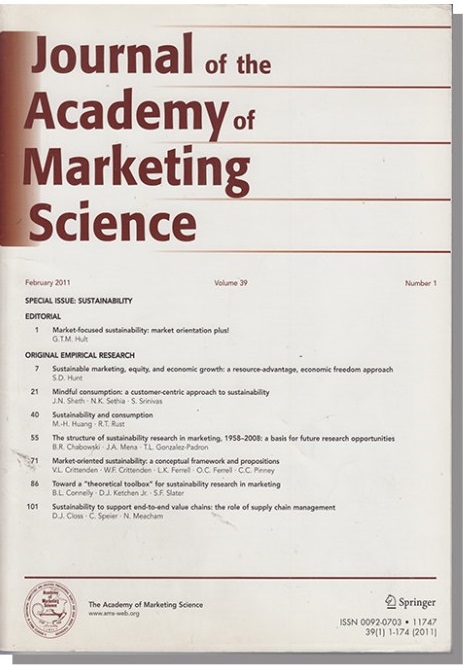
JAMS, also known as The Journal of the Academy of Marketing Science, plays a crucial role in bridging the gap between scholarly research and practical application in the realm of marketing. Its primary objective is to study and enhance marketing practices by publishing research-driven articles.
When manuscripts are submitted to JAMS for publication, they are evaluated based on their potential to contribute to the advancement of marketing science and practice.
 求助内容:
 应助结果提醒方式:


 京公网安备 11010802042870号


