
Preparation of polyacylated anthocyanins of red radish and enhancing its stability and bioaccessibility through encapsulating within double-coated yeast glucan particles
IF 1.4
4区 农林科学
引用次数: 0
Abstract
Abstract Although the anthocyanins of red radishes (ARR) rich in polyacylated pelargonidin glucosides are used as commercial food pigment, they are unstable. We found that the anthocyanin purity of the crude ARR extract can be rapidly increased by 5 times using D101 macroporous resin (mass ratio of extract:resin = 1:2.2). Capsule constructed by chitosan (CTS), pectin (PT) and yeast glucan particles (YGP) presented a high efficiency to encapsulate ARR. Liquid chromatography-mass spectrometry analysis verified that polyacylated pelargonidin glucosides in ARR were packed into the capsule. Microstructure observation and Fourier transforms infrared spectroscopy further confirmed the encapsulated structure. Co-encapsulation of CTS, PT and YGP showed effective protection for ARR against heat, oxygen, ascorbic acid, and physiological pH. This encapsulation also significantly improved the gastric and intestinal bioaccessibilities of ARR. These results suggested that the triplex-coated YGPs might be a promising strategy to protect and deliver polyacylated anthocyanin.红萝卜多酰基花青素的制备及双包被酵母葡聚糖增强其稳定性和生物可及性
摘要红萝卜花青素(ARR)富含聚酰基天葵苷(pelargonidin),是一种不稳定的食品色素。我们发现,使用D101大孔树脂(提取物与树脂的质量比为1:2.2),可使粗提取物的花青素纯度快速提高5倍。壳聚糖(CTS)、果胶(PT)和酵母葡聚糖颗粒(YGP)构建的胶囊包封ARR效率较高。液相色谱-质谱分析证实,ARR中聚酰基化的天竺竺素苷被装入胶囊中。微观结构观察和傅里叶变换红外光谱进一步证实了其封装结构。CTS、PT和YGP共包封对ARR的热、氧、抗坏血酸和生理ph具有有效的保护作用,并显著提高了ARR的胃和肠道生物可及性。这些结果表明,三聚体包被的ygp可能是一种很有前途的保护和传递聚酰基化花青素的策略。
本文章由计算机程序翻译,如有差异,请以英文原文为准。
求助全文
约1分钟内获得全文
求助全文
来源期刊
CiteScore
3.20
自引率
0.00%
发文量
52
审稿时长
3.8 months
期刊介绍:
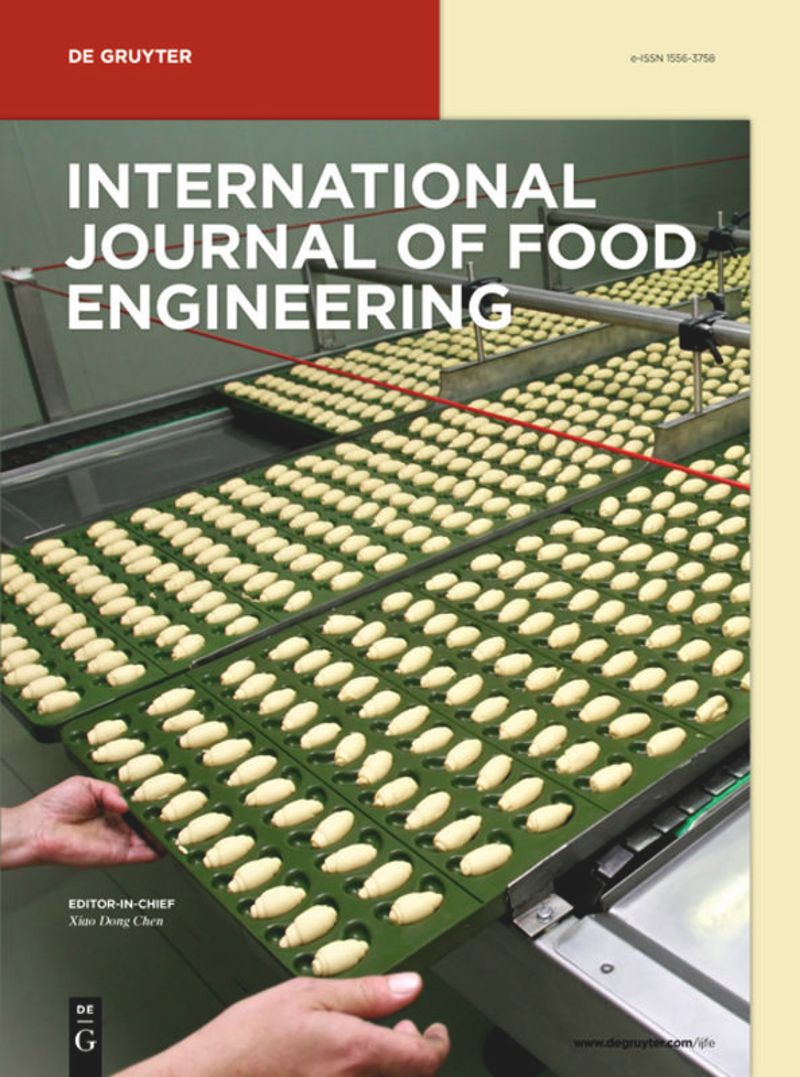
International Journal of Food Engineering is devoted to engineering disciplines related to processing foods. The areas of interest include heat, mass transfer and fluid flow in food processing; food microstructure development and characterization; application of artificial intelligence in food engineering research and in industry; food biotechnology; and mathematical modeling and software development for food processing purposes. Authors and editors come from top engineering programs around the world: the U.S., Canada, the U.K., and Western Europe, but also South America, Asia, Africa, and the Middle East.
 求助内容:
 应助结果提醒方式:


 京公网安备 11010802042870号


