
Ginsenoside Rg5 improves exercise performance and alleviates exercise-induced fatigue by enhancing mitochondrial function
IF 10.6
Q1 FOOD SCIENCE & TECHNOLOGY
引用次数: 0
Abstract
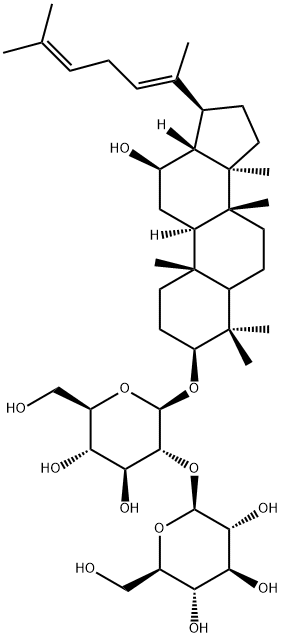
Red ginseng is widely recognized for its anti-fatigue properties, yet the underlying mechanisms remain unclear. Ginsenoside Rg5, a major saponin in red ginseng, was investigated for its role in regulating mitochondrial bioenergetics. Notably, label-free quantitative proteomics revealed that Rg5 selectively upregulated 11 core subunits of mitochondrial respiratory chain complex I. In L-02 hepatocytes, Rg5 significantly enhanced mitochondrial function, as evidenced by increased mitochondrial membrane potential, ATP production, mitochondrial DNA copy number, as well as enzymatic activities of complexes I and II. This effect was accompanied by activation of the LKB1/PGC-1α/TFAM signaling axis, indicating stimulation of mitochondrial biogenesis. In vivo, Rg5 administration markedly prolonged exhaustion time in forced swimming and treadmill tests and improved motor coordination in the rotarod. These functional improvements were associated with elevated ATP levels in the gastrocnemius muscle, liver, and heart, along with increased expression of multiple complex I subunits and enhanced mitochondrial biogenesis. In addition, multiple fatigue-related serum biochemical parameters were significantly improved. Collectively, this study suggests that Rg5 may be associated with the upregulation of key subunits of Complex I and the activation of mitochondrial biogenesis-related processes; these changes appear to collectively lead to enhanced mitochondrial ATP production and contribute to fatigue relief. These findings identify Rg5 as a potential mitochondrial modulator of exercise endurance and support its potential as a natural intervention for fatigue management.人参皂苷Rg5通过增强线粒体功能改善运动表现,缓解运动性疲劳
红参因其抗疲劳特性而被广泛认可,但其潜在的机制尚不清楚。研究了红参中主要皂苷人参皂苷Rg5对线粒体生物能量学的调节作用。值得注意的是,无标记定量蛋白质组学显示,Rg5选择性上调线粒体呼吸链复合体I的11个核心亚基。在L-02肝细胞中,Rg5显著增强线粒体功能,表现为线粒体膜电位、ATP生成、线粒体DNA拷贝数以及复合体I和II的酶活性增加。这种作用伴随着LKB1/PGC-1α/TFAM信号轴的激活,表明线粒体生物发生受到刺激。在体内,Rg5显著延长了强迫游泳和跑步机试验中的疲劳时间,并改善了旋转体的运动协调性。这些功能的改善与腓肠肌、肝脏和心脏中ATP水平的升高,以及多种复合物I亚基表达的增加和线粒体生物发生的增强有关。此外,与疲劳相关的多项血清生化指标均有显著改善。总之,本研究表明Rg5可能与复合体I关键亚基的上调和线粒体生物发生相关过程的激活有关;这些变化似乎共同导致线粒体ATP生成增强,有助于缓解疲劳。这些发现确定Rg5是运动耐力的潜在线粒体调节剂,并支持其作为疲劳管理的自然干预的潜力。
本文章由计算机程序翻译,如有差异,请以英文原文为准。
求助全文
约1分钟内获得全文
求助全文

文献相关原料
原料信息
原料厂家
 求助内容:
 应助结果提醒方式:


 京公网安备 11010802042870号


