
Unraveling the flavor formation mechanism of coconut cream through the interplay between lipid oxidation and the Maillard reaction
IF 7.1
1区 农林科学
Q1 FOOD SCIENCE & TECHNOLOGY
引用次数: 0
Abstract
This study clarifies the mechanistic coupling between lipid oxidation (LO) and the Maillard reaction (MR) in thermally processed coconut cream (CC). The oil–water–protein matrix facilitated triglyceride hydrolysis, leading to selective release of free fatty acids and reshaping the lipid precursor pool. Unlike the coconut oil system, lipid oxidation in CC proceeded under restricted conditions, where lipid-derived carbonyls were preferentially consumed through carbonyl–amine interactions rather than accumulating as secondary oxidation products. This cross-reactivity accelerated the transition from intermediate to advanced MR stages, as indicated by lower A294 but higher A420 and fluorescence intensity, and enhanced consumption of reducing sugars and glutamic acid. Integrated volatile analysis and chemometric modeling revealed that LO–MR coupling significantly intensified aroma generation, particularly α-dicarbonyl compounds such as 2,3-butanedione and 3-hydroxy-2-butanone, which contributed to the characteristic milky–caramel profile. Correlation analysis further suggested a possible association between medium-chain fatty acids and ketone formation. These findings demonstrate that flavor development in coconut cream is driven by hydrolysis-induced precursor release, restricted lipid oxidation, and efficient carbonyl flux into the Maillard reaction network, providing a theoretical basis for the food industry to design thermal processes that deliberately promote desirable milky–caramel notes while avoiding oxidative off-flavors in coconut cream and analogous plant-based emulsions.通过脂质氧化与美拉德反应的相互作用揭示椰子奶油风味形成机制
本研究阐明了热加工椰子奶油(CC)中脂质氧化(LO)与美拉德反应(MR)之间的机理耦合。油水蛋白基质促进甘油三酯水解,导致游离脂肪酸选择性释放,重塑脂质前体池。与椰子油系统不同,CC中的脂质氧化是在受限条件下进行的,其中脂质衍生的羰基优先通过羰基-胺相互作用被消耗,而不是作为二次氧化产物积累。这种交叉反应性加速了从中期到晚期MR阶段的过渡,正如A294较低但A420和荧光强度较高所表明的那样,并且增加了还原糖和谷氨酸的消耗。综合挥发性分析和化学计量模型显示,LO-MR偶联显著增强了香气的产生,尤其是α-二羰基化合物,如2,3-丁二酮和3-羟基-2-丁酮,这是牛奶-焦糖特征的组成部分。相关分析进一步表明中链脂肪酸与酮的形成可能存在关联。这些发现表明,椰子奶油的风味发展是由水解诱导的前体释放、受限制的脂质氧化和有效的羰基进入美拉德反应网络驱动的,为食品工业设计热过程提供了理论基础,这些热过程可以故意促进理想的牛奶-焦糖味道,同时避免椰子奶油和类似植物性乳剂中的氧化脱味。
本文章由计算机程序翻译,如有差异,请以英文原文为准。
求助全文
约1分钟内获得全文
求助全文
来源期刊
LWT - Food Science and Technology
工程技术-食品科技
CiteScore
11.80
自引率
6.70%
发文量
1724
审稿时长
65 days
期刊介绍:
LWT - Food Science and Technology is an international journal that publishes innovative papers in the fields of food chemistry, biochemistry, microbiology, technology and nutrition. The work described should be innovative either in the approach or in the methods used. The significance of the results either for the science community or for the food industry must also be specified. Contributions written in English are welcomed in the form of review articles, short reviews, research papers, and research notes. Papers featuring animal trials and cell cultures are outside the scope of the journal and will not be considered for publication.
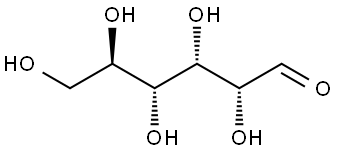
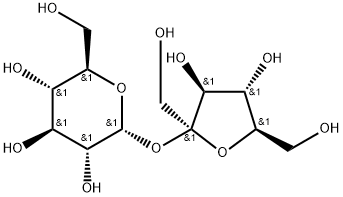
文献相关原料
原料信息
原料厂家

 求助内容:
 应助结果提醒方式:


 京公网安备 11010802042870号


