
Drugging the proteome via large-scale chemoproteomics
IF 14.4
1区 生物学
Q1 BIOCHEMISTRY & MOLECULAR BIOLOGY
Trends in Biochemical Sciences
Pub Date : 2026-10-01
Epub Date: 2026-07-04
DOI:10.1016/j.tibs.2026.06.005
引用次数: 0
Abstract
Genomic and proteomic initiatives have accelerated therapeutic target identification, yet many proteins remain difficult to drug, especially those lacking structural information, including those with intrinsically disordered regions. However, the conformational states of these proteins are shaped in living cells by chemical modifications, protein–protein interactions, oligomerization, and aggregation, offering new ligandable opportunities. In this article, we first discuss current approaches toward drugging the ‘undruggable’ proteins, in particular the advantages and limitations of structure-based drug design. We then describe the advantages of cellular protein-based strategies in identifying ligands for proteins that are hard to target, highlighting large-scale chemoproteomics approaches for drugging the proteome.
通过大规模化学蛋白质组学对蛋白质组进行药物治疗。
基因组学和蛋白质组学的发展加速了治疗靶点的识别,但许多蛋白质仍然难以药物治疗,特别是那些缺乏结构信息的蛋白质,包括那些具有内在无序区域的蛋白质。然而,这些蛋白质的构象状态在活细胞中通过化学修饰、蛋白质-蛋白质相互作用、寡聚化和聚集形成,提供了新的配体机会。在本文中,我们首先讨论了目前对“不可药物”蛋白质进行药物治疗的方法,特别是基于结构的药物设计的优点和局限性。然后,我们描述了基于细胞蛋白质的策略在识别难以靶向的蛋白质配体方面的优势,强调了用于给蛋白质组药物的大规模化学蛋白质组学方法。
本文章由计算机程序翻译,如有差异,请以英文原文为准。
求助全文
约1分钟内获得全文
求助全文
来源期刊
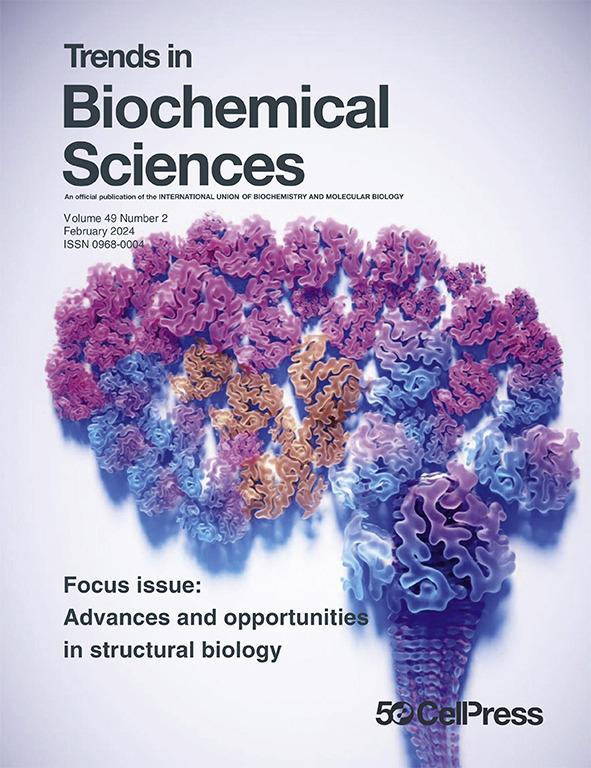
Trends in Biochemical Sciences
生物-生化与分子生物学
CiteScore
22.90
自引率
0.70%
发文量
148
审稿时长
6-12 weeks
期刊介绍:
For over 40 years, Trends in Biochemical Sciences (TIBS) has been a leading publication keeping readers informed about recent advances in all areas of biochemistry and molecular biology. Through monthly, peer-reviewed issues, TIBS covers a wide range of topics, from traditional subjects like protein structure and function to emerging areas in signaling and metabolism. Articles are curated by the Editor and authored by top researchers in their fields, with a focus on moving beyond simple literature summaries to providing novel insights and perspectives. Each issue primarily features concise and timely Reviews and Opinions, supplemented by shorter articles including Spotlights, Forums, and Technology of the Month, as well as impactful pieces like Science & Society and Scientific Life articles.
 求助内容:
 应助结果提醒方式:


 京公网安备 11010802042870号


