Van Loi Tran, Jeong-Rim Lee, Sang-Hun Lee, Dong-Hyun Kim, Sua Hong, Youngkyun Son, Jihwan Choi, Dong-Hyun Kim
{"title":"Microstructure and Mechanical Response of Additively Manufactured Maraging Steel Modified by Heat Treatment","authors":"Van Loi Tran, Jeong-Rim Lee, Sang-Hun Lee, Dong-Hyun Kim, Sua Hong, Youngkyun Son, Jihwan Choi, Dong-Hyun Kim","doi":"10.1007/s12540-025-02125-0","DOIUrl":null,"url":null,"abstract":"<div><p>This study investigated the effects of processing parameters and heat treatment on the densification, mechanical properties, and microstructure of maraging steel 1.2709 fabricated by laser powder bed fusion (PBF). A 5 × 5 matrix of process conditions was examined with laser power ranging from 180 to 220 W and scan speed from 700 to 1100 mm/s. The optimal condition was identified at 200 W and 700 mm/s, corresponding to an energy density of 79.4 J/mm<sup>3</sup>, which yielded a near-full density of 99.91% and superior tensile properties (UTS 1218.5 MPa, elongation 17.6%). Process parameter optimization improved densification by reducing porosity, thereby enhancing tensile strength and ductility. Notably, the fully martensitic structure of the as-built sample largely reverts to austenite, with only a trace amount (~ 30%) of BCC phase remaining, at a heat treatment temperature of 650 °C, leading to a significant strain-induced phase transformation of austenite (TRIP effect). Furthermore, furnace cooling produces relatively more stable reverted austenite, which suppresses immediate transformation at the onset of strain and thereby delays the TRIP effect, enabling extended work hardening and improved ductility of up to 24.3% while maintaining tensile strength above 1150 MPa compared to air cooling. These findings highlight a combined strategy of optimizing PBF parameters and tailoring intercritical heat treatment to control the TRIP effect, offering practical guidelines for the fabrication and commercialization of maraging steel 1.2709 with improved processability and mechanical performance.</p><h3>Graphical abstract</h3><div><figure><div><div><picture><source><img></source></picture></div></div></figure></div></div>","PeriodicalId":703,"journal":{"name":"Metals and Materials International","volume":"32 8","pages":"2683 - 2702"},"PeriodicalIF":4.5000,"publicationDate":"2025-12-05","publicationTypes":"Journal Article","fieldsOfStudy":null,"isOpenAccess":false,"openAccessPdf":"","citationCount":"0","resultStr":null,"platform":"Semanticscholar","paperid":null,"PeriodicalName":"Metals and Materials International","FirstCategoryId":"88","ListUrlMain":"https://link.springer.com/article/10.1007/s12540-025-02125-0","RegionNum":3,"RegionCategory":"材料科学","ArticlePicture":[],"TitleCN":null,"AbstractTextCN":null,"PMCID":null,"EPubDate":"","PubModel":"","JCR":"Q2","JCRName":"MATERIALS SCIENCE, MULTIDISCIPLINARY","Score":null,"Total":0}
引用次数: 0
Abstract
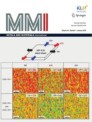
This study investigated the effects of processing parameters and heat treatment on the densification, mechanical properties, and microstructure of maraging steel 1.2709 fabricated by laser powder bed fusion (PBF). A 5 × 5 matrix of process conditions was examined with laser power ranging from 180 to 220 W and scan speed from 700 to 1100 mm/s. The optimal condition was identified at 200 W and 700 mm/s, corresponding to an energy density of 79.4 J/mm3, which yielded a near-full density of 99.91% and superior tensile properties (UTS 1218.5 MPa, elongation 17.6%). Process parameter optimization improved densification by reducing porosity, thereby enhancing tensile strength and ductility. Notably, the fully martensitic structure of the as-built sample largely reverts to austenite, with only a trace amount (~ 30%) of BCC phase remaining, at a heat treatment temperature of 650 °C, leading to a significant strain-induced phase transformation of austenite (TRIP effect). Furthermore, furnace cooling produces relatively more stable reverted austenite, which suppresses immediate transformation at the onset of strain and thereby delays the TRIP effect, enabling extended work hardening and improved ductility of up to 24.3% while maintaining tensile strength above 1150 MPa compared to air cooling. These findings highlight a combined strategy of optimizing PBF parameters and tailoring intercritical heat treatment to control the TRIP effect, offering practical guidelines for the fabrication and commercialization of maraging steel 1.2709 with improved processability and mechanical performance.
期刊介绍:
Metals and Materials International publishes original papers and occasional critical reviews on all aspects of research and technology in materials engineering: physical metallurgy, materials science, and processing of metals and other materials. Emphasis is placed on those aspects of the science of materials that are concerned with the relationships among the processing, structure and properties (mechanical, chemical, electrical, electrochemical, magnetic and optical) of materials. Aspects of processing include the melting, casting, and fabrication with the thermodynamics, kinetics and modeling.


 求助内容:
 应助结果提醒方式:


 京公网安备 11010802042870号


