Dual-mode analysis of ischemic stroke based on urine SERS spectra and carotid B-ultrasound

IF 13.9 1区 综合性期刊 Q1 MULTIDISCIPLINARY SCIENCES
Wenrou Yu, Zhaoxian Chen, Yao Liu, Yan Du, Hui Wang, Fengjie Tang, Xin Xie, Yingzhou Huang
{"title":"Dual-mode analysis of ischemic stroke based on urine SERS spectra and carotid B-ultrasound","authors":"Wenrou Yu,&nbsp;Zhaoxian Chen,&nbsp;Yao Liu,&nbsp;Yan Du,&nbsp;Hui Wang,&nbsp;Fengjie Tang,&nbsp;Xin Xie,&nbsp;Yingzhou Huang","doi":"10.1126/sciadv.aee3487","DOIUrl":null,"url":null,"abstract":"<div >Achieving noninvasive high-frequency monitoring of ischemic stroke (IS) remains a major clinical challenge for timely intervention and precise secondary prevention. Establishing precise correlations between patients’ systemic microscopic molecular fingerprints and localized macroscopic organ pathological events is essential to overcome the limitations of single-modal detection and enhance the efficacy of clinical risk assessment. However, because of the complexity of heterogeneous data, effectively integrating the cross-dimensional “molecular imaging” data remains a critical bottleneck in achieving this goal. Here, we present a proof-of-concept method to distinguish patients with confirmed IS from healthy controls (HCs) that used machine learning (ML)–based methods to surface-enhanced Raman spectroscopy (SERS) of urine (one-dimensional) and carotid artery B-ultrasound imaging (CBI) (two-dimensional). In an exploratory cohort of 101 participants, this approach analyzed 10,100 SERS spectra and 481 CBI images, achieving 92% classification accuracy and an area under the curve (AUC) of 0.95. Furthermore, by combined SERS spectra and liquid chromatography–mass spectrometry technology, this study preliminarily explored the urinary biomarker differences between HC/IS groups. The multidimensional data fusion strategy proposed in this study effectively bridges the information gap between traditional molecular detection and clinical phenotypes by systematically correlating microfluidic biomarkers with macro-organ imaging features. This approach provides a previously unexplored, noninvasive, and highly accurate tool for risk stratification and clinical decision-making in classifying HC/IS groups.</div>","PeriodicalId":21609,"journal":{"name":"Science Advances","volume":"12 27","pages":""},"PeriodicalIF":13.9000,"publicationDate":"2026-07-01","publicationTypes":"Journal Article","fieldsOfStudy":null,"isOpenAccess":false,"openAccessPdf":"https://www.science.org/doi/reader/10.1126/sciadv.aee3487","citationCount":"0","resultStr":null,"platform":"Semanticscholar","paperid":null,"PeriodicalName":"Science Advances","FirstCategoryId":"103","ListUrlMain":"https://www.science.org/doi/10.1126/sciadv.aee3487","RegionNum":1,"RegionCategory":"综合性期刊","ArticlePicture":[],"TitleCN":null,"AbstractTextCN":null,"PMCID":null,"EPubDate":"","PubModel":"","JCR":"Q1","JCRName":"MULTIDISCIPLINARY SCIENCES","Score":null,"Total":0}
引用次数: 0

Abstract

Achieving noninvasive high-frequency monitoring of ischemic stroke (IS) remains a major clinical challenge for timely intervention and precise secondary prevention. Establishing precise correlations between patients’ systemic microscopic molecular fingerprints and localized macroscopic organ pathological events is essential to overcome the limitations of single-modal detection and enhance the efficacy of clinical risk assessment. However, because of the complexity of heterogeneous data, effectively integrating the cross-dimensional “molecular imaging” data remains a critical bottleneck in achieving this goal. Here, we present a proof-of-concept method to distinguish patients with confirmed IS from healthy controls (HCs) that used machine learning (ML)–based methods to surface-enhanced Raman spectroscopy (SERS) of urine (one-dimensional) and carotid artery B-ultrasound imaging (CBI) (two-dimensional). In an exploratory cohort of 101 participants, this approach analyzed 10,100 SERS spectra and 481 CBI images, achieving 92% classification accuracy and an area under the curve (AUC) of 0.95. Furthermore, by combined SERS spectra and liquid chromatography–mass spectrometry technology, this study preliminarily explored the urinary biomarker differences between HC/IS groups. The multidimensional data fusion strategy proposed in this study effectively bridges the information gap between traditional molecular detection and clinical phenotypes by systematically correlating microfluidic biomarkers with macro-organ imaging features. This approach provides a previously unexplored, noninvasive, and highly accurate tool for risk stratification and clinical decision-making in classifying HC/IS groups.

Abstract Image

基于尿SERS和颈动脉b超的缺血性脑卒中双模分析
实现缺血性卒中(IS)的无创高频监测仍然是及时干预和精确二级预防的主要临床挑战。建立患者全身显微分子指纹与局部宏观器官病理事件之间的精确关联,是克服单模态检测的局限性,提高临床风险评估有效性的关键。然而,由于异构数据的复杂性,有效整合跨维“分子成像”数据仍然是实现这一目标的关键瓶颈。在这里,我们提出了一种概念验证方法来区分确诊的IS患者和健康对照(hc),该方法使用基于机器学习(ML)的方法来进行尿液表面增强拉曼光谱(SERS)(一维)和颈动脉b超成像(CBI)(二维)。在101名参与者的探索性队列中,该方法分析了10100张SERS光谱和481张CBI图像,分类准确率达到92%,曲线下面积(AUC)为0.95。此外,本研究通过联合SERS光谱和液相色谱-质谱技术,初步探讨HC/IS组尿液生物标志物的差异。本研究提出的多维数据融合策略通过系统地将微流控生物标志物与大器官成像特征相关联,有效地弥合了传统分子检测与临床表型之间的信息鸿沟。该方法为HC/IS组的风险分层和临床决策分类提供了一种以前未被探索过的、无创的、高度准确的工具。
本文章由计算机程序翻译,如有差异,请以英文原文为准。
求助全文
约1分钟内获得全文 求助全文
来源期刊
Science Advances
Science Advances 综合性期刊-综合性期刊
CiteScore
21.40
自引率
1.50%
发文量
1937
审稿时长
29 weeks
期刊介绍: Science Advances, an open-access journal by AAAS, publishes impactful research in diverse scientific areas. It aims for fair, fast, and expert peer review, providing freely accessible research to readers. Led by distinguished scientists, the journal supports AAAS's mission by extending Science magazine's capacity to identify and promote significant advances. Evolving digital publishing technologies play a crucial role in advancing AAAS's global mission for science communication and benefitting humankind.
文献相关原料
原料信息
原料厂家
1
pentafuorophenyl column
3
Ethylene glycol
4
L-arginine-15N4 hydrochloride
5
Polyvinyl pyrrolidone
6
Silver nitrate
7
Sodium borohydride
8
Phosphate-buffered saline
9
high-frequency linear array probe L12-4s
10
L12-4s
12
Mindray M11 portable color ultrasound diagnostic system
13
inVia Qontor confocal Raman microscope
14
Lab-Solutions workstation
15
LCMS-8060 QQQ mass spectrometer
16
Shimadzu LC-30 HPLC system
17
22
Adenine
73-24-5
¥20.00-¥22040.76
18
22
Lysine
56-87-1
¥15.00-¥33027.58
19
22
Hypoxanthine
68-94-0
¥16.00-¥17623.00
20
22
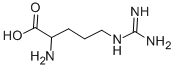
Arginine
7004-12-8
21
22
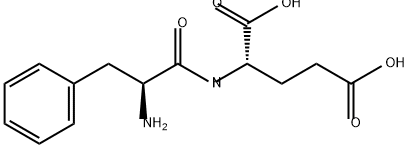
Phenylalanine glutamic acid
3617-45-6
¥666.00-¥9999999.00
22
22
Adenosine
58-61-7
¥10.00-¥11470.00
23
22
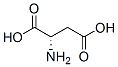
Aspartic acid
6899-03-2
¥60.00-¥8664.00
×
引用
GB/T 7714-2015
复制
MLA
复制
APA
复制
导出至
BibTeX EndNote RefMan NoteFirst NoteExpress
×
提示
您的信息不完整,为了账户安全,请先补充。
现在去补充
×
提示
您因"违规操作"
具体请查看互助需知
我知道了
×
提示
确定
请完成安全验证×
copy
已复制链接
快去分享给好友吧!
我知道了
右上角分享
点击右上角分享
0
联系我们:info@booksci.cn Book学术提供免费学术资源搜索服务,方便国内外学者检索中英文文献。致力于提供最便捷和优质的服务体验。 Copyright © 2023 布克学术 All rights reserved.
京ICP备2023020795号-1
ghs 京公网安备 11010802042870号
Book学术文献互助
Book学术文献互助群
群 号:604180095
Book学术官方微信
小红书