X Sun, D S Liu, L Zhang, X Z Song, Y H Sun, D Wu, Z D Yin, Z G Wang
{"title":"[Immunogenicity and safety of varicella attenuated live vaccine with booster immunization at different intervals in children aged 7-12 years].","authors":"X Sun, D S Liu, L Zhang, X Z Song, Y H Sun, D Wu, Z D Yin, Z G Wang","doi":"10.3760/cma.j.cn112338-20260112-00036","DOIUrl":null,"url":null,"abstract":"<p><p><b>Objective:</b> To evaluate the immunogenicity and safety of a booster dose of varicella attenuated live vaccine administered at different time intervals in Chinese children aged 7-12 years. <b>Methods:</b> This study was conducted in Xuzhou City, Jiangsu Province, from October 2024 to October 2025 using an open-label design. Children aged 7 to 12 who had received the initial immunization of the attenuated live varicella vaccine were recruited as the research subjects. They were divided into 4 groups based on the time interval from primary immunization to booster immunization (3, 18, 36 and 60 months groups). The estimated sample size was 400 (100 in each group).Venous blood samples were collected before booster vaccination and 30 days after vaccination. Serum varicella antibodies were detected by the fluorescent antibody to membrane antigen assay. Geometric mean titer (GMT), geometric mean increase, seropositivity rate and seroconversion rate were calculated to evaluate the booster immune response. Adverse reactions within 30 days after vaccination were observed. <b>Results:</b> At 3, 18, 36, and 60 months post-primary immunization, seropositivity rates remained at high levels (92.05%-94.87%), while GMTs showed a significant declining trend (27.03, 21.59, 18.29, and 14.33, respectively, <i>P</i><0.001). Following the booster dose at 3, 18, 36, and 60 months, GMTs in all groups increased significantly to 87.35, 113.55, 141.80, and 129.01, the antibody levels increased by 3.23, 5.26, 7.75 and 9.00 times respectively compared with those before the booster immunization (<i>P</i><0.001). Seroconversion rates were 60.26%, 71.60%, 77.27%, and 65.91%, respectively (<i>P</i>>0.05), and the seropositivity rate reached 100% in all groups. The overall incidence of adverse reactions was 0.73%, with no serious adverse events observed. <b>Conclusions:</b> The live attenuated varicella vaccine demonstrates favorable immunogenicity and safety when administered as a booster dose to children aged 7-12 years. A booster inoculation given 36-48 months following primary immunization elicits a more robust antibody response. These findings provide reference evidence to support the implementation of a two-dose varicella vaccination strategy and to determine the optimal timing for booster vaccination among school-aged children in China.</p>","PeriodicalId":23968,"journal":{"name":"中华流行病学杂志","volume":"47 6","pages":"1128-1134"},"PeriodicalIF":0.0000,"publicationDate":"2026-06-10","publicationTypes":"Journal Article","fieldsOfStudy":null,"isOpenAccess":false,"openAccessPdf":"","citationCount":"0","resultStr":null,"platform":"Semanticscholar","paperid":null,"PeriodicalName":"中华流行病学杂志","FirstCategoryId":"3","ListUrlMain":"https://doi.org/10.3760/cma.j.cn112338-20260112-00036","RegionNum":0,"RegionCategory":null,"ArticlePicture":[],"TitleCN":null,"AbstractTextCN":null,"PMCID":null,"EPubDate":"","PubModel":"","JCR":"Q1","JCRName":"Medicine","Score":null,"Total":0}
引用次数: 0
Abstract
Objective: To evaluate the immunogenicity and safety of a booster dose of varicella attenuated live vaccine administered at different time intervals in Chinese children aged 7-12 years. Methods: This study was conducted in Xuzhou City, Jiangsu Province, from October 2024 to October 2025 using an open-label design. Children aged 7 to 12 who had received the initial immunization of the attenuated live varicella vaccine were recruited as the research subjects. They were divided into 4 groups based on the time interval from primary immunization to booster immunization (3, 18, 36 and 60 months groups). The estimated sample size was 400 (100 in each group).Venous blood samples were collected before booster vaccination and 30 days after vaccination. Serum varicella antibodies were detected by the fluorescent antibody to membrane antigen assay. Geometric mean titer (GMT), geometric mean increase, seropositivity rate and seroconversion rate were calculated to evaluate the booster immune response. Adverse reactions within 30 days after vaccination were observed. Results: At 3, 18, 36, and 60 months post-primary immunization, seropositivity rates remained at high levels (92.05%-94.87%), while GMTs showed a significant declining trend (27.03, 21.59, 18.29, and 14.33, respectively, P<0.001). Following the booster dose at 3, 18, 36, and 60 months, GMTs in all groups increased significantly to 87.35, 113.55, 141.80, and 129.01, the antibody levels increased by 3.23, 5.26, 7.75 and 9.00 times respectively compared with those before the booster immunization (P<0.001). Seroconversion rates were 60.26%, 71.60%, 77.27%, and 65.91%, respectively (P>0.05), and the seropositivity rate reached 100% in all groups. The overall incidence of adverse reactions was 0.73%, with no serious adverse events observed. Conclusions: The live attenuated varicella vaccine demonstrates favorable immunogenicity and safety when administered as a booster dose to children aged 7-12 years. A booster inoculation given 36-48 months following primary immunization elicits a more robust antibody response. These findings provide reference evidence to support the implementation of a two-dose varicella vaccination strategy and to determine the optimal timing for booster vaccination among school-aged children in China.
期刊介绍:
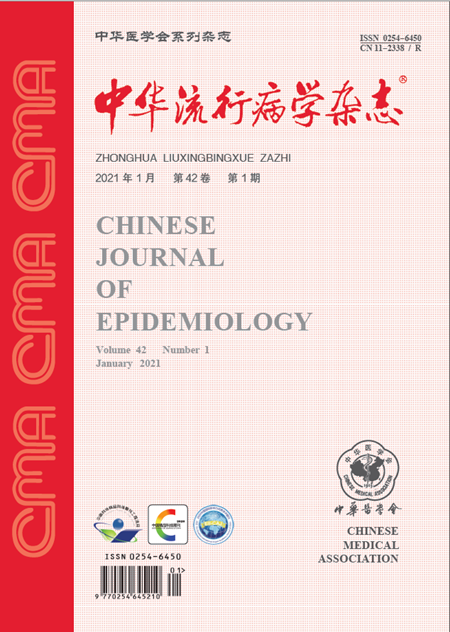
Chinese Journal of Epidemiology, established in 1981, is an advanced academic periodical in epidemiology and related disciplines in China, which, according to the principle of integrating theory with practice, mainly reports the major progress in epidemiological research. The columns of the journal include commentary, expert forum, original article, field investigation, disease surveillance, laboratory research, clinical epidemiology, basic theory or method and review, etc.
The journal is included by more than ten major biomedical databases and index systems worldwide, such as been indexed in Scopus, PubMed/MEDLINE, PubMed Central (PMC), Europe PubMed Central, Embase, Chemical Abstract, Chinese Science and Technology Paper and Citation Database (CSTPCD), Chinese core journal essentials overview, Chinese Science Citation Database (CSCD) core database, Chinese Biological Medical Disc (CBMdisc), and Chinese Medical Citation Index (CMCI), etc. It is one of the core academic journals and carefully selected core journals in preventive and basic medicine in China.

 求助内容:
 应助结果提醒方式:


 京公网安备 11010802042870号


