Y Zhao, X G Wang, L Jiang, D Liang, Z M Shi, L Shi, W Peng, L L Liang, Z H Fan, J Xu, Y F Wang
{"title":"[An interpretation of the new U.S. dietary guidelines and its implications for China's nutrition policy].","authors":"Y Zhao, X G Wang, L Jiang, D Liang, Z M Shi, L Shi, W Peng, L L Liang, Z H Fan, J Xu, Y F Wang","doi":"10.3760/cma.j.cn112150-20260412-00323","DOIUrl":null,"url":null,"abstract":"<p><p>In January 2026, the U.S. Department of Agriculture and the Department of Health and Human Services jointly released the \"Dietary Guidelines for Americans 2025-2030\"(hereinafter referred to as the \"new guidelines\"). The core focus of these guidelines has shifted from nutrient limits to overall food quality; they advocate\" enjoying real food,\" take a clear stand against highly processed foods, increase the recommended protein intake, recommend full-fat dairy products, and simplify information dissemination strategies. While these changes have attracted widespread attention, they have also sparked significant controversy, including contradictions between visual presentations and written recommendations, the absence of quantitative limits, and a lack of transparency in the revision process. This article systematically interprets the major changes and scientific rationale behind the new guidelines, analyzes related academic controversies, compares the dietary guidelines of China and the United States, and evaluates their implications for China's nutrition policy from the dual perspectives of their value as a reference and their potential risks, taking into account the dietary structure, metabolic characteristics, and nutritional status of the Chinese population.</p>","PeriodicalId":24033,"journal":{"name":"中华预防医学杂志","volume":"60 ","pages":"1422-1428"},"PeriodicalIF":0.0000,"publicationDate":"2026-09-06","publicationTypes":"Journal Article","fieldsOfStudy":null,"isOpenAccess":false,"openAccessPdf":"","citationCount":"0","resultStr":null,"platform":"Semanticscholar","paperid":null,"PeriodicalName":"中华预防医学杂志","FirstCategoryId":"3","ListUrlMain":"https://doi.org/10.3760/cma.j.cn112150-20260412-00323","RegionNum":0,"RegionCategory":null,"ArticlePicture":[],"TitleCN":null,"AbstractTextCN":null,"PMCID":null,"EPubDate":"","PubModel":"","JCR":"Q3","JCRName":"Medicine","Score":null,"Total":0}
引用次数: 0
Abstract
In January 2026, the U.S. Department of Agriculture and the Department of Health and Human Services jointly released the "Dietary Guidelines for Americans 2025-2030"(hereinafter referred to as the "new guidelines"). The core focus of these guidelines has shifted from nutrient limits to overall food quality; they advocate" enjoying real food," take a clear stand against highly processed foods, increase the recommended protein intake, recommend full-fat dairy products, and simplify information dissemination strategies. While these changes have attracted widespread attention, they have also sparked significant controversy, including contradictions between visual presentations and written recommendations, the absence of quantitative limits, and a lack of transparency in the revision process. This article systematically interprets the major changes and scientific rationale behind the new guidelines, analyzes related academic controversies, compares the dietary guidelines of China and the United States, and evaluates their implications for China's nutrition policy from the dual perspectives of their value as a reference and their potential risks, taking into account the dietary structure, metabolic characteristics, and nutritional status of the Chinese population.
期刊介绍:
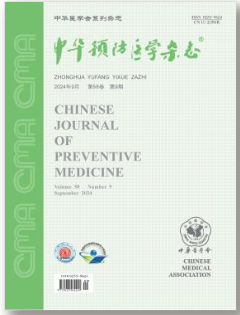
Chinese Journal of Preventive Medicine (CJPM), the successor to Chinese Health Journal , was initiated on October 1, 1953. In 1960, it was amalgamated with the Chinese Medical Journal and the Journal of Medical History and Health Care , and thereafter, was renamed as People’s Care . On November 25, 1978, the publication was denominated as Chinese Journal of Preventive Medicine . The contents of CJPM deal with a wide range of disciplines and technologies including epidemiology, environmental health, nutrition and food hygiene, occupational health, hygiene for children and adolescents, radiological health, toxicology, biostatistics, social medicine, pathogenic and epidemiological research in malignant tumor, surveillance and immunization.

 求助内容:
 应助结果提醒方式:


 京公网安备 11010802042870号


