{"title":"[Genomic evolution and epidemiological patterns of respiratory syncytial virus and their implications for surveillance and early warning].","authors":"Z F Zhao, J F Zeng, C Chen","doi":"10.3760/cma.j.cn112150-20250918-00908","DOIUrl":null,"url":null,"abstract":"<p><p>Respiratory syncytial virus (RSV) is an important respiratory pathogen in infants, young children and older adults. Based on global RSV genomic surveillance data, this review systematically summarizes the geographic distribution, seasonal epidemic patterns, and long-term evolutionary trends of RSV, with particular emphasis on the sustained circulation and evolutionary mechanisms of dominant genotypes such as ON1 in RSV-A and BA9 in RSV-B. Current evidence indicates that RSV transmission dynamics are tightly coupled with viral evolution. The G gene evolves relatively rapidly and contains multiple positively selected sites, suggesting an important role in immune escape and population adaptation. In recent years, changes in social behavior patterns and population immunity have further disrupted the seasonal rhythm of RSV and may have influenced the spread of dominant genotypes. Under routine respiratory infectious disease surveillance, strengthened genomic monitoring and integration of multi-source data are needed to improve early warning of abnormal RSV epidemics and variant-associated risks, thereby providing prospective evidence for protecting high-risk populations and informing public health decision-making.</p>","PeriodicalId":24033,"journal":{"name":"中华预防医学杂志","volume":"60 ","pages":"1519-1523"},"PeriodicalIF":0.0000,"publicationDate":"2026-09-06","publicationTypes":"Journal Article","fieldsOfStudy":null,"isOpenAccess":false,"openAccessPdf":"","citationCount":"0","resultStr":null,"platform":"Semanticscholar","paperid":null,"PeriodicalName":"中华预防医学杂志","FirstCategoryId":"3","ListUrlMain":"https://doi.org/10.3760/cma.j.cn112150-20250918-00908","RegionNum":0,"RegionCategory":null,"ArticlePicture":[],"TitleCN":null,"AbstractTextCN":null,"PMCID":null,"EPubDate":"","PubModel":"","JCR":"Q3","JCRName":"Medicine","Score":null,"Total":0}
引用次数: 0
Abstract
Respiratory syncytial virus (RSV) is an important respiratory pathogen in infants, young children and older adults. Based on global RSV genomic surveillance data, this review systematically summarizes the geographic distribution, seasonal epidemic patterns, and long-term evolutionary trends of RSV, with particular emphasis on the sustained circulation and evolutionary mechanisms of dominant genotypes such as ON1 in RSV-A and BA9 in RSV-B. Current evidence indicates that RSV transmission dynamics are tightly coupled with viral evolution. The G gene evolves relatively rapidly and contains multiple positively selected sites, suggesting an important role in immune escape and population adaptation. In recent years, changes in social behavior patterns and population immunity have further disrupted the seasonal rhythm of RSV and may have influenced the spread of dominant genotypes. Under routine respiratory infectious disease surveillance, strengthened genomic monitoring and integration of multi-source data are needed to improve early warning of abnormal RSV epidemics and variant-associated risks, thereby providing prospective evidence for protecting high-risk populations and informing public health decision-making.
期刊介绍:
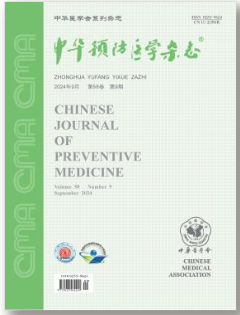
Chinese Journal of Preventive Medicine (CJPM), the successor to Chinese Health Journal , was initiated on October 1, 1953. In 1960, it was amalgamated with the Chinese Medical Journal and the Journal of Medical History and Health Care , and thereafter, was renamed as People’s Care . On November 25, 1978, the publication was denominated as Chinese Journal of Preventive Medicine . The contents of CJPM deal with a wide range of disciplines and technologies including epidemiology, environmental health, nutrition and food hygiene, occupational health, hygiene for children and adolescents, radiological health, toxicology, biostatistics, social medicine, pathogenic and epidemiological research in malignant tumor, surveillance and immunization.

 求助内容:
 应助结果提醒方式:


 京公网安备 11010802042870号


