An oral carrier-free nanodrug’s synergistic mechanisms analyzed in silico and in experiment: assembly ability, pH tolerance capability, mucus layer permeability

IF 8.4
Minfang Feng, Xingxing Dai, B. Y. Li, Yumei Yan, Xinhui Peng, Rui Li, Yueyang Xie, Guoqing Li, Xinyuan Shi
{"title":"An oral carrier-free nanodrug’s synergistic mechanisms analyzed in silico and in experiment: assembly ability, pH tolerance capability, mucus layer permeability","authors":"Minfang Feng, Xingxing Dai, B. Y. Li, Yumei Yan, Xinhui Peng, Rui Li, Yueyang Xie, Guoqing Li, Xinyuan Shi","doi":"10.1016/j.matdes.2026.116381","DOIUrl":null,"url":null,"abstract":"Despite their promising potential as simplified and highly efficient therapeutic platforms, carrier-free nanodrugs remain limited by an incomplete explanation of the molecular mechanisms that govern their co-assembly, structural stability, and biological interactions. This knowledge gap impedes rational guidance for preliminary drug selection in carrier-free nanodrug development, especially for oral administration, where navigating the complex gastrointestinal environment is a major barrier to absorption. Here, a glycyrrhizic acid-baicalin nanodrug (GBN) was chosen as representative carrier-free nanodrug model. It exhibits emergent properties including the enhanced efficacy and effective oral delivery by overcoming gastrointestinal barriers. Experimental characterization and molecular simulations revealed that GBN exhibited stable pharmaceutical properties, and its greater thermodynamic and kinetic stability than self-assembly endowed it with potent assembly ability and sustained assembly ability at different pH levels. An integrated computational framework combining gastrointestinal pH-response modeling with a mesoscopic intestinal mucus model was also established and further enabled quantitative assessment of GBN stability and mucus permeability. Overall, this study established a comprehensive simulation-experiment framework for evaluating the assembly ability and oral delivery mechanisms of carrier-free nanodrugs, expecting to provide a comprehensive analysis for evaluating the assembly ability and oral delivery mechanisms of nanodrugs.","PeriodicalId":101318,"journal":{"name":"MATERIALS & DESIGN","volume":"267 1","pages":"116381-116381"},"PeriodicalIF":8.4000,"publicationDate":"2026-06-10","publicationTypes":"Journal Article","fieldsOfStudy":null,"isOpenAccess":false,"openAccessPdf":"","citationCount":"0","resultStr":null,"platform":"Semanticscholar","paperid":null,"PeriodicalName":"MATERIALS & DESIGN","FirstCategoryId":"0","ListUrlMain":"https://doi.org/10.1016/j.matdes.2026.116381","RegionNum":0,"RegionCategory":null,"ArticlePicture":[],"TitleCN":null,"AbstractTextCN":null,"PMCID":null,"EPubDate":"","PubModel":"","JCR":"","JCRName":"","Score":null,"Total":0}
引用次数: 0

Abstract

Despite their promising potential as simplified and highly efficient therapeutic platforms, carrier-free nanodrugs remain limited by an incomplete explanation of the molecular mechanisms that govern their co-assembly, structural stability, and biological interactions. This knowledge gap impedes rational guidance for preliminary drug selection in carrier-free nanodrug development, especially for oral administration, where navigating the complex gastrointestinal environment is a major barrier to absorption. Here, a glycyrrhizic acid-baicalin nanodrug (GBN) was chosen as representative carrier-free nanodrug model. It exhibits emergent properties including the enhanced efficacy and effective oral delivery by overcoming gastrointestinal barriers. Experimental characterization and molecular simulations revealed that GBN exhibited stable pharmaceutical properties, and its greater thermodynamic and kinetic stability than self-assembly endowed it with potent assembly ability and sustained assembly ability at different pH levels. An integrated computational framework combining gastrointestinal pH-response modeling with a mesoscopic intestinal mucus model was also established and further enabled quantitative assessment of GBN stability and mucus permeability. Overall, this study established a comprehensive simulation-experiment framework for evaluating the assembly ability and oral delivery mechanisms of carrier-free nanodrugs, expecting to provide a comprehensive analysis for evaluating the assembly ability and oral delivery mechanisms of nanodrugs.
一种口服无载体纳米药物的协同机制的硅和实验分析:组装能力,pH耐受性,黏液层渗透性
尽管作为简化和高效的治疗平台,无载体纳米药物具有很大的潜力,但由于对其共组装、结构稳定性和生物相互作用的分子机制的不完整解释,它们仍然受到限制。这种知识差距阻碍了对无载体纳米药物开发中初步药物选择的合理指导,特别是口服给药,在口服给药中,复杂的胃肠道环境是吸收的主要障碍。本文选择甘草酸-黄芩苷纳米药物(GBN)作为代表性的无载体纳米药物模型。它具有突发性的特性,包括通过克服胃肠道障碍而增强的功效和有效的口服给药。实验表征和分子模拟结果表明,GBN具有稳定的药物性质,其比自组装更强的热力学和动力学稳定性使其在不同pH水平下具有强大的组装能力和持续的组装能力。建立了将胃肠道ph反应模型与介观肠道粘液模型相结合的综合计算框架,进一步实现了GBN稳定性和粘液通透性的定量评估。总体而言,本研究建立了无载体纳米药物组装能力和口服给药机制评价的综合模拟-实验框架,以期为评价纳米药物的组装能力和口服给药机制提供综合分析。
本文章由计算机程序翻译,如有差异,请以英文原文为准。
求助全文
约1分钟内获得全文 求助全文
来源期刊
自引率
0.00%
发文量
0
期刊介绍: Materials and Design is a multidisciplinary journal that publishes original research reports, review articles, and express communications. It covers a wide range of topics including the structure and properties of inorganic and organic materials, advancements in synthesis, processing, characterization, and testing, as well as the design of materials and engineering systems, and their applications in technology. The journal aims to integrate various disciplines such as materials science, engineering, physics, and chemistry. By exploring themes from materials to design, it seeks to uncover connections between natural and artificial materials, and between experimental findings and theoretical models. Manuscripts submitted to Materials and Design are expected to offer elements of discovery and surprise, contributing to new insights into the architecture and function of matter.
文献相关原料
原料信息
原料厂家
1
sodium hydroxide
2
UV-vis spectrophotometer
3
phosphotungstic acid
4
Magnetic stirrer
5
freeze dryer
7
transmission electron microscope
8
phosphate-buffered saline
9
tabletop high-speed centrifuge
10
laser particle size analyzer
11
Zetasizer
12
NANO ITC
13
shaker
14
Fourier transform infrared spectrometer
15
22
glycyrrhizic acid (GA)
1405-86-3
¥10.00-¥8828.62
16
22
BAI
491-67-8
¥20.00-¥4670.00
17
Pepsin
9001-75-6
¥32.00-¥107089.95
18
Pancreatin
8049-47-6
¥23.00-¥7116.73
19
22
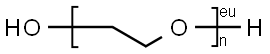
Polyethylene glycol
25322-68-3
¥18.00-¥9999999.00
×
引用
GB/T 7714-2015
复制
MLA
复制
APA
复制
导出至
BibTeX EndNote RefMan NoteFirst NoteExpress
×
提示
您的信息不完整,为了账户安全,请先补充。
现在去补充
×
提示
您因"违规操作"
具体请查看互助需知
我知道了
×
提示
确定
请完成安全验证×
copy
已复制链接
快去分享给好友吧!
我知道了
右上角分享
点击右上角分享
0
联系我们:info@booksci.cn Book学术提供免费学术资源搜索服务,方便国内外学者检索中英文文献。致力于提供最便捷和优质的服务体验。 Copyright © 2023 布克学术 All rights reserved.
京ICP备2023020795号-1
ghs 京公网安备 11010802042870号
Book学术文献互助
Book学术文献互助群
群 号:604180095
Book学术官方微信
小红书