
Salicylic acid enhances postharvest blueberry quality by maintaining phenolic acids and improving aroma volatiles during storage
IF 4.9
3区 农林科学
Q2 FOOD SCIENCE & TECHNOLOGY
引用次数: 0
Abstract
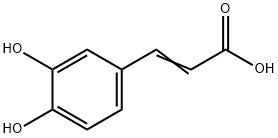
Abstract Blueberries are prone to softening, decay, and flavor loss. This study investigated the effects of salicylic acid (SA) on the quality, phenolic acid content, and aroma profile of blueberries. Blueberries were treated with 0, 0.5, 1, and 1.5 mmol L−1 SA and then stored at 4 ± 0.5°C for 20 days. Results indicated that treatment with 1 mmol L-1 SA effectively preserved appearance, reduced decay incidence, delayed firmness decline, and maintained higher levels of total soluble solids (TSS) and titratable acidity (TA). Additionally, SA significantly slowed the degradation of total phenols, total flavonoids, and anthocyanins, while increasing the levels of phenolic acids, including chlorogenic acid, caffeic acid, and ferulic acid. Concurrently, SA mitigated aroma loss by sustaining higher levels of key volatile organic compounds (VOCs) such as linalool and geraniol. Further analysis revealed that SA maintained the stability of VOCs by inhibiting the activities of phospholipase A (PLA) and lipoxygenase (LOX), and modulating the activities of hydroperoxide lyase (HPL), alcohol dehydrogenase (ADH), and alcohol acyltransferase (AAT). In conclusion, SA effectively delays postharvest quality deterioration, phenolic acid degradation, and aroma loss in blueberries, providing a theoretical basis for the green preservation of berries.水杨酸通过维持酚酸和改善储存过程中的香气挥发物来提高采后蓝莓的品质
蓝莓容易变软、腐烂和失去风味。研究了水杨酸(SA)对蓝莓品质、酚酸含量和香气特征的影响。分别用0、0.5、1和1.5 mmol L−1 SA处理蓝莓,在4±0.5°C下保存20天。结果表明,1 mmol L-1 SA处理能有效地保持果实外观,减少腐烂发生率,延缓硬度下降,保持较高的总可溶性固形物(TSS)和可滴定酸度(TA)水平。此外,SA显著减缓了总酚、总黄酮和花青素的降解,同时增加了酚酸(包括绿原酸、咖啡酸和阿魏酸)的水平。同时,SA通过维持较高水平的关键挥发性有机化合物(VOCs)如芳樟醇和香叶醇来减轻香气损失。进一步分析表明,SA通过抑制磷脂酶A (PLA)和脂氧合酶(LOX)的活性,调节氢过氧化物裂解酶(HPL)、醇脱氢酶(ADH)和醇酰基转移酶(AAT)的活性来维持VOCs的稳定性。综上所述,SA有效延缓了蓝莓采后品质变质、酚酸降解和香气损失,为蓝莓绿色保鲜提供了理论依据。
本文章由计算机程序翻译,如有差异,请以英文原文为准。
求助全文
约1分钟内获得全文
求助全文
来源期刊
Food Quality and Safety
FOOD SCIENCE & TECHNOLOGY-
CiteScore
7.20
自引率
1.80%
发文量
31
审稿时长
5 weeks
期刊介绍:
Food quality and safety are the main targets of investigation in food production. Therefore, reliable paths to detect, identify, quantify, characterize and monitor quality and safety issues occurring in food are of great interest.
Food Quality and Safety is an open access, international, peer-reviewed journal providing a platform to highlight emerging and innovative science and technology in the agro-food field, publishing up-to-date research in the areas of food quality and safety, food nutrition and human health. It promotes food and health equity which will consequently promote public health and combat diseases.
The journal is an effective channel of communication between food scientists, nutritionists, public health professionals, food producers, food marketers, policy makers, governmental and non-governmental agencies, and others concerned with the food safety, nutrition and public health dimensions.
The journal accepts original research articles, review papers, technical reports, case studies, conference reports, and book reviews articles.
文献相关原料
原料信息
原料厂家












 求助内容:
 应助结果提醒方式:


 京公网安备 11010802042870号


