
Tweets to the Streets? Effects of a Leader’s Social Media Messaging on Nationalist Mobilization
IF 4.8
1区 社会学
Q1 INTERNATIONAL RELATIONS
引用次数: 0
Abstract
Can a leader’s use of social media in an external crisis increase domestic nationalist mobilization? In this research note I leverage an original writing simulation on serving national security elites in Pakistan to demonstrate that the vocabulary that leaders employ is endogenous to their messaging platform, with crisis messages composed for Twitter/X communicating greater levels of affective content than similar content composed for official communiqués. I then randomize elite-curated content across an online sample of Pakistani social media users to show that bundling escalatory intent with affective platform-specific vocabulary reduced respondent sensitivity to crisis details, increased public jingoism, and slightly increased domestic willingness to engage in street protest. I discuss the strategic implications of these findings for leaders who, conscious of the mobilizing risks of social media, may wish to avoid tying their hands in a crisis.向街头发推文?领导人的社交媒体信息对民族主义动员的影响
一个领导人在外部危机中使用社交媒体,会增加国内的民族主义动员吗?在这份研究报告中,我利用为巴基斯坦国家安全精英服务的原创写作模拟来证明,领导人使用的词汇是他们的消息传递平台的内生因素,为Twitter/X编写的危机信息传达的情感内容水平高于为官方公报编写的类似内容。然后,我在巴基斯坦社交媒体用户的在线样本中随机选取了精英策划的内容,以显示将升级意图与情感平台特定词汇捆绑在一起,降低了受访者对危机细节的敏感性,增加了公众的沙文主义,并略微增加了国内参与街头抗议的意愿。我讨论了这些发现对那些意识到社交媒体的动员风险、可能希望避免在危机中束缚自己手脚的领导人的战略意义。
本文章由计算机程序翻译,如有差异,请以英文原文为准。
求助全文
约1分钟内获得全文
求助全文
来源期刊
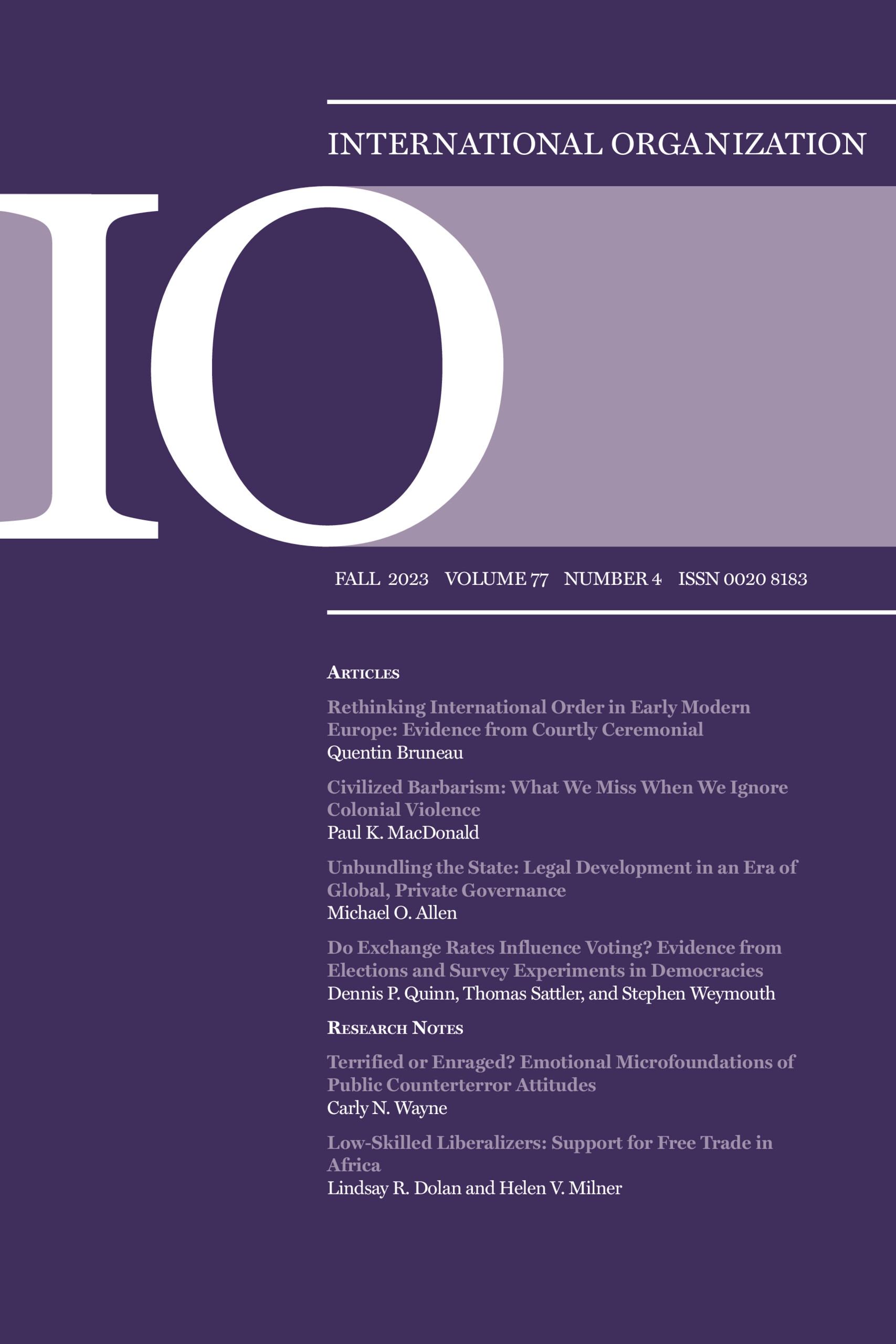
International Organization
Multiple-
CiteScore
14.50
自引率
1.30%
发文量
25
期刊介绍:
International Organization (IO) is a prominent peer-reviewed journal that comprehensively covers the field of international affairs. Its subject areas encompass foreign policies, international relations, political economy, security policies, environmental disputes, regional integration, alliance patterns, conflict resolution, economic development, and international capital movements. Continuously ranked among the top journals in the field, IO does not publish book reviews but instead features high-quality review essays that survey new developments, synthesize important ideas, and address key issues for future scholarship.
 求助内容:
 应助结果提醒方式:


 京公网安备 11010802042870号


