Lv Dai, Zi-Chen Tang, Zhen Jia, Li Jiang, Chuan-Tong Zhao, Zhi-Yuan Zhao, Wen-Ting Zhao, Cai-Xia Li
{"title":"SNP density impact on kinship inference and IBS-machine learning optimization.","authors":"Lv Dai, Zi-Chen Tang, Zhen Jia, Li Jiang, Chuan-Tong Zhao, Zhi-Yuan Zhao, Wen-Ting Zhao, Cai-Xia Li","doi":"10.16288/j.yczz.25-287","DOIUrl":null,"url":null,"abstract":"<p><p>In recent years, multiple panels containing varying numbers of single nucleotide polymorphisms (SNPs) have been reported in forensic genetics for kinship inference. However, systematic exploration of the impact of SNP number on inference performance and the application of machine learning algorithms remains lacking. Therefore, we evaluated the impact of SNP number on kinship inference performance and the optimization effects of machine learning methods on the identity-by-state (IBS) algorithm. We constructed multiple SNP panels with SNP numbers ranging from 15,476 to 20,838, and evaluated the performance of the likelihood ratio (LR) method and the IBS algorithm for kinship inference under different SNP numbers based on simulated pedigrees. After selecting the optimal SNP panel, we validated it using real pedigrees and further combined the IBS algorithm with machine learning methods to enhance inference performance. Our results showed that for the LR method, the sensitivity in inferring sixth and seventh degree kinships exhibited a significant positive correlation with SNP number. For the IBS algorithm, although the sensitivity in inferring fourth to seventh degree kinships showed a significant positive correlation with SNP number, the actual improvement was limited (only 0.5%~2.2% increase). Based on these results, we determined the optimal panel containing 20,838 SNPs (21K panel). The 21K panel based on the LR method could accurately infer kinships within sixth degree (with a sensitivity of 93.65% for sixth degree kinship inference), and the 21K panel based on the IBS algorithm could accurately infer kinships within third degree (with a sensitivity of 86.79% for third degree kinship inference). After combining the IBS algorithm with machine learning, the sensitivity for fourth degree kinship inference improved from 69.10% to 87.66%, the sensitivities for fifth and sixth degree kinships improved from 38.03% and 21.41% to 48.75% and 37.80%, respectively.</p>","PeriodicalId":35536,"journal":{"name":"遗传","volume":"48 6","pages":"570-588"},"PeriodicalIF":0.0000,"publicationDate":"2026-06-01","publicationTypes":"Journal Article","fieldsOfStudy":null,"isOpenAccess":false,"openAccessPdf":"","citationCount":"0","resultStr":null,"platform":"Semanticscholar","paperid":null,"PeriodicalName":"遗传","FirstCategoryId":"1091","ListUrlMain":"https://doi.org/10.16288/j.yczz.25-287","RegionNum":0,"RegionCategory":null,"ArticlePicture":[],"TitleCN":null,"AbstractTextCN":null,"PMCID":null,"EPubDate":"","PubModel":"","JCR":"Q3","JCRName":"Medicine","Score":null,"Total":0}
引用次数: 0
Abstract
In recent years, multiple panels containing varying numbers of single nucleotide polymorphisms (SNPs) have been reported in forensic genetics for kinship inference. However, systematic exploration of the impact of SNP number on inference performance and the application of machine learning algorithms remains lacking. Therefore, we evaluated the impact of SNP number on kinship inference performance and the optimization effects of machine learning methods on the identity-by-state (IBS) algorithm. We constructed multiple SNP panels with SNP numbers ranging from 15,476 to 20,838, and evaluated the performance of the likelihood ratio (LR) method and the IBS algorithm for kinship inference under different SNP numbers based on simulated pedigrees. After selecting the optimal SNP panel, we validated it using real pedigrees and further combined the IBS algorithm with machine learning methods to enhance inference performance. Our results showed that for the LR method, the sensitivity in inferring sixth and seventh degree kinships exhibited a significant positive correlation with SNP number. For the IBS algorithm, although the sensitivity in inferring fourth to seventh degree kinships showed a significant positive correlation with SNP number, the actual improvement was limited (only 0.5%~2.2% increase). Based on these results, we determined the optimal panel containing 20,838 SNPs (21K panel). The 21K panel based on the LR method could accurately infer kinships within sixth degree (with a sensitivity of 93.65% for sixth degree kinship inference), and the 21K panel based on the IBS algorithm could accurately infer kinships within third degree (with a sensitivity of 86.79% for third degree kinship inference). After combining the IBS algorithm with machine learning, the sensitivity for fourth degree kinship inference improved from 69.10% to 87.66%, the sensitivities for fifth and sixth degree kinships improved from 38.03% and 21.41% to 48.75% and 37.80%, respectively.
期刊介绍:
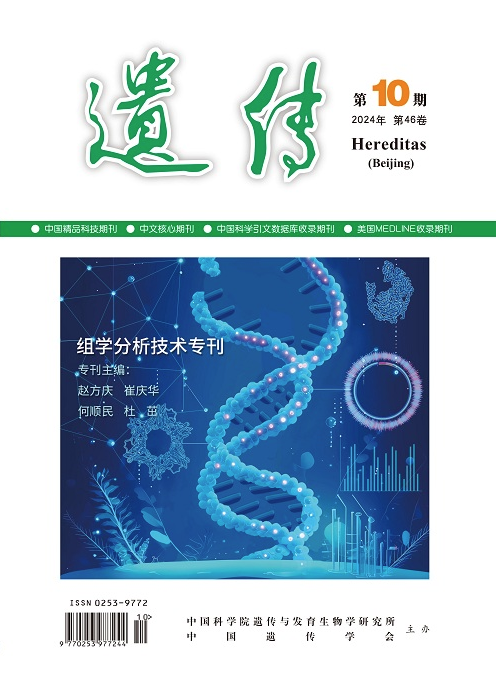
Hereditas is a national academic journal sponsored by the Institute of Genetics and Developmental Biology of the Chinese Academy of Sciences and the Chinese Society of Genetics and published by Science Press. It is a Chinese core journal and a Chinese high-quality scientific journal. The journal mainly publishes innovative research papers in the fields of genetics, genomics, cell biology, developmental biology, biological evolution, genetic engineering and biotechnology; new technologies and new methods; monographs and reviews on hot issues in the discipline; academic debates and discussions; experience in genetics teaching; introductions to famous geneticists at home and abroad; genetic counseling; information on academic conferences at home and abroad, etc. Main columns: review, frontier focus, research report, technology and method, resources and platform, experimental operation guide, genetic resources, genetics teaching, scientific news, etc.

 求助内容:
 应助结果提醒方式:


 京公网安备 11010802042870号


