{"title":"Functional study of the soybean rapid alkalinization factor <i>GmRALF34s</i> in response to saline-alkali stress.","authors":"Man-Ting Zhang, Zi-Hao Lu, Min-Qi Nie, Yu-Xiang Tan, Qi-Mei Liang, Mao-Yan Luo, Yong-Dong Dai, Jin-Tao Li, Wei Chen, Zi-Mei Chen, Jia-Xian He, Meina Li","doi":"10.16288/j.yczz.25-349","DOIUrl":null,"url":null,"abstract":"<p><p>China's soybean supply is heavily dependent on international markets, making it an urgent task to enhance domestic self-sufficiency to ensure food security. Data from the national soil census indicate that China possesses approximately 500 million mu of saline-alkali soil resources, of which about 200 million mu have potential for agricultural development. Against the backdrop of tight arable land resources, developing new soybean varieties tolerant to saline-alkali conditions represents a strategic initiative to effectively utilize saline-alkali land, expand cultivation areas, and address the challenge of soil salinization. Rapid alkalinization factors (RALFs) are a class of plant small peptides that act as ligands, initiating downstream signaling by binding to plasma membrane receptor complexes, thereby coordinating plant growth, development, and stress responses. However, the specific molecular mechanisms by which RALF peptides mediate responses to saline-alkali stress in important crops such as soybean remain unclear. Through expression profiling analysis of the soybean RALF family, combined with transcriptome data under alkaline salt treatment, this study identified two homologs of <i>Arabidopsis thaliana AtRALF34</i>, designated <i>GmRALF34a</i> and <i>GmRALF34b</i>, which are predominantly expressed in roots and whose expression is significantly suppressed following alkaline salt treatment. Using gene editing technology, we generated <i>Gmralf34ab</i> double mutants, which exhibited enhanced sensitivity to alkaline salt stress. In contrast, no significant differences were observed between the mutant and wild type plants under neutral salt stress. Field phenotypic characterization further demonstrated that the mutants showed significant reductions in agronomic traits, including plant height, node number, and yield per plant. In conclusion, this study preliminarily reveals that <i>GmRALF34s</i> play an important role in soybean response to alkaline salt stress and adaptation to saline-alkaline environments, provides valuable genetic materials for further elucidating their molecular mechanisms and establishing a theoretical and material foundation for breeding salt-alkali tolerant soybean varieties.</p>","PeriodicalId":35536,"journal":{"name":"遗传","volume":"48 6","pages":"614-627"},"PeriodicalIF":0.0000,"publicationDate":"2026-06-01","publicationTypes":"Journal Article","fieldsOfStudy":null,"isOpenAccess":false,"openAccessPdf":"","citationCount":"0","resultStr":null,"platform":"Semanticscholar","paperid":null,"PeriodicalName":"遗传","FirstCategoryId":"1091","ListUrlMain":"https://doi.org/10.16288/j.yczz.25-349","RegionNum":0,"RegionCategory":null,"ArticlePicture":[],"TitleCN":null,"AbstractTextCN":null,"PMCID":null,"EPubDate":"","PubModel":"","JCR":"Q3","JCRName":"Medicine","Score":null,"Total":0}
引用次数: 0
Abstract
China's soybean supply is heavily dependent on international markets, making it an urgent task to enhance domestic self-sufficiency to ensure food security. Data from the national soil census indicate that China possesses approximately 500 million mu of saline-alkali soil resources, of which about 200 million mu have potential for agricultural development. Against the backdrop of tight arable land resources, developing new soybean varieties tolerant to saline-alkali conditions represents a strategic initiative to effectively utilize saline-alkali land, expand cultivation areas, and address the challenge of soil salinization. Rapid alkalinization factors (RALFs) are a class of plant small peptides that act as ligands, initiating downstream signaling by binding to plasma membrane receptor complexes, thereby coordinating plant growth, development, and stress responses. However, the specific molecular mechanisms by which RALF peptides mediate responses to saline-alkali stress in important crops such as soybean remain unclear. Through expression profiling analysis of the soybean RALF family, combined with transcriptome data under alkaline salt treatment, this study identified two homologs of Arabidopsis thaliana AtRALF34, designated GmRALF34a and GmRALF34b, which are predominantly expressed in roots and whose expression is significantly suppressed following alkaline salt treatment. Using gene editing technology, we generated Gmralf34ab double mutants, which exhibited enhanced sensitivity to alkaline salt stress. In contrast, no significant differences were observed between the mutant and wild type plants under neutral salt stress. Field phenotypic characterization further demonstrated that the mutants showed significant reductions in agronomic traits, including plant height, node number, and yield per plant. In conclusion, this study preliminarily reveals that GmRALF34s play an important role in soybean response to alkaline salt stress and adaptation to saline-alkaline environments, provides valuable genetic materials for further elucidating their molecular mechanisms and establishing a theoretical and material foundation for breeding salt-alkali tolerant soybean varieties.
期刊介绍:
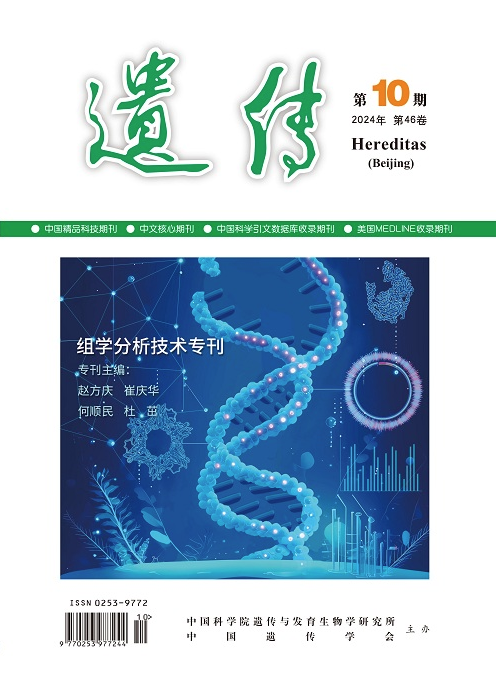
Hereditas is a national academic journal sponsored by the Institute of Genetics and Developmental Biology of the Chinese Academy of Sciences and the Chinese Society of Genetics and published by Science Press. It is a Chinese core journal and a Chinese high-quality scientific journal. The journal mainly publishes innovative research papers in the fields of genetics, genomics, cell biology, developmental biology, biological evolution, genetic engineering and biotechnology; new technologies and new methods; monographs and reviews on hot issues in the discipline; academic debates and discussions; experience in genetics teaching; introductions to famous geneticists at home and abroad; genetic counseling; information on academic conferences at home and abroad, etc. Main columns: review, frontier focus, research report, technology and method, resources and platform, experimental operation guide, genetic resources, genetics teaching, scientific news, etc.

 求助内容:
 应助结果提醒方式:


 京公网安备 11010802042870号


