M. Sabbaghian, N. Fakhar, J. Mola, R. Mahmudi, J. J. Sidor, K. Mukhtarova, J. Gubicza
{"title":"Serrated Shear Flow in AA5083 Alloy Refined by Dual Equal Channel Lateral Extrusion Process","authors":"M. Sabbaghian, N. Fakhar, J. Mola, R. Mahmudi, J. J. Sidor, K. Mukhtarova, J. Gubicza","doi":"10.1007/s12540-025-02113-4","DOIUrl":null,"url":null,"abstract":"<div><p>The influence of 3 passes of dual equal channel lateral extrusion (DECLE) as a severe plastic deformation (SPD) method on the microstructural evolution and shear mechanical properties of an AA5083 aluminum alloy was investigated at room temperature (RT) and 75 °C. The initial grain size of 20.4 µm in the as-received sample was reduced to 11.6 µm in the DECLE-processed sample due to dynamic recrystallization (DRX) and recovery processes. Furthermore, the X-ray line profile analysis revealed a diffraction domain size of 130 nm and a dislocation density of 0.4 × 10<sup>14</sup> m<sup>–2</sup> in the DECLE-processed condition. Shear punch test (SPT) was used for evaluating the shear deformation behavior of the alloy at both temperatures across a range of strain rates. Consistent with microstructural observations, SPT results indicated a higher shear strength in the DECLE-processed condition compared to the annealed material. Serrated flow, attributed to dynamic strain aging (DSA), was observed in both material conditions, with the serrations being more pronounced at 75 °C than at RT. As the shear strain rate increased, the serrations gradually disappeared. Moreover, the strength of the samples decreased at higher strain rates, indicating negative strain rate sensitivity. Despite the notable differences in microstructure between the annealed and DECLE-processed conditions, the serrated flow behavior inferred from SPT showed only marginal differences. Despite the small sample size in the SPT, the method proves to be efficient in analyzing the DSA behavior. The results enable us to identify prior processing conditions associated with serrated flow, which can potentially compromise the surface quality of sheet products after metal forming operations. The insights from the present work on the DSA behavior of AA5083 Al alloy and the closely related occurrence of localized deformation within Portevin–Le Chatelier (PLC) bands are of practical significance for sheet forming operations involving the use of partially recrystallized feedstock.</p><h3>Graphical Abstract</h3><div><figure><div><div><picture><source><img></source></picture><span>The alternative text for this image may have been generated using AI.</span></div></div></figure></div></div>","PeriodicalId":703,"journal":{"name":"Metals and Materials International","volume":"32 7","pages":"2343 - 2356"},"PeriodicalIF":4.5000,"publicationDate":"2025-12-17","publicationTypes":"Journal Article","fieldsOfStudy":null,"isOpenAccess":false,"openAccessPdf":"","citationCount":"0","resultStr":null,"platform":"Semanticscholar","paperid":null,"PeriodicalName":"Metals and Materials International","FirstCategoryId":"88","ListUrlMain":"https://link.springer.com/article/10.1007/s12540-025-02113-4","RegionNum":3,"RegionCategory":"材料科学","ArticlePicture":[],"TitleCN":null,"AbstractTextCN":null,"PMCID":null,"EPubDate":"","PubModel":"","JCR":"Q2","JCRName":"MATERIALS SCIENCE, MULTIDISCIPLINARY","Score":null,"Total":0}
引用次数: 0
Abstract
The influence of 3 passes of dual equal channel lateral extrusion (DECLE) as a severe plastic deformation (SPD) method on the microstructural evolution and shear mechanical properties of an AA5083 aluminum alloy was investigated at room temperature (RT) and 75 °C. The initial grain size of 20.4 µm in the as-received sample was reduced to 11.6 µm in the DECLE-processed sample due to dynamic recrystallization (DRX) and recovery processes. Furthermore, the X-ray line profile analysis revealed a diffraction domain size of 130 nm and a dislocation density of 0.4 × 10¹⁴ m–2 in the DECLE-processed condition. Shear punch test (SPT) was used for evaluating the shear deformation behavior of the alloy at both temperatures across a range of strain rates. Consistent with microstructural observations, SPT results indicated a higher shear strength in the DECLE-processed condition compared to the annealed material. Serrated flow, attributed to dynamic strain aging (DSA), was observed in both material conditions, with the serrations being more pronounced at 75 °C than at RT. As the shear strain rate increased, the serrations gradually disappeared. Moreover, the strength of the samples decreased at higher strain rates, indicating negative strain rate sensitivity. Despite the notable differences in microstructure between the annealed and DECLE-processed conditions, the serrated flow behavior inferred from SPT showed only marginal differences. Despite the small sample size in the SPT, the method proves to be efficient in analyzing the DSA behavior. The results enable us to identify prior processing conditions associated with serrated flow, which can potentially compromise the surface quality of sheet products after metal forming operations. The insights from the present work on the DSA behavior of AA5083 Al alloy and the closely related occurrence of localized deformation within Portevin–Le Chatelier (PLC) bands are of practical significance for sheet forming operations involving the use of partially recrystallized feedstock.
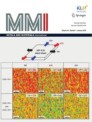
Graphical Abstract
The alternative text for this image may have been generated using AI.
期刊介绍:
Metals and Materials International publishes original papers and occasional critical reviews on all aspects of research and technology in materials engineering: physical metallurgy, materials science, and processing of metals and other materials. Emphasis is placed on those aspects of the science of materials that are concerned with the relationships among the processing, structure and properties (mechanical, chemical, electrical, electrochemical, magnetic and optical) of materials. Aspects of processing include the melting, casting, and fabrication with the thermodynamics, kinetics and modeling.

 求助内容:
 应助结果提醒方式:


 京公网安备 11010802042870号


