Fabrication of Functionally Graded Aluminum Sheets with a Gradient of Grain Size Through the Efficient Combination of Severe Plastic Deformation Techniques
IF 4.5 3区 材料科学Q2 MATERIALS SCIENCE, MULTIDISCIPLINARY
Fatemeh Zamani, Morteza Alizadeh, Ali Mirzaei, Beom Tak Na, Hyoun Woo Kim, Sang Sub Kim, Mamdouh I. Elamy
{"title":"Fabrication of Functionally Graded Aluminum Sheets with a Gradient of Grain Size Through the Efficient Combination of Severe Plastic Deformation Techniques","authors":"Fatemeh Zamani, Morteza Alizadeh, Ali Mirzaei, Beom Tak Na, Hyoun Woo Kim, Sang Sub Kim, Mamdouh I. Elamy","doi":"10.1007/s12540-025-02114-3","DOIUrl":null,"url":null,"abstract":"<div><p>In this research, a novel single-phase functionally graded material based on 1050 aluminum was fabricated through an innovative approach using accumulative roll bonding. Unlike conventional FGM manufacturing techniques that often involve multi-phase compositions or complex processing routes, the proposed method introduces a unique microstructural gradient along the transverse direction solely by controlled ARB passes. This strategy enables the creation of a continuous grain size gradient without the addition of reinforcements or secondary phases, ensuring both structural integrity and cost-effectiveness. X-ray diffraction (XRD) and electron backscatter diffraction (EBSD) were utilized for structural and microstructural studies, respectively. The XRD results indicated that as the number of rolling cycles through the thickness of the functionally graded sample increases, the crystallite size decreases and dislocation density increases. Also, the EBSD maps confirmed a gradient in grain size across the functionally graded sample’s thickness from 1060 nm to 290 nm. The resulting FGM exhibited improved mechanical performance, with yield and tensile strengths of 167 MPa and 246 MPa, respectively. This study introduces a simple, cost-effective route for producing aluminum-based FGMs with tailored microstructural gradients.</p><h3>Graphical abstract</h3><div><figure><div><div><picture><source><img></source></picture><span>The alternative text for this image may have been generated using AI.</span></div></div></figure></div></div>","PeriodicalId":703,"journal":{"name":"Metals and Materials International","volume":"32 7","pages":"2496 - 2512"},"PeriodicalIF":4.5000,"publicationDate":"2025-12-05","publicationTypes":"Journal Article","fieldsOfStudy":null,"isOpenAccess":false,"openAccessPdf":"","citationCount":"0","resultStr":null,"platform":"Semanticscholar","paperid":null,"PeriodicalName":"Metals and Materials International","FirstCategoryId":"88","ListUrlMain":"https://link.springer.com/article/10.1007/s12540-025-02114-3","RegionNum":3,"RegionCategory":"材料科学","ArticlePicture":[],"TitleCN":null,"AbstractTextCN":null,"PMCID":null,"EPubDate":"","PubModel":"","JCR":"Q2","JCRName":"MATERIALS SCIENCE, MULTIDISCIPLINARY","Score":null,"Total":0}
引用次数: 0
Abstract
In this research, a novel single-phase functionally graded material based on 1050 aluminum was fabricated through an innovative approach using accumulative roll bonding. Unlike conventional FGM manufacturing techniques that often involve multi-phase compositions or complex processing routes, the proposed method introduces a unique microstructural gradient along the transverse direction solely by controlled ARB passes. This strategy enables the creation of a continuous grain size gradient without the addition of reinforcements or secondary phases, ensuring both structural integrity and cost-effectiveness. X-ray diffraction (XRD) and electron backscatter diffraction (EBSD) were utilized for structural and microstructural studies, respectively. The XRD results indicated that as the number of rolling cycles through the thickness of the functionally graded sample increases, the crystallite size decreases and dislocation density increases. Also, the EBSD maps confirmed a gradient in grain size across the functionally graded sample’s thickness from 1060 nm to 290 nm. The resulting FGM exhibited improved mechanical performance, with yield and tensile strengths of 167 MPa and 246 MPa, respectively. This study introduces a simple, cost-effective route for producing aluminum-based FGMs with tailored microstructural gradients.
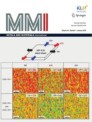
Graphical abstract
The alternative text for this image may have been generated using AI.
期刊介绍:
Metals and Materials International publishes original papers and occasional critical reviews on all aspects of research and technology in materials engineering: physical metallurgy, materials science, and processing of metals and other materials. Emphasis is placed on those aspects of the science of materials that are concerned with the relationships among the processing, structure and properties (mechanical, chemical, electrical, electrochemical, magnetic and optical) of materials. Aspects of processing include the melting, casting, and fabrication with the thermodynamics, kinetics and modeling.


 求助内容:
 应助结果提醒方式:


 京公网安备 11010802042870号


