Molecular Evolution of Organic Matter Humification Governs Ferrihydrite Transformation: Interfacial Electron Transfer Mechanisms and Carbon Preservation Implications
Wenfeng Huang, Bo Chen, Jingyi Zhang, Chengpeng Yuan, Zehong Zhang, Quan Qian, Kexin Chen, Qi Liu, Xiangyang Gui, Liyang Hu, Xinde Cao and Xiaoyun Xu*,
{"title":"Molecular Evolution of Organic Matter Humification Governs Ferrihydrite Transformation: Interfacial Electron Transfer Mechanisms and Carbon Preservation Implications","authors":"Wenfeng Huang, Bo Chen, Jingyi Zhang, Chengpeng Yuan, Zehong Zhang, Quan Qian, Kexin Chen, Qi Liu, Xiangyang Gui, Liyang Hu, Xinde Cao and Xiaoyun Xu*, ","doi":"10.1021/acs.est.5c15760","DOIUrl":null,"url":null,"abstract":"<p >During soil humification, organic matter (OM) develops distinct compositional and chemical signatures across the progressive stages. However, how these evolving OM characteristics influence iron (hydr)oxide transformation and ultimately regulate carbon preservation remains unclear. Through controlled anaerobic incubation experiments with ferrihydrite (Fh) and straw-derived OM from sequential soil humification stages under Fe(II)-mediated conditions, we found that advancing humification increasingly inhibited Fh crystallization, reducing its transformation to lepidocrocite/goethite from 45.3% in the degradation stage to 21.5% in the maturation stage. This stage-dependent inhibition correlated strongly with the accumulation of highly unsaturated and phenolic compounds (HUPs), which disrupted interfacial electron transfer and mineral nucleation, which are key processes in secondary mineral formation. Mechanistically, HUPs facilitated ternary Fh-OM-Fe(II) complex formation via the C–O–Fe bond, enhancing Fe(II) adsorption while narrowing the Fe(II)-Fh redox potential gap to suppress interfacial electron transfer. Furthermore, HUPs reduced the mineral surface potential and impeded particle agglomeration, thereby disrupting the crystallization of nucleation precursors. Consequently, the inhibited Fh transformation facilitated the selective adsorption of HUPs and their molecular conversion to condensed aromatics, thereby preferentially preserving organic carbon from advanced humification stages. These findings highlight the stage-dependent regulation of Fh transformation by humified OM and its implication for carbon preservation, advancing our understanding of coupled carbon–iron biogeochemistry in soils.</p>","PeriodicalId":36,"journal":{"name":"环境科学与技术","volume":"60 23","pages":"16595–16606"},"PeriodicalIF":12.2000,"publicationDate":"2026-06-16","publicationTypes":"Journal Article","fieldsOfStudy":null,"isOpenAccess":false,"openAccessPdf":"","citationCount":"0","resultStr":null,"platform":"Semanticscholar","paperid":null,"PeriodicalName":"环境科学与技术","FirstCategoryId":"1","ListUrlMain":"https://pubs.acs.org/doi/10.1021/acs.est.5c15760","RegionNum":1,"RegionCategory":"环境科学与生态学","ArticlePicture":[],"TitleCN":null,"AbstractTextCN":null,"PMCID":null,"EPubDate":"2026/6/3 0:00:00","PubModel":"Epub","JCR":"Q1","JCRName":"ENGINEERING, ENVIRONMENTAL","Score":null,"Total":0}
引用次数: 0
Abstract
During soil humification, organic matter (OM) develops distinct compositional and chemical signatures across the progressive stages. However, how these evolving OM characteristics influence iron (hydr)oxide transformation and ultimately regulate carbon preservation remains unclear. Through controlled anaerobic incubation experiments with ferrihydrite (Fh) and straw-derived OM from sequential soil humification stages under Fe(II)-mediated conditions, we found that advancing humification increasingly inhibited Fh crystallization, reducing its transformation to lepidocrocite/goethite from 45.3% in the degradation stage to 21.5% in the maturation stage. This stage-dependent inhibition correlated strongly with the accumulation of highly unsaturated and phenolic compounds (HUPs), which disrupted interfacial electron transfer and mineral nucleation, which are key processes in secondary mineral formation. Mechanistically, HUPs facilitated ternary Fh-OM-Fe(II) complex formation via the C–O–Fe bond, enhancing Fe(II) adsorption while narrowing the Fe(II)-Fh redox potential gap to suppress interfacial electron transfer. Furthermore, HUPs reduced the mineral surface potential and impeded particle agglomeration, thereby disrupting the crystallization of nucleation precursors. Consequently, the inhibited Fh transformation facilitated the selective adsorption of HUPs and their molecular conversion to condensed aromatics, thereby preferentially preserving organic carbon from advanced humification stages. These findings highlight the stage-dependent regulation of Fh transformation by humified OM and its implication for carbon preservation, advancing our understanding of coupled carbon–iron biogeochemistry in soils.
期刊介绍:
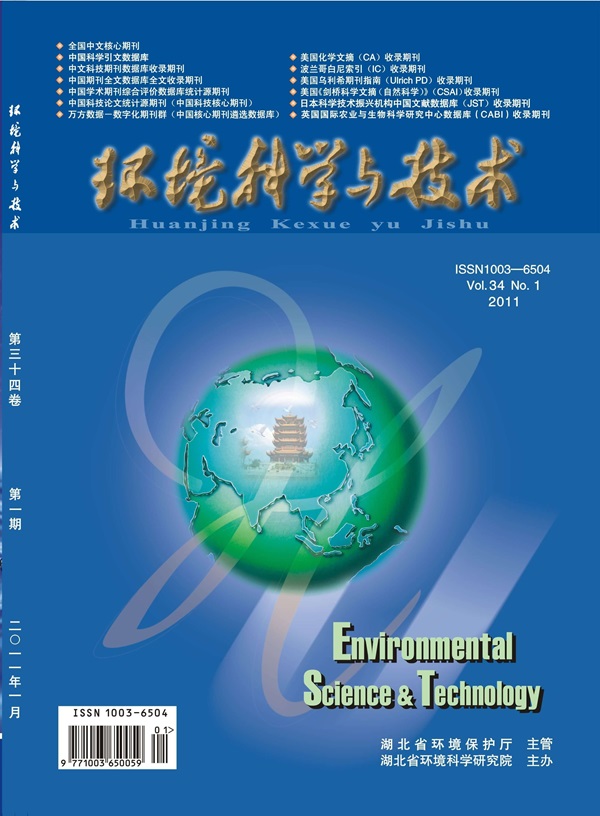
Environmental Science & Technology (ES&T) is a co-sponsored academic and technical magazine by the Hubei Provincial Environmental Protection Bureau and the Hubei Provincial Academy of Environmental Sciences.
Environmental Science & Technology (ES&T) holds the status of Chinese core journals, scientific papers source journals of China, Chinese Science Citation Database source journals, and Chinese Academic Journal Comprehensive Evaluation Database source journals. This publication focuses on the academic field of environmental protection, featuring articles related to environmental protection and technical advancements.


 求助内容:
 应助结果提醒方式:


 京公网安备 11010802042870号


