Francisca Contreras Hernández, Itxaso Villelabeitia, Isabelle Levine, Carel W le Roux, Alexander D Miras, Ruth K Price
{"title":"Effects of Bariatric Surgery and Obesity Medicines on Human Eating Behavior.","authors":"Francisca Contreras Hernández, Itxaso Villelabeitia, Isabelle Levine, Carel W le Roux, Alexander D Miras, Ruth K Price","doi":"10.1146/annurev-nutr-070225-105258","DOIUrl":null,"url":null,"abstract":"<p><p>Obesity is a chronic disease driven by complex neurohormonal and behavioral mechanisms that regulate adipocyte mass by impacting appetite, food reward, and ingestive patterns. This review synthesizes evidence from objective, rather than verbal report-based, methodologies examining how bariatric surgery and obesity medicines modify human eating behavior. Roux-en-Y gastric bypass and sleeve gastrectomy consistently reduce total energy intake through sustained reductions in meal size and eating rate, without systematic changes in meal initiation or macronutrient selection. In small cohorts where food choices did shift, alterations were associated with greater weight loss, highlighting interindividual variability. GLP-1-based therapy similarly reduces energy intake and improves appetitive behavior through strengthened gut-brain signaling, whereas naltrexone/bupropion primarily targets central reward circuits. Overall, bariatric surgery leads to reduced intake without altering food choices, suggesting a benefit from eating \"less of the same,\" whereas equivalent conclusions for obesity medicines remain premature due to limited direct evidence.</p>","PeriodicalId":8009,"journal":{"name":"Annual review of nutrition","volume":" ","pages":"339-356"},"PeriodicalIF":13.3000,"publicationDate":"2026-08-01","publicationTypes":"Journal Article","fieldsOfStudy":null,"isOpenAccess":false,"openAccessPdf":"","citationCount":"0","resultStr":null,"platform":"Semanticscholar","paperid":null,"PeriodicalName":"Annual review of nutrition","FirstCategoryId":"3","ListUrlMain":"https://doi.org/10.1146/annurev-nutr-070225-105258","RegionNum":2,"RegionCategory":"医学","ArticlePicture":[],"TitleCN":null,"AbstractTextCN":null,"PMCID":null,"EPubDate":"2026/5/15 0:00:00","PubModel":"Epub","JCR":"Q1","JCRName":"NUTRITION & DIETETICS","Score":null,"Total":0}
引用次数: 0
Abstract
Obesity is a chronic disease driven by complex neurohormonal and behavioral mechanisms that regulate adipocyte mass by impacting appetite, food reward, and ingestive patterns. This review synthesizes evidence from objective, rather than verbal report-based, methodologies examining how bariatric surgery and obesity medicines modify human eating behavior. Roux-en-Y gastric bypass and sleeve gastrectomy consistently reduce total energy intake through sustained reductions in meal size and eating rate, without systematic changes in meal initiation or macronutrient selection. In small cohorts where food choices did shift, alterations were associated with greater weight loss, highlighting interindividual variability. GLP-1-based therapy similarly reduces energy intake and improves appetitive behavior through strengthened gut-brain signaling, whereas naltrexone/bupropion primarily targets central reward circuits. Overall, bariatric surgery leads to reduced intake without altering food choices, suggesting a benefit from eating "less of the same," whereas equivalent conclusions for obesity medicines remain premature due to limited direct evidence.
期刊介绍:
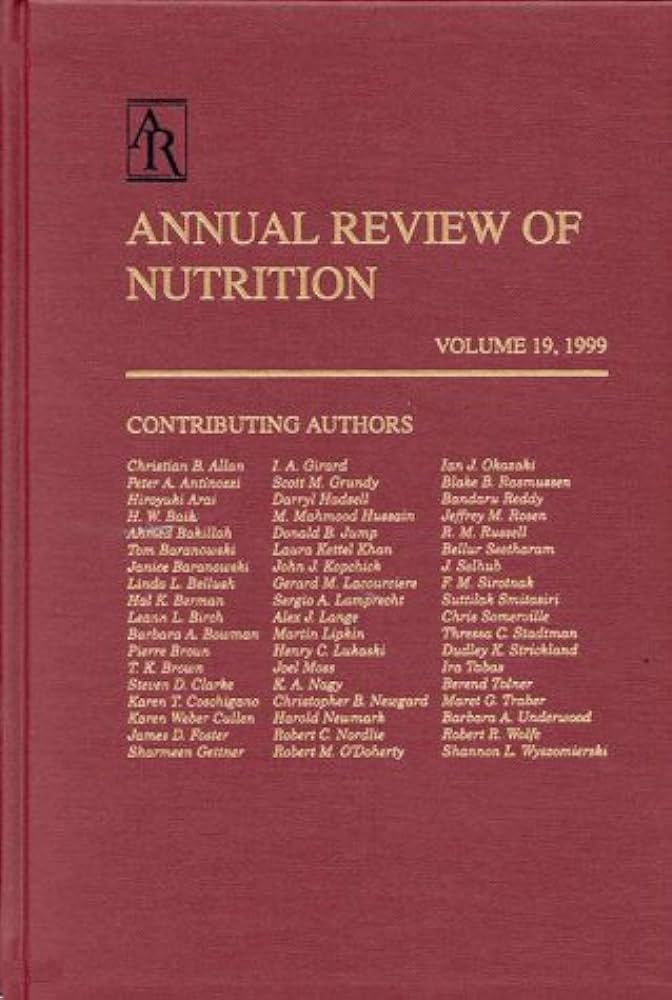
Annual Review of Nutrition
Publication History:In publication since 1981
Scope:Covers significant developments in the field of nutrition
Topics Covered Include:
Energy metabolism;
Carbohydrates;
Lipids;
Proteins and amino acids;
Vitamins;
Minerals;
Nutrient transport and function;
Metabolic regulation;
Nutritional genomics;
Molecular and cell biology;
Clinical nutrition;
Comparative nutrition;
Nutritional anthropology;
Nutritional toxicology;
Nutritional microbiology;
Epidemiology;
Public health nutrition

 求助内容:
 应助结果提醒方式:


 京公网安备 11010802042870号


