Yu-Xiao-Qian Cheng, Kai-Yuan Min, Ze-Kun Liu, Long-Ping Yang, Qing Li
{"title":"Quantitative Evaluation of Research Integrity Policies in Medical Field Based on Policy Modeling Consistency Index Model.","authors":"Yu-Xiao-Qian Cheng, Kai-Yuan Min, Ze-Kun Liu, Long-Ping Yang, Qing Li","doi":"10.3881/j.issn.1000-503X.16896","DOIUrl":null,"url":null,"abstract":"<p><p>Objective To quantitatively evaluate China's core research integrity policies by constructing an evaluation index system specific to the medical field and reveal the applicability and structural shortcomings of these policies,thereby providing empirical evidence and optimization pathways for enhancing the scientific rigor and practical effectiveness of research integrity governance in China. Methods Eighteen research integrity policy documents issued at the national level by the central government and ministries from January 2010 to January 2025 were collected.An evaluation framework based on the policy modeling consistency index model was constructed via text mining and keyword analysis to quantitatively assess the consistency and effectiveness of these policies.According to their scores,the policies were rated as excellent,good,medium,or bad grade. Results The 18 policies showed the average policy modeling consistency index of 6.27 and the sag index of 2.73,which indicated good overall performance but with clear disparities.Among them,3 policies were rated as excellent,6 as good,and 9 as medium.Analysis of the dimensional averages revealed that while the policies performed robustly in terms of policy function and policy timeliness,they exhibited significant shortcomings in the dimensions of policy target and policy scope,with average scores of 0.59 and 0.44,respectively. Conclusions While China's medical research integrity policy framework is generally effective,it exhibits clear structural shortcomings,including a lack of international perspective,monolithic policy targets,insufficient enforcement rigidity,and low operability.Accordingly,it is recommended that measures such as aligning with global standards,establishing a multi-stakeholder collaborative governance network,strengthening policy enforcement,and improving policy operability should be adopted.These measures will help to systematically optimize China's medical research integrity policy system,thereby enhancing the overall governance level in this domain.</p>","PeriodicalId":6919,"journal":{"name":"中国医学科学院学报","volume":"48 2","pages":"258-265"},"PeriodicalIF":0.0000,"publicationDate":"2026-04-01","publicationTypes":"Journal Article","fieldsOfStudy":null,"isOpenAccess":false,"openAccessPdf":"","citationCount":"0","resultStr":null,"platform":"Semanticscholar","paperid":null,"PeriodicalName":"中国医学科学院学报","FirstCategoryId":"1087","ListUrlMain":"https://doi.org/10.3881/j.issn.1000-503X.16896","RegionNum":0,"RegionCategory":null,"ArticlePicture":[],"TitleCN":null,"AbstractTextCN":null,"PMCID":null,"EPubDate":"","PubModel":"","JCR":"Q4","JCRName":"Medicine","Score":null,"Total":0}
引用次数: 0
Abstract
Objective To quantitatively evaluate China's core research integrity policies by constructing an evaluation index system specific to the medical field and reveal the applicability and structural shortcomings of these policies,thereby providing empirical evidence and optimization pathways for enhancing the scientific rigor and practical effectiveness of research integrity governance in China. Methods Eighteen research integrity policy documents issued at the national level by the central government and ministries from January 2010 to January 2025 were collected.An evaluation framework based on the policy modeling consistency index model was constructed via text mining and keyword analysis to quantitatively assess the consistency and effectiveness of these policies.According to their scores,the policies were rated as excellent,good,medium,or bad grade. Results The 18 policies showed the average policy modeling consistency index of 6.27 and the sag index of 2.73,which indicated good overall performance but with clear disparities.Among them,3 policies were rated as excellent,6 as good,and 9 as medium.Analysis of the dimensional averages revealed that while the policies performed robustly in terms of policy function and policy timeliness,they exhibited significant shortcomings in the dimensions of policy target and policy scope,with average scores of 0.59 and 0.44,respectively. Conclusions While China's medical research integrity policy framework is generally effective,it exhibits clear structural shortcomings,including a lack of international perspective,monolithic policy targets,insufficient enforcement rigidity,and low operability.Accordingly,it is recommended that measures such as aligning with global standards,establishing a multi-stakeholder collaborative governance network,strengthening policy enforcement,and improving policy operability should be adopted.These measures will help to systematically optimize China's medical research integrity policy system,thereby enhancing the overall governance level in this domain.
期刊介绍:
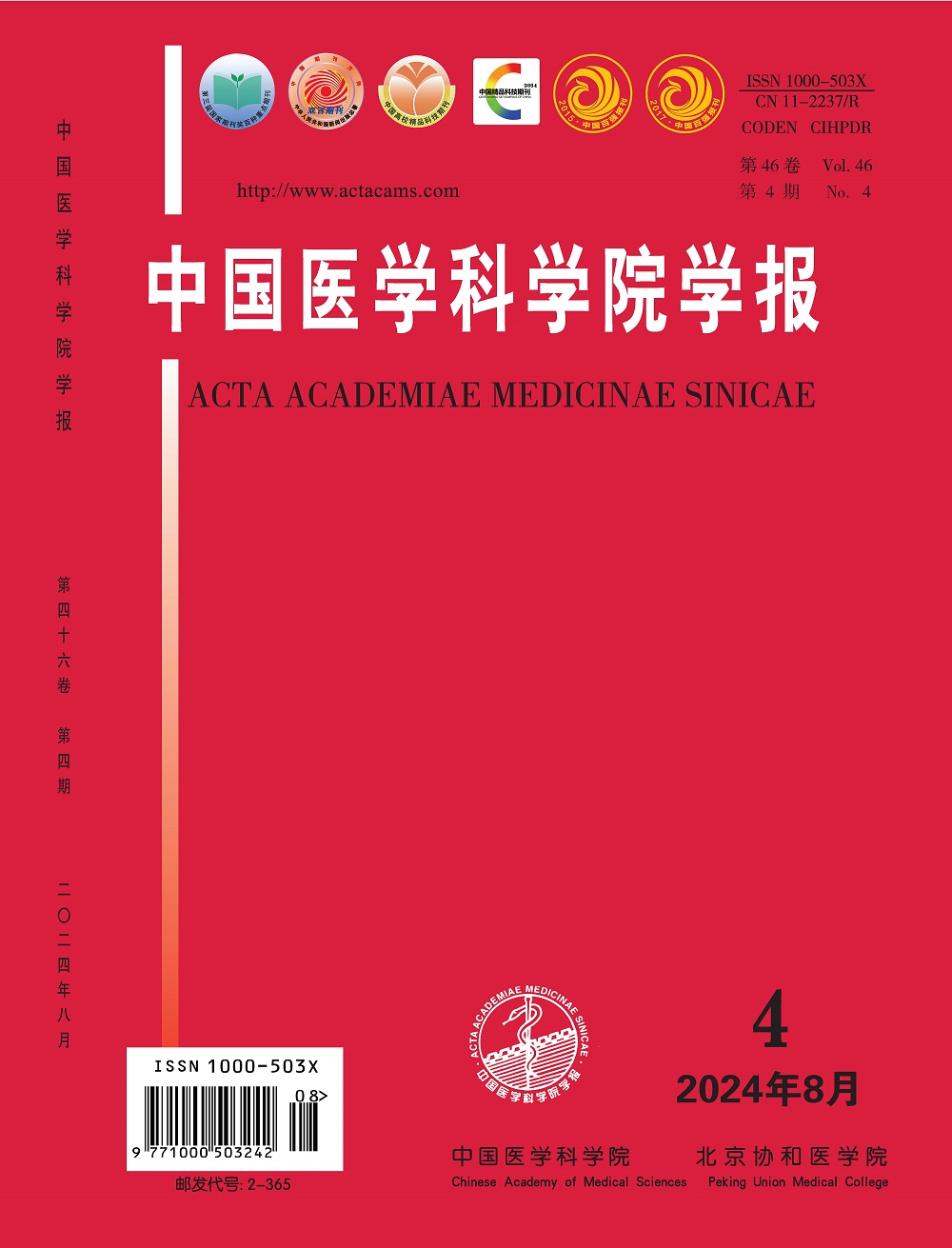
Acta Academiae Medicinae Sinicae was founded in February 1979. It is a comprehensive medical academic journal published in China and abroad, supervised by the Ministry of Health of the People's Republic of China and sponsored by the Chinese Academy of Medical Sciences and Peking Union Medical College.
The journal mainly reports the latest research results, work progress and dynamics in the fields of basic medicine, clinical medicine, pharmacy, preventive medicine, biomedicine, medical teaching and research, aiming to promote the exchange of medical information and improve the academic level of medicine. At present, the journal has been included in 10 famous foreign retrieval systems and their databases [Medline (PubMed online version), Elsevier, EMBASE, CA, WPRIM, ExtraMED, IC, JST, UPD and EBSCO-ASP]; and has been included in important domestic retrieval systems and databases [China Science Citation Database (Documentation and Information Center of the Chinese Academy of Sciences), China Core Journals Overview (Peking University Library), China Science and Technology Paper Statistical Source Database (China Science and Technology Core Journals) (China Institute of Scientific and Technological Information), China Science and Technology Journal Paper and Citation Database (China Institute of Scientific and Technological Information)].

 求助内容:
 应助结果提醒方式:


 京公网安备 11010802042870号


