Xinyi Wang, Yu Sun, Min Liu, Zixuan He, Wenjiao Cao, Weiying Liu
{"title":"[Role of Gut Mycobiome in Lung Cancer Immunotherapy: \u2029Mechanisms, Challenges and Translational Prospects].","authors":"Xinyi Wang, Yu Sun, Min Liu, Zixuan He, Wenjiao Cao, Weiying Liu","doi":"10.3779/j.issn.1009-3419.2026.101.07","DOIUrl":null,"url":null,"abstract":"<p><p>Lung cancer is one of the most common malignancies with the highest morbidity and mortality worldwide. Immune checkpoint inhibitors (ICIs) have significantly improved the prognosis of patients with advanced lung cancer, but more than half of patients derive limited benefit. The gut microbiota can regulate tumor immunity and ICIs efficacy via the gut-lung axis. Although accounting for a small proportion, the gut mycobiome exerts key immunomodulatory effects, yet relevant research lags far behind that of bacteria. This review systematically summarizes the clinical association between the gut mycobiome and lung cancer, clarifies the potential mechanisms by which the mycobiome and its metabolites influence ICIs efficacy through immune regulation, metabolic modulation, and cross-kingdom interactions, and summarizes potential strategies including dietary intervention, fecal microbiota transplantation, and fungal targeting. It provides theoretical support for establishing mycobiome-based predictive models, developing precise interventions, and improving the efficacy of ICIs.\u2029.</p>","PeriodicalId":39317,"journal":{"name":"中国肺癌杂志","volume":"29 3","pages":"200-207"},"PeriodicalIF":0.0000,"publicationDate":"2026-03-20","publicationTypes":"Journal Article","fieldsOfStudy":null,"isOpenAccess":false,"openAccessPdf":"https://www.ncbi.nlm.nih.gov/pmc/articles/PMC13168028/pdf/","citationCount":"0","resultStr":null,"platform":"Semanticscholar","paperid":null,"PeriodicalName":"中国肺癌杂志","FirstCategoryId":"3","ListUrlMain":"https://doi.org/10.3779/j.issn.1009-3419.2026.101.07","RegionNum":0,"RegionCategory":null,"ArticlePicture":[],"TitleCN":null,"AbstractTextCN":null,"PMCID":null,"EPubDate":"","PubModel":"","JCR":"Q4","JCRName":"Medicine","Score":null,"Total":0}
引用次数: 0
Abstract
Lung cancer is one of the most common malignancies with the highest morbidity and mortality worldwide. Immune checkpoint inhibitors (ICIs) have significantly improved the prognosis of patients with advanced lung cancer, but more than half of patients derive limited benefit. The gut microbiota can regulate tumor immunity and ICIs efficacy via the gut-lung axis. Although accounting for a small proportion, the gut mycobiome exerts key immunomodulatory effects, yet relevant research lags far behind that of bacteria. This review systematically summarizes the clinical association between the gut mycobiome and lung cancer, clarifies the potential mechanisms by which the mycobiome and its metabolites influence ICIs efficacy through immune regulation, metabolic modulation, and cross-kingdom interactions, and summarizes potential strategies including dietary intervention, fecal microbiota transplantation, and fungal targeting. It provides theoretical support for establishing mycobiome-based predictive models, developing precise interventions, and improving the efficacy of ICIs. .
期刊介绍:
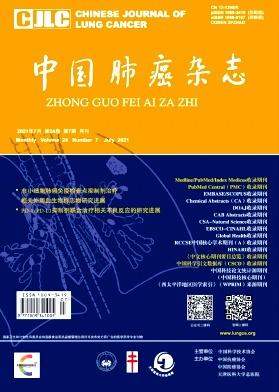
Chinese Journal of Lung Cancer(CJLC, pISSN 1009-3419, eISSN 1999-6187), a monthly Open Access journal, is hosted by Chinese Anti-Cancer Association, Chinese Antituberculosis Association, Tianjin Medical University General Hospital. CJLC was indexed in DOAJ, EMBASE/SCOPUS, Chemical Abstract(CA), CSA-Biological Science, HINARI, EBSCO-CINAHL,CABI Abstract, Global Health, CNKI, etc. Editor-in-Chief: Professor Qinghua ZHOU.

 求助内容:
 应助结果提醒方式:


 京公网安备 11010802042870号


