
Dual-response behavior of chitosan humidity sensors via tailored electrode structures

IF 4.9 3区 材料科学 Q2 MATERIALS SCIENCE, MULTIDISCIPLINARY
Huangping Yan, Zhijun Ye, Yuyang Wang, Anna He, Jingqin Cui, Rui Zhou, Gaofeng Zheng
{"title":"Dual-response behavior of chitosan humidity sensors via tailored electrode structures","authors":"Huangping Yan, Zhijun Ye, Yuyang Wang, Anna He, Jingqin Cui, Rui Zhou, Gaofeng Zheng","doi":"10.1016/j.mtcomm.2026.115285","DOIUrl":null,"url":null,"abstract":"Accurate humidity measurement is critical in environmental monitoring, industrial process control, medical diagnostics, and related fields. The use of humidity-sensitive materials exhibiting dual capacitance/resistance response characteristics offers a promising strategy to enhance sensor applicability. In this study, a chitosan humidity sensor was developed to systematically investigate its dual-response behavior under varying humidity conditions (6%–92%RH). Sensors with different interdigitated electrode configurations were fabricated and characterized at 1 kHz to evaluate their humidity sensing performance. Experimental results demonstrate outstanding sensor performance, including high response (5382.29% in capacitance and 99.99% in resistance) and rapid response/recovery times (within 10 s and 30 s, respectively). Among the configurations tested, the interdigitated electrodes design exhibits the most pronounced capacitance response, accompanied by a notable resistance response and the fastest response/recovery times, establishing it as the optimal electrode structure. The dual-response mechanism was elucidated using a water adsorption model, revealing distinct capacitance and resistance behaviors, while different electrode configurations modulate ion transport pathways and electric field distribution, accounting for the observed performance differences. Non-contact sensing tests further validate the practical potential of the dual-response characteristics. These findings provide valuable insights for optimizing the design and expanding the applicability of advanced humidity sensors.","PeriodicalId":18477,"journal":{"name":"Materials Today Communications","volume":"53 1","pages":"115285-115285"},"PeriodicalIF":4.9000,"publicationDate":"2026-04-01","publicationTypes":"Journal Article","fieldsOfStudy":null,"isOpenAccess":false,"openAccessPdf":"","citationCount":"0","resultStr":null,"platform":"Semanticscholar","paperid":null,"PeriodicalName":"Materials Today Communications","FirstCategoryId":"0","ListUrlMain":"https://doi.org/10.1016/j.mtcomm.2026.115285","RegionNum":3,"RegionCategory":"材料科学","ArticlePicture":[],"TitleCN":null,"AbstractTextCN":null,"PMCID":null,"EPubDate":"","PubModel":"","JCR":"Q2","JCRName":"MATERIALS SCIENCE, MULTIDISCIPLINARY","Score":null,"Total":0}
引用次数: 0

Abstract

Accurate humidity measurement is critical in environmental monitoring, industrial process control, medical diagnostics, and related fields. The use of humidity-sensitive materials exhibiting dual capacitance/resistance response characteristics offers a promising strategy to enhance sensor applicability. In this study, a chitosan humidity sensor was developed to systematically investigate its dual-response behavior under varying humidity conditions (6%–92%RH). Sensors with different interdigitated electrode configurations were fabricated and characterized at 1 kHz to evaluate their humidity sensing performance. Experimental results demonstrate outstanding sensor performance, including high response (5382.29% in capacitance and 99.99% in resistance) and rapid response/recovery times (within 10 s and 30 s, respectively). Among the configurations tested, the interdigitated electrodes design exhibits the most pronounced capacitance response, accompanied by a notable resistance response and the fastest response/recovery times, establishing it as the optimal electrode structure. The dual-response mechanism was elucidated using a water adsorption model, revealing distinct capacitance and resistance behaviors, while different electrode configurations modulate ion transport pathways and electric field distribution, accounting for the observed performance differences. Non-contact sensing tests further validate the practical potential of the dual-response characteristics. These findings provide valuable insights for optimizing the design and expanding the applicability of advanced humidity sensors.
定制电极结构壳聚糖湿度传感器的双响应特性
准确的湿度测量在环境监测、工业过程控制、医疗诊断和相关领域至关重要。使用具有双电容/电阻响应特性的湿度敏感材料为增强传感器的适用性提供了一种有前途的策略。本研究研制了壳聚糖湿度传感器,系统研究了其在不同湿度条件下(6% ~ 92% rh)的双响应特性。制作了具有不同交叉电极结构的传感器,并在1khz下对其湿度传感性能进行了表征。实验结果表明,该传感器具有高响应(电容为5382.29%,电阻为99.99%)和快速响应/恢复时间(分别在10 s和30 s内)等特点。在测试的配置中,交错电极设计表现出最明显的电容响应,伴随着显著的电阻响应和最快的响应/恢复时间,使其成为最佳电极结构。利用水吸附模型阐明了双响应机制,揭示了不同的电容和电阻行为,而不同的电极配置调节离子传输途径和电场分布,解释了观察到的性能差异。非接触式传感试验进一步验证了双响应特性的实际应用潜力。这些发现为优化设计和扩大先进湿度传感器的适用性提供了有价值的见解。
本文章由计算机程序翻译,如有差异,请以英文原文为准。
求助全文
约1分钟内获得全文 求助全文
来源期刊
Materials Today Communications
Materials Today Communications Materials Science-General Materials Science
CiteScore
5.20
自引率
5.30%
发文量
1783
审稿时长
51 days
期刊介绍: Materials Today Communications is a primary research journal covering all areas of materials science. The journal offers the materials community an innovative, efficient and flexible route for the publication of original research which has not found the right home on first submission.
文献相关原料
原料信息
原料厂家
1
NICOLET iS10
2
chitosan
3
glycerol
4
22
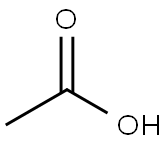
acetic acid solution
64-19-7
¥15.00-¥57499.90
×
引用
GB/T 7714-2015
复制
MLA
复制
APA
复制
导出至
BibTeX EndNote RefMan NoteFirst NoteExpress
×
提示
您的信息不完整,为了账户安全,请先补充。
现在去补充
×
提示
您因"违规操作"
具体请查看互助需知
我知道了
×
提示
确定
请完成安全验证×
copy
已复制链接
快去分享给好友吧!
我知道了
右上角分享
点击右上角分享
0
联系我们:info@booksci.cn Book学术提供免费学术资源搜索服务,方便国内外学者检索中英文文献。致力于提供最便捷和优质的服务体验。 Copyright © 2023 布克学术 All rights reserved.
京ICP备2023020795号-1
ghs 京公网安备 11010802042870号
Book学术文献互助
Book学术文献互助群
群 号:604180095
Book学术官方微信
小红书



