{"title":"Eupalinolide B Ameliorates Diabetic Kidney Disease via Inhibition of Cell Division Cycle 37-Mediated Inflammatory Pathways.","authors":"Huiying Li, Guanjun Li, Ling Huang, Tianyun Fan, Ying Zhang, Junzhe Zhang, Liwei Gu, Jianyou Wang, Li Hu, Huan Tang, Yali Song, Qingming Luo, Jigang Wang","doi":"10.1681/ASN.0000001122","DOIUrl":null,"url":null,"abstract":"<p><strong>Key points: </strong>A natural sesquiterpene lactone compound Eupalinolide B protected against diabetic kidney disease. Eupalinolide B targeted cell division cycle 37 protein and disrupted the interaction between cell division cycle 37 and heat shock protein 90. The renoprotective effects of Eupalinolide B were dependent on cell division cycle 37-mediated inflammatory pathways in diabetic kidney disease.</p><p><strong>Background: </strong>Diabetic kidney disease (DKD) is a major complication of diabetes, driven by chronic inflammation throughout its initiation and progression. Developing effective novel therapeutics is urgently needed. Eupalinolide B, a natural small compound derived from Eupatorium lindleyanum DC ., has multiple bioactive properties, notably antitumor and anti-inflammatory activities. However, the therapeutic potential of Eupalinolide B for DKD remains unclear. This study was to investigate the potential effects, direct targets, and pharmacologic mechanisms of Eupalinolide B against DKD, and discover novel therapeutic targets in the progression of DKD.</p><p><strong>Methods: </strong>The therapeutic effects of Eupalinolide B were assessed in high glucose-induced rat mesangial (HBZY-1) cells and db/db diabetic mice. Targeting and binding site engagement of Eupalinolide B was validated through activity-based protein profiling technology, pull-down assay, surface plasmon resonance analysis, and high-resolution mass spectrometry analysis. The target protein was knocked down to investigate its role in DKD-related inflammation and determine whether Eupalinolide B's renoprotective effects depend on the protein. The impact of Eupalinolide B on protein-protein interactions was examined using immunoblotting, immunohistochemistry, immunofluorescence, and coimmunoprecipitation assays.</p><p><strong>Results: </strong>Eupalinolide B was observed to ameliorate the glomerular filtration dysfunction and histopathologic damage in db/db mice and suppress NF-κB and mitogen-activated protein kinase proinflammatory pathways in both high glucose-induced HBZY-1 cells and db/db mice. In addition, we found that Eupalinolide B directly bound to cysteine 64 and 234 residues of cell division cycle 37 (CDC37), the essential cochaperone of heat shock protein 90 (HSP90). Mechanistically, by targeting CDC37, Eupalinolide B disrupted the interaction between CDC37 and HSP90, consequently blocking downstream proinflammatory signaling upon high glucose induction in HBZY-1 cells.</p><p><strong>Conclusions: </strong>Eupalinolide B was identified as a novel CDC37-targeting agent with renoprotective and anti-inflammatory effects against DKD that functions by inhibiting CDC37-HSP90 interaction.</p>","PeriodicalId":17217,"journal":{"name":"Journal of The American Society of Nephrology","volume":" ","pages":"2146-2161"},"PeriodicalIF":9.7000,"publicationDate":"2026-10-01","publicationTypes":"Journal Article","fieldsOfStudy":null,"isOpenAccess":false,"openAccessPdf":"https://www.ncbi.nlm.nih.gov/pmc/articles/PMC13641490/pdf/","citationCount":"0","resultStr":null,"platform":"Semanticscholar","paperid":null,"PeriodicalName":"Journal of The American Society of Nephrology","FirstCategoryId":"3","ListUrlMain":"https://doi.org/10.1681/ASN.0000001122","RegionNum":1,"RegionCategory":"医学","ArticlePicture":[],"TitleCN":null,"AbstractTextCN":null,"PMCID":null,"EPubDate":"2026/5/11 0:00:00","PubModel":"Epub","JCR":"Q1","JCRName":"UROLOGY & NEPHROLOGY","Score":null,"Total":0}
引用次数: 0
Abstract
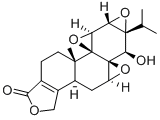
Key points: A natural sesquiterpene lactone compound Eupalinolide B protected against diabetic kidney disease. Eupalinolide B targeted cell division cycle 37 protein and disrupted the interaction between cell division cycle 37 and heat shock protein 90. The renoprotective effects of Eupalinolide B were dependent on cell division cycle 37-mediated inflammatory pathways in diabetic kidney disease.
Background: Diabetic kidney disease (DKD) is a major complication of diabetes, driven by chronic inflammation throughout its initiation and progression. Developing effective novel therapeutics is urgently needed. Eupalinolide B, a natural small compound derived from Eupatorium lindleyanum DC ., has multiple bioactive properties, notably antitumor and anti-inflammatory activities. However, the therapeutic potential of Eupalinolide B for DKD remains unclear. This study was to investigate the potential effects, direct targets, and pharmacologic mechanisms of Eupalinolide B against DKD, and discover novel therapeutic targets in the progression of DKD.
Methods: The therapeutic effects of Eupalinolide B were assessed in high glucose-induced rat mesangial (HBZY-1) cells and db/db diabetic mice. Targeting and binding site engagement of Eupalinolide B was validated through activity-based protein profiling technology, pull-down assay, surface plasmon resonance analysis, and high-resolution mass spectrometry analysis. The target protein was knocked down to investigate its role in DKD-related inflammation and determine whether Eupalinolide B's renoprotective effects depend on the protein. The impact of Eupalinolide B on protein-protein interactions was examined using immunoblotting, immunohistochemistry, immunofluorescence, and coimmunoprecipitation assays.
Results: Eupalinolide B was observed to ameliorate the glomerular filtration dysfunction and histopathologic damage in db/db mice and suppress NF-κB and mitogen-activated protein kinase proinflammatory pathways in both high glucose-induced HBZY-1 cells and db/db mice. In addition, we found that Eupalinolide B directly bound to cysteine 64 and 234 residues of cell division cycle 37 (CDC37), the essential cochaperone of heat shock protein 90 (HSP90). Mechanistically, by targeting CDC37, Eupalinolide B disrupted the interaction between CDC37 and HSP90, consequently blocking downstream proinflammatory signaling upon high glucose induction in HBZY-1 cells.
Conclusions: Eupalinolide B was identified as a novel CDC37-targeting agent with renoprotective and anti-inflammatory effects against DKD that functions by inhibiting CDC37-HSP90 interaction.
期刊介绍:
The Journal of the American Society of Nephrology (JASN) stands as the preeminent kidney journal globally, offering an exceptional synthesis of cutting-edge basic research, clinical epidemiology, meta-analysis, and relevant editorial content. Representing a comprehensive resource, JASN encompasses clinical research, editorials distilling key findings, perspectives, and timely reviews.
Editorials are skillfully crafted to elucidate the essential insights of the parent article, while JASN actively encourages the submission of Letters to the Editor discussing recently published articles. The reviews featured in JASN are consistently erudite and comprehensive, providing thorough coverage of respective fields. Since its inception in July 1990, JASN has been a monthly publication.
JASN publishes original research reports and editorial content across a spectrum of basic and clinical science relevant to the broad discipline of nephrology. Topics covered include renal cell biology, developmental biology of the kidney, genetics of kidney disease, cell and transport physiology, hemodynamics and vascular regulation, mechanisms of blood pressure regulation, renal immunology, kidney pathology, pathophysiology of kidney diseases, nephrolithiasis, clinical nephrology (including dialysis and transplantation), and hypertension. Furthermore, articles addressing healthcare policy and care delivery issues relevant to nephrology are warmly welcomed.

 求助内容:
 应助结果提醒方式:


 京公网安备 11010802042870号


