L Y Wang, M Z Jiang, Z Y Wang, M J Yao, Y Guo, J Yan
{"title":"[Current status and challenges of standard formulation in the field of infectious disease prevention and control in China].","authors":"L Y Wang, M Z Jiang, Z Y Wang, M J Yao, Y Guo, J Yan","doi":"10.3760/cma.j.cn112150-20250902-00849","DOIUrl":null,"url":null,"abstract":"<p><p>The study obtained 1 358 current standards through the National Public Service Platform for Standards Information and systematically reviewed and analyzed the current distribution and demand for standards related to infectious diseases in China. In terms of content coverage, disease-specific standards predominated, accounting for 841 items (61.93%), whereas 517 standards (38.07%) were general standards involving two or more infectious diseases or a specific field of infectious diseases. From the perspective of prevention and control, the current standards are mainly concentrated in areas such as \"pathogen detection\" and \"disease diagnosis, \" while standards in fields including \"laboratory data security\" and \"drug prophylaxis\" remain relatively insufficient. In addition, the current standard system still faces several challenges, including long development cycles, insufficient cross-departmental collaboration, and limited alignment with international standards. It is therefore recommended to optimize the existing standards by controlling excessive growth while improving quality and to establish cross-departmental and multidisciplinary collaborative mechanisms to enhance the scientific rigor and systematic nature of standard development. These efforts may better address the challenges of infectious disease prevention and control and provide a reference for improving the standard system for infectious disease prevention and control in China.</p>","PeriodicalId":24033,"journal":{"name":"中华预防医学杂志","volume":"60 ","pages":"1-7"},"PeriodicalIF":0.0000,"publicationDate":"2026-05-08","publicationTypes":"Journal Article","fieldsOfStudy":null,"isOpenAccess":false,"openAccessPdf":"","citationCount":"0","resultStr":null,"platform":"Semanticscholar","paperid":null,"PeriodicalName":"中华预防医学杂志","FirstCategoryId":"3","ListUrlMain":"https://doi.org/10.3760/cma.j.cn112150-20250902-00849","RegionNum":0,"RegionCategory":null,"ArticlePicture":[],"TitleCN":null,"AbstractTextCN":null,"PMCID":null,"EPubDate":"","PubModel":"","JCR":"Q3","JCRName":"Medicine","Score":null,"Total":0}
引用次数: 0
Abstract
The study obtained 1 358 current standards through the National Public Service Platform for Standards Information and systematically reviewed and analyzed the current distribution and demand for standards related to infectious diseases in China. In terms of content coverage, disease-specific standards predominated, accounting for 841 items (61.93%), whereas 517 standards (38.07%) were general standards involving two or more infectious diseases or a specific field of infectious diseases. From the perspective of prevention and control, the current standards are mainly concentrated in areas such as "pathogen detection" and "disease diagnosis, " while standards in fields including "laboratory data security" and "drug prophylaxis" remain relatively insufficient. In addition, the current standard system still faces several challenges, including long development cycles, insufficient cross-departmental collaboration, and limited alignment with international standards. It is therefore recommended to optimize the existing standards by controlling excessive growth while improving quality and to establish cross-departmental and multidisciplinary collaborative mechanisms to enhance the scientific rigor and systematic nature of standard development. These efforts may better address the challenges of infectious disease prevention and control and provide a reference for improving the standard system for infectious disease prevention and control in China.
期刊介绍:
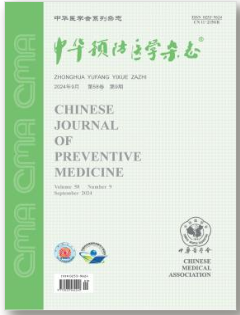
Chinese Journal of Preventive Medicine (CJPM), the successor to Chinese Health Journal , was initiated on October 1, 1953. In 1960, it was amalgamated with the Chinese Medical Journal and the Journal of Medical History and Health Care , and thereafter, was renamed as People’s Care . On November 25, 1978, the publication was denominated as Chinese Journal of Preventive Medicine . The contents of CJPM deal with a wide range of disciplines and technologies including epidemiology, environmental health, nutrition and food hygiene, occupational health, hygiene for children and adolescents, radiological health, toxicology, biostatistics, social medicine, pathogenic and epidemiological research in malignant tumor, surveillance and immunization.

 求助内容:
求助内容: 应助结果提醒方式:

 京公网安备 11010802042870号


