{"title":"Upgrading of Biomass Pyrolysis Oil Quality Via the Coupled Process of Small Molecule Catalytic Activation and Biomass Pyrolysis","authors":"Lixia He, Ruiyuan Tang, Zhibing Shen, Tingting Yang, Juntao Zhang","doi":"10.1007/s12155-026-11017-z","DOIUrl":null,"url":null,"abstract":"<div><p>Currently, the comprehensive utilization of biomass has attracted significant attention, and fast pyrolysis is increasingly regarded as one of the most promising technologies for biomass conversion. In this study, a fixed-bed reactor was employed to investigate the effects of rice husk pyrolysis under various atmospheres (H<sub>2</sub>, CH<sub>4</sub>, H<sub>2</sub>-CH<sub>4</sub>) and catalysts conditions. The results indicate that the bio-oil yield reached 37.30 wt% at 500 ℃ for 30 min under an H<sub>2</sub>-CH<sub>4</sub> (11:5) mixed atmosphere. Among the metal-modified HZSM-5 catalysts with different zinc loadings, the variant containing 5% Zn demonstrated superior catalytic performance. This improvement was attributed to the uniform crystalline morphology and hierarchical porous structure of HZSM-5, which facilitate biomass pyrolysis. Furthermore, <sup>13</sup>CH<sub>4</sub> isotope tracer experiments combined with nuclear magnetic resonance (NMR) analysis of bio-oil confirmed that the small-molecule gases produced reactive •CHₓ and •H radicals via catalytic activation. These radicals participated in the biomass pyrolysis reaction and promoted the formation of phenolic compounds.</p></div>","PeriodicalId":487,"journal":{"name":"BioEnergy Research","volume":"19 1","pages":""},"PeriodicalIF":3.0000,"publicationDate":"2026-05-09","publicationTypes":"Journal Article","fieldsOfStudy":null,"isOpenAccess":false,"openAccessPdf":"","citationCount":"0","resultStr":null,"platform":"Semanticscholar","paperid":null,"PeriodicalName":"BioEnergy Research","FirstCategoryId":"5","ListUrlMain":"https://link.springer.com/article/10.1007/s12155-026-11017-z","RegionNum":3,"RegionCategory":"工程技术","ArticlePicture":[],"TitleCN":null,"AbstractTextCN":null,"PMCID":null,"EPubDate":"","PubModel":"","JCR":"Q3","JCRName":"ENERGY & FUELS","Score":null,"Total":0}
引用次数: 0
Abstract
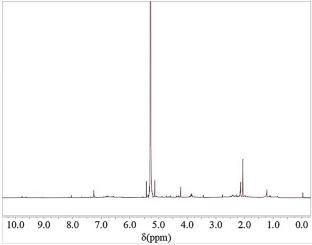
Currently, the comprehensive utilization of biomass has attracted significant attention, and fast pyrolysis is increasingly regarded as one of the most promising technologies for biomass conversion. In this study, a fixed-bed reactor was employed to investigate the effects of rice husk pyrolysis under various atmospheres (H2, CH4, H2-CH4) and catalysts conditions. The results indicate that the bio-oil yield reached 37.30 wt% at 500 ℃ for 30 min under an H2-CH4 (11:5) mixed atmosphere. Among the metal-modified HZSM-5 catalysts with different zinc loadings, the variant containing 5% Zn demonstrated superior catalytic performance. This improvement was attributed to the uniform crystalline morphology and hierarchical porous structure of HZSM-5, which facilitate biomass pyrolysis. Furthermore, 13CH4 isotope tracer experiments combined with nuclear magnetic resonance (NMR) analysis of bio-oil confirmed that the small-molecule gases produced reactive •CHₓ and •H radicals via catalytic activation. These radicals participated in the biomass pyrolysis reaction and promoted the formation of phenolic compounds.
期刊介绍:
BioEnergy Research fills a void in the rapidly growing area of feedstock biology research related to biomass, biofuels, and bioenergy. The journal publishes a wide range of articles, including peer-reviewed scientific research, reviews, perspectives and commentary, industry news, and government policy updates. Its coverage brings together a uniquely broad combination of disciplines with a common focus on feedstock biology and science, related to biomass, biofeedstock, and bioenergy production.


 求助内容:
求助内容: 应助结果提醒方式:

 京公网安备 11010802042870号


