Nadezhda Polekhina, Valeria Osipova, Sergey Akkuzin, Igor Litovchenko, Kseniya Spiridonova, Vyacheslav Chernov, Maria Leontyeva-Smirnova
{"title":"Effect of Long-Term Aging at 580 °C on Microstructure and Mechanical Properties of 12% Chromium Heat-Resistant Ferritic–Martensitic Steel","authors":"Nadezhda Polekhina, Valeria Osipova, Sergey Akkuzin, Igor Litovchenko, Kseniya Spiridonova, Vyacheslav Chernov, Maria Leontyeva-Smirnova","doi":"10.1007/s11665-025-12811-0","DOIUrl":null,"url":null,"abstract":"<p>The effect of long-term (1000-5000 h) aging at 580 °C on the microstructure and mechanical properties of 12% Cr ferritic–martensitic steel 16Cr12MnWSiVNbB (EP-823-Sh type) is studied. Steel aging results in the following structural changes in comparison with the initial state: lower dislocation density and fewer crystal lattice microdistortions due to polygonization and larger number density and volume fraction of the second-phase particles. After 5000 h of aging, finely dispersed precipitates of the Laves phase (Fe, Cr)<sub>2</sub>(Mo, W) heterogeneously nucleate at the grain boundaries and the M<sub>23</sub>C<sub>6</sub> carbides. Aging causes depletion of the matrix in Mo, which diffuses into the M<sub>23</sub>C<sub>6</sub> carbides (after 1000 h) and Laves phase particles (after 5000 h). It is accompanied by the steel crystal lattice parameter decrease. The yield stress and strength of steel at room temperature are reduced (by ≈ 1.2 times), compared to those in the initial state, due to a decreased solid-solution and dislocation strengthening efficiency. The precipitation of Laves phase after 5000 h provides additional dispersion strengthening, increasing the yield strength, compared to that after 1000 h of aging. At the elevated test temperatures (580 and 650 °C) the steel strength properties remain unchanged. A fractographic analysis shows predominantly ductile dimple transcrystalline fracture at the temperatures within 20-650 °C. After 5000 h of aging, there are areas of intercrystalline fracture, indicating a local embrittlement of the boundaries due to the Laves phase precipitates.</p>","PeriodicalId":644,"journal":{"name":"Journal of Materials Engineering and Performance","volume":"35 17","pages":"17044 - 17059"},"PeriodicalIF":2.0000,"publicationDate":"2025-11-28","publicationTypes":"Journal Article","fieldsOfStudy":null,"isOpenAccess":false,"openAccessPdf":"","citationCount":"0","resultStr":null,"platform":"Semanticscholar","paperid":null,"PeriodicalName":"Journal of Materials Engineering and Performance","FirstCategoryId":"88","ListUrlMain":"https://link.springer.com/article/10.1007/s11665-025-12811-0","RegionNum":4,"RegionCategory":"材料科学","ArticlePicture":[],"TitleCN":null,"AbstractTextCN":null,"PMCID":null,"EPubDate":"","PubModel":"","JCR":"Q3","JCRName":"MATERIALS SCIENCE, MULTIDISCIPLINARY","Score":null,"Total":0}
引用次数: 0
Abstract
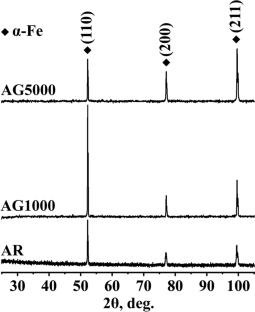
The effect of long-term (1000-5000 h) aging at 580 °C on the microstructure and mechanical properties of 12% Cr ferritic–martensitic steel 16Cr12MnWSiVNbB (EP-823-Sh type) is studied. Steel aging results in the following structural changes in comparison with the initial state: lower dislocation density and fewer crystal lattice microdistortions due to polygonization and larger number density and volume fraction of the second-phase particles. After 5000 h of aging, finely dispersed precipitates of the Laves phase (Fe, Cr)2(Mo, W) heterogeneously nucleate at the grain boundaries and the M23C6 carbides. Aging causes depletion of the matrix in Mo, which diffuses into the M23C6 carbides (after 1000 h) and Laves phase particles (after 5000 h). It is accompanied by the steel crystal lattice parameter decrease. The yield stress and strength of steel at room temperature are reduced (by ≈ 1.2 times), compared to those in the initial state, due to a decreased solid-solution and dislocation strengthening efficiency. The precipitation of Laves phase after 5000 h provides additional dispersion strengthening, increasing the yield strength, compared to that after 1000 h of aging. At the elevated test temperatures (580 and 650 °C) the steel strength properties remain unchanged. A fractographic analysis shows predominantly ductile dimple transcrystalline fracture at the temperatures within 20-650 °C. After 5000 h of aging, there are areas of intercrystalline fracture, indicating a local embrittlement of the boundaries due to the Laves phase precipitates.
期刊介绍:
ASM International''s Journal of Materials Engineering and Performance focuses on solving day-to-day engineering challenges, particularly those involving components for larger systems. The journal presents a clear understanding of relationships between materials selection, processing, applications and performance.
The Journal of Materials Engineering covers all aspects of materials selection, design, processing, characterization and evaluation, including how to improve materials properties through processes and process control of casting, forming, heat treating, surface modification and coating, and fabrication.
Testing and characterization (including mechanical and physical tests, NDE, metallography, failure analysis, corrosion resistance, chemical analysis, surface characterization, and microanalysis of surfaces, features and fractures), and industrial performance measurement are also covered

 求助内容:
求助内容: 应助结果提醒方式:

 京公网安备 11010802042870号


