{"title":"Adsorption of malachite green from aqueous solutions using a novel SnO2/PANI-Co-PPy nanocomposite","authors":"Gourang Damle, Alok Tiwari, Shivendu Saxena, Vishal Sandhwar, Diksha Saxena, Vishal Mishra and Dipak Jadhav","doi":"10.1039/D6RA01276K","DOIUrl":null,"url":null,"abstract":"<p >Water pollution from dye-containing industrial effluents poses significant environmental and health threats, particularly due to persistent cationic dyes like malachite green (MG). The present work demonstrates a novel modification of a green process for synthesizing tin oxide (SnO<small><sub>2</sub></small>) by copolymerising polyaniline (PANI) and polypyrrole (PPy) <em>via in situ</em> polymerisation for the removal of MG dye from aqueous solutions. The SnO<small><sub>2</sub></small>/PANI-Co-PPy nanocomposite was analyzed analytically using Fourier transform infrared (FTIR) spectroscopy, X-ray diffraction (XRD), scanning electron microscopy-energy-dispersive X-ray spectroscopy (SEM-EDX), and Barrett–Joyner–Halenda (BJH) and Brunauer–Emmett–Teller (BET) analyses. The result showed that the uniform layering of PANI and PPy on the SnO<small><sub>2</sub></small> surface enables tight bonding between the polymers and SnO<small><sub>2</sub></small>. Several factors influence the adsorption of MG dye from synthetic simulated wastewater by SnO<small><sub>2</sub></small>/PANI-Co-PPy, including adsorbent dose (5 to 20 mg), time (15 to 60 minutes), pH (4 to 11), and temperature (303 to 343 K). The surface area available for the adsorption was 20 m<small><sup>2</sup></small> g<small><sup>−1</sup></small> with a pore size of 13.09 nm, showing maximum adsorption capacity (<em>Q</em><small><sub>m</sub></small>) of 1250 mg g<small><sup>−1</sup></small> and 97.06% removal at an optimized dose of 12.5 mg L<small><sup>−1</sup></small>, pH 9 and initial MG concentration of 50 mg L<small><sup>−1</sup></small> in 30 minutes. The kinetic study of the SnO<small><sub>2</sub></small>/PANI-Co-PPy nanocomposite showed the suitability of the second-order kinetic model, achieving equilibrium in 30 minutes at an initial concentration of 50 mg L<small><sup>−1</sup></small>. For the composite, Δ<em>S</em> was >0 (high randomness at the solid–liquid interface) along with exothermic characteristics (Δ<em>H</em> < 0). Overall, SnO<small><sub>2</sub></small>/PANI-Co-PPy was an effective adsorbing material with high removal efficiency for treating wastewater contaminated with MG dye.</p>","PeriodicalId":102,"journal":{"name":"RSC Advances","volume":" 27","pages":" 24356-24369"},"PeriodicalIF":4.6000,"publicationDate":"2026-05-08","publicationTypes":"Journal Article","fieldsOfStudy":null,"isOpenAccess":false,"openAccessPdf":"https://pubs.rsc.org/en/content/articlepdf/2026/ra/d6ra01276k?page=search","citationCount":"0","resultStr":null,"platform":"Semanticscholar","paperid":null,"PeriodicalName":"RSC Advances","FirstCategoryId":"92","ListUrlMain":"https://pubs.rsc.org/en/content/articlelanding/2026/ra/d6ra01276k","RegionNum":3,"RegionCategory":"化学","ArticlePicture":[],"TitleCN":null,"AbstractTextCN":null,"PMCID":null,"EPubDate":"","PubModel":"","JCR":"Q2","JCRName":"CHEMISTRY, MULTIDISCIPLINARY","Score":null,"Total":0}
引用次数: 0
Abstract
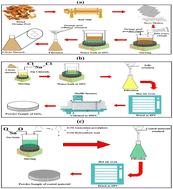
Water pollution from dye-containing industrial effluents poses significant environmental and health threats, particularly due to persistent cationic dyes like malachite green (MG). The present work demonstrates a novel modification of a green process for synthesizing tin oxide (SnO2) by copolymerising polyaniline (PANI) and polypyrrole (PPy) via in situ polymerisation for the removal of MG dye from aqueous solutions. The SnO2/PANI-Co-PPy nanocomposite was analyzed analytically using Fourier transform infrared (FTIR) spectroscopy, X-ray diffraction (XRD), scanning electron microscopy-energy-dispersive X-ray spectroscopy (SEM-EDX), and Barrett–Joyner–Halenda (BJH) and Brunauer–Emmett–Teller (BET) analyses. The result showed that the uniform layering of PANI and PPy on the SnO2 surface enables tight bonding between the polymers and SnO2. Several factors influence the adsorption of MG dye from synthetic simulated wastewater by SnO2/PANI-Co-PPy, including adsorbent dose (5 to 20 mg), time (15 to 60 minutes), pH (4 to 11), and temperature (303 to 343 K). The surface area available for the adsorption was 20 m2 g−1 with a pore size of 13.09 nm, showing maximum adsorption capacity (Qm) of 1250 mg g−1 and 97.06% removal at an optimized dose of 12.5 mg L−1, pH 9 and initial MG concentration of 50 mg L−1 in 30 minutes. The kinetic study of the SnO2/PANI-Co-PPy nanocomposite showed the suitability of the second-order kinetic model, achieving equilibrium in 30 minutes at an initial concentration of 50 mg L−1. For the composite, ΔS was >0 (high randomness at the solid–liquid interface) along with exothermic characteristics (ΔH < 0). Overall, SnO2/PANI-Co-PPy was an effective adsorbing material with high removal efficiency for treating wastewater contaminated with MG dye.
期刊介绍:
An international, peer-reviewed journal covering all of the chemical sciences, including multidisciplinary and emerging areas. RSC Advances is a gold open access journal allowing researchers free access to research articles, and offering an affordable open access publishing option for authors around the world.

 求助内容:
求助内容: 应助结果提醒方式:

 京公网安备 11010802042870号


