
Dopaminergic neurons are vulnerable to dysregulation of YEATS2-dependent calcium homeostasis
IF 4.1
2区 综合性期刊
Q1 MULTIDISCIPLINARY SCIENCES
引用次数: 0
Abstract
YEATS2 is a chromatin-associated factor that regulates dopaminergic (DAergic) synaptic integrity, although its mechanism of action remains unclear. Here, we profiled head transcriptomic changes following neuron-specific YEATS2 knockdown in Drosophila. This analysis revealed coordinated downregulation of metabolic genes alongside upregulation of G protein-coupled receptor (GPCR) signaling components. YEATS2 loss led to elevated intracellular calcium, indicating calcium overload in the nervous system, and was associated with seizure-like activity, locomotor deficits, and loss of DAergic neurons, while sparing glutamatergic neurons and mushroom bodies. Genetic and pharmacological inhibition of store-operated calcium entry (SOCE) via the Orai channel, as well as blockade of ryanodine receptors, improved stress-induced phenotypes, restored calcium balance, and preserved DAergic neuron integrity. Together, these findings identify ER-centered calcium dysregulation as a key downstream consequence of YEATS2 loss and define a YEATS2-dependent epigenetic-calcium axis that links chromatin regulation to neuronal excitability and selective dopaminergic vulnerability.
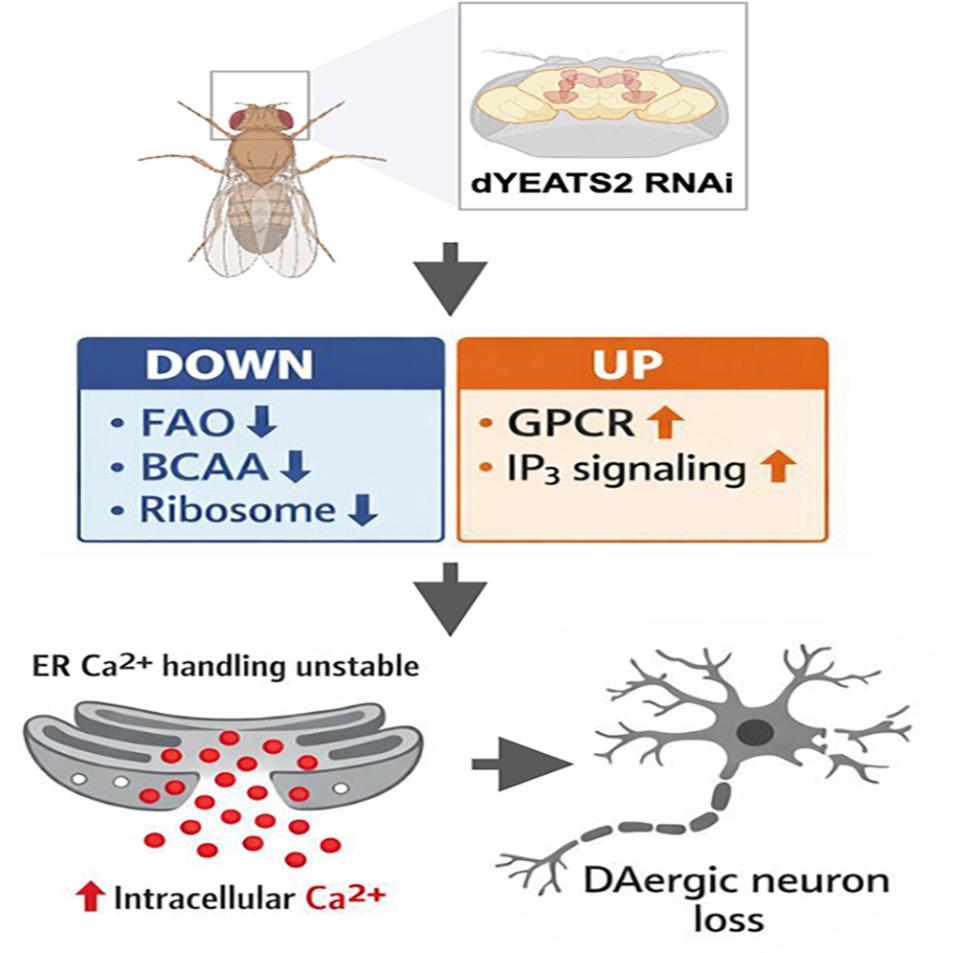
多巴胺能神经元易受yeats2依赖性钙稳态失调的影响
YEATS2是一种染色质相关因子,可调节多巴胺能突触完整性,但其作用机制尚不清楚。在这里,我们分析了果蝇神经元特异性YEATS2敲低后头部转录组的变化。该分析揭示了代谢基因的协同下调以及G蛋白偶联受体(GPCR)信号传导成分的上调。YEATS2缺失导致细胞内钙升高,表明神经系统钙超载,并与癫痫样活动、运动缺陷和DAergic神经元的丢失有关,而保留谷氨酸能神经元和蘑菇体。通过Orai通道的储存操作钙进入(SOCE)的遗传和药理学抑制,以及对ryanodine受体的阻断,改善了应激诱导的表型,恢复了钙平衡,并保持了能神经元的完整性。总之,这些发现确定了内质网为中心的钙失调是YEATS2缺失的关键下游后果,并确定了YEATS2依赖性表观遗传钙轴,该轴将染色质调节与神经元兴奋性和选择性多巴胺能易感性联系起来。
本文章由计算机程序翻译,如有差异,请以英文原文为准。
求助全文
约1分钟内获得全文
求助全文
来源期刊

iScience
Multidisciplinary-Multidisciplinary
CiteScore
7.20
自引率
1.70%
发文量
1972
审稿时长
6 weeks
期刊介绍:
Science has many big remaining questions. To address them, we will need to work collaboratively and across disciplines. The goal of iScience is to help fuel that type of interdisciplinary thinking. iScience is a new open-access journal from Cell Press that provides a platform for original research in the life, physical, and earth sciences. The primary criterion for publication in iScience is a significant contribution to a relevant field combined with robust results and underlying methodology. The advances appearing in iScience include both fundamental and applied investigations across this interdisciplinary range of topic areas. To support transparency in scientific investigation, we are happy to consider replication studies and papers that describe negative results.
We know you want your work to be published quickly and to be widely visible within your community and beyond. With the strong international reputation of Cell Press behind it, publication in iScience will help your work garner the attention and recognition it merits. Like all Cell Press journals, iScience prioritizes rapid publication. Our editorial team pays special attention to high-quality author service and to efficient, clear-cut decisions based on the information available within the manuscript. iScience taps into the expertise across Cell Press journals and selected partners to inform our editorial decisions and help publish your science in a timely and seamless way.
 求助内容:
求助内容: 应助结果提醒方式:

 京公网安备 11010802042870号


