{"title":"Imidazolium-based Ionic Liquids Modified Amberlite Resin for Valeric Acid Removal from Water","authors":"Özge Yalçın, Nilay Baylan, Süheyla Çehreli","doi":"10.1007/s11270-026-09526-w","DOIUrl":null,"url":null,"abstract":"<div><p>This paper attempts to test the ionic liquids (ILs) modified Amberlite XAD-4 resins as novel and effective adsorbents for valeric acid (VA) removal from aqueous solutions by adsorption. In this regard, the adsorption performance and mechanism of Amberlite XAD-4 resin with imidazolium-based ILs, namely 1-butyl-3-methylimidazolium hexafluorophosphate ([BMIM][PF<sub>6</sub>]), and 1-butyl-3-methylimidazolium bis(trifluoromethylsulfonyl)imide ([BMIM][Tf<sub>2</sub>N]), were investigated. The unmodified XAD-4 and ionic liquids modified Amberlite XAD-4 resins (XAD-4/IL1 and XAD-4/IL2) have been characterized with FTIR, XRD, and SEM analysis. The characterization results confirmed that the successful IL modification onto the resin surface. In batch adsorption experiments, the influence of initial VA concentrations (1–3% w/w), temperature (25–45 <sup>o</sup>C), and resin dosage (0.01–0.05 g) on adsorption capacity was conducted. Additionally, adsorption isotherm, kinetics and thermodynamic modeling were carried out to determine the adsorption mechanism. IL modification, specifically with [Tf₂N]⁻ based anion, significantly improved the adsorption performance of Amberlite XAD-4 for VA. The highest q<sub>e</sub> values were determined at the conditions of lower temperature (25 °C), maximum initial VA concentration (3% w/w), and minumum adsorbent dosage (0.01 g) as 1006.41 mg.g<sup>−1</sup>, 1123.31 mg.g<sup>−1</sup>, and 1307.94 mg.g<sup>−1</sup> for XAD-4, XAD-4/IL1 and XAD-4/IL2, respectively. Imidazolium-based ILs modified XAD-4 can be an alternative as an innovative and effective adsorbent for VA uptake from aqueous medium.</p></div>","PeriodicalId":808,"journal":{"name":"Water, Air, & Soil Pollution","volume":"237 15","pages":""},"PeriodicalIF":3.0000,"publicationDate":"2026-05-05","publicationTypes":"Journal Article","fieldsOfStudy":null,"isOpenAccess":false,"openAccessPdf":"https://link.springer.com/content/pdf/10.1007/s11270-026-09526-w.pdf","citationCount":"0","resultStr":null,"platform":"Semanticscholar","paperid":null,"PeriodicalName":"Water, Air, & Soil Pollution","FirstCategoryId":"6","ListUrlMain":"https://link.springer.com/article/10.1007/s11270-026-09526-w","RegionNum":4,"RegionCategory":"环境科学与生态学","ArticlePicture":[],"TitleCN":null,"AbstractTextCN":null,"PMCID":null,"EPubDate":"","PubModel":"","JCR":"Q2","JCRName":"ENVIRONMENTAL SCIENCES","Score":null,"Total":0}
引用次数: 0
Abstract
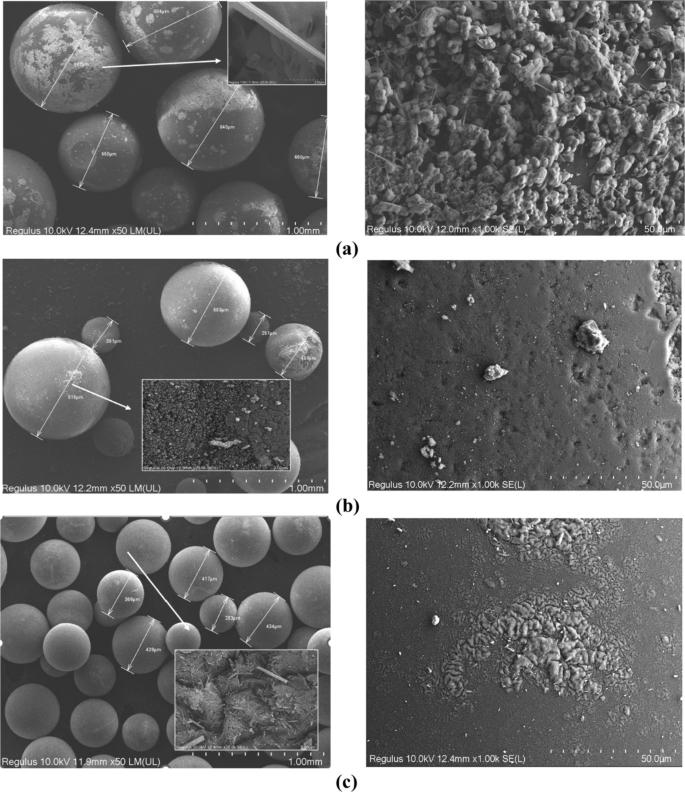
This paper attempts to test the ionic liquids (ILs) modified Amberlite XAD-4 resins as novel and effective adsorbents for valeric acid (VA) removal from aqueous solutions by adsorption. In this regard, the adsorption performance and mechanism of Amberlite XAD-4 resin with imidazolium-based ILs, namely 1-butyl-3-methylimidazolium hexafluorophosphate ([BMIM][PF6]), and 1-butyl-3-methylimidazolium bis(trifluoromethylsulfonyl)imide ([BMIM][Tf2N]), were investigated. The unmodified XAD-4 and ionic liquids modified Amberlite XAD-4 resins (XAD-4/IL1 and XAD-4/IL2) have been characterized with FTIR, XRD, and SEM analysis. The characterization results confirmed that the successful IL modification onto the resin surface. In batch adsorption experiments, the influence of initial VA concentrations (1–3% w/w), temperature (25–45 oC), and resin dosage (0.01–0.05 g) on adsorption capacity was conducted. Additionally, adsorption isotherm, kinetics and thermodynamic modeling were carried out to determine the adsorption mechanism. IL modification, specifically with [Tf₂N]⁻ based anion, significantly improved the adsorption performance of Amberlite XAD-4 for VA. The highest qe values were determined at the conditions of lower temperature (25 °C), maximum initial VA concentration (3% w/w), and minumum adsorbent dosage (0.01 g) as 1006.41 mg.g−1, 1123.31 mg.g−1, and 1307.94 mg.g−1 for XAD-4, XAD-4/IL1 and XAD-4/IL2, respectively. Imidazolium-based ILs modified XAD-4 can be an alternative as an innovative and effective adsorbent for VA uptake from aqueous medium.
期刊介绍:
Water, Air, & Soil Pollution is an international, interdisciplinary journal on all aspects of pollution and solutions to pollution in the biosphere. This includes chemical, physical and biological processes affecting flora, fauna, water, air and soil in relation to environmental pollution. Because of its scope, the subject areas are diverse and include all aspects of pollution sources, transport, deposition, accumulation, acid precipitation, atmospheric pollution, metals, aquatic pollution including marine pollution and ground water, waste water, pesticides, soil pollution, sewage, sediment pollution, forestry pollution, effects of pollutants on humans, vegetation, fish, aquatic species, micro-organisms, and animals, environmental and molecular toxicology applied to pollution research, biosensors, global and climate change, ecological implications of pollution and pollution models. Water, Air, & Soil Pollution also publishes manuscripts on novel methods used in the study of environmental pollutants, environmental toxicology, environmental biology, novel environmental engineering related to pollution, biodiversity as influenced by pollution, novel environmental biotechnology as applied to pollution (e.g. bioremediation), environmental modelling and biorestoration of polluted environments.
Articles should not be submitted that are of local interest only and do not advance international knowledge in environmental pollution and solutions to pollution. Articles that simply replicate known knowledge or techniques while researching a local pollution problem will normally be rejected without review. Submitted articles must have up-to-date references, employ the correct experimental replication and statistical analysis, where needed and contain a significant contribution to new knowledge. The publishing and editorial team sincerely appreciate your cooperation.
Water, Air, & Soil Pollution publishes research papers; review articles; mini-reviews; and book reviews.

 求助内容:
求助内容: 应助结果提醒方式:

 京公网安备 11010802042870号


