
Protopanaxatriol enhances mucin expression in intestinal epithelial cells and mice
IF 5.6
2区 医学
Q1 CHEMISTRY, MEDICINAL
Journal of Ginseng Research
Pub Date : 2026-05-01
Epub Date: 2026-02-10
DOI:10.1016/j.jgr.2026.100992
引用次数: 0
Abstract
Background
Mucins are critical components of the intestinal mucus layer that protects the gut epithelium and maintains microbiota balance. Protopanaxatriol (PPT), an active metabolite derived from protopanaxatriol-type saponins, has shown promise in modulating gut health, but its effects on mucin expression remain poorly understood.
Objective
This study aimed to investigate the effects of PPT on mucin expression in human intestinal epithelial Caco-2 cells and in a mouse model.
Methods
Caco-2 cells were treated with different concentrations of PPT, and the expression of mucins was assessed via qRT-PCR and Western blot analysis. In parallel, mice were administered PPT orally, and tissues were collected for mucin quantification.
Results
PPT treatment significantly upregulated mucin expression at both the mRNA and protein levels in Caco-2 cells. In vivo, mice administered with PPT exhibited significantly elevated mucin expression in the colon. In addition, PPT administration also induced mucin expression in both lung and stomach tissues.
Conclusion
PPT promoted mucin expression in human intestinal epithelial cells and in the gut of mice, suggesting their potential as natural agents for maintaining gut health and preventing intestinal disorders.
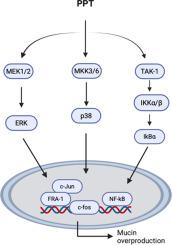
原鸟杂醇增强小肠上皮细胞和小鼠黏蛋白的表达
粘蛋白是肠黏液层的重要组成部分,它保护肠道上皮并维持微生物群平衡。原anaxatriol (PPT)是一种从原anaxatriol型皂苷中提取的活性代谢物,已显示出调节肠道健康的前景,但其对粘蛋白表达的影响尚不清楚。目的探讨PPT对人肠上皮Caco-2细胞及小鼠黏蛋白表达的影响。方法用不同浓度PPT处理scaco -2细胞,采用qRT-PCR和Western blot分析粘液蛋白的表达情况。同时,小鼠口服PPT,并收集组织进行粘蛋白定量。结果sppt处理显著上调Caco-2细胞中粘蛋白mRNA和蛋白水平的表达。在体内,给药PPT的小鼠在结肠中表现出明显升高的粘蛋白表达。此外,PPT还能诱导肺和胃组织中粘蛋白的表达。结论ppt可促进人肠上皮细胞和小鼠肠道中粘蛋白的表达,提示其可能是维持肠道健康和预防肠道疾病的天然药物。
本文章由计算机程序翻译,如有差异,请以英文原文为准。
求助全文
约1分钟内获得全文
求助全文
来源期刊
Journal of Ginseng Research
CHEMISTRY, MEDICINAL-INTEGRATIVE & COMPLEMENTARY MEDICINE
CiteScore
11.40
自引率
9.50%
发文量
111
审稿时长
6-12 weeks
期刊介绍:
Journal of Ginseng Research (JGR) is an official, open access journal of the Korean Society of Ginseng and is the only international journal publishing scholarly reports on ginseng research in the world. The journal is a bimonthly peer-reviewed publication featuring high-quality studies related to basic, pre-clinical, and clinical researches on ginseng to reflect recent progresses in ginseng research.
JGR publishes papers, either experimental or theoretical, that advance our understanding of ginseng science, including plant sciences, biology, chemistry, pharmacology, toxicology, pharmacokinetics, veterinary medicine, biochemistry, manufacture, and clinical study of ginseng since 1976. It also includes the new paradigm of integrative research, covering alternative medicinal approaches. Article types considered for publication include review articles, original research articles, and brief reports.
JGR helps researchers to understand mechanisms for traditional efficacy of ginseng and to put their clinical evidence together. It provides balanced information on basic science and clinical applications to researchers, manufacturers, practitioners, teachers, scholars, and medical doctors.
 求助内容:
求助内容: 应助结果提醒方式:

 京公网安备 11010802042870号


