
Exploring the anticancer potential of Citrus spp. essential oils against various human cancer cell lines
Q3 Pharmacology, Toxicology and Pharmaceutics
引用次数: 0
Abstract
Conventional cancer treatments, such as chemotherapy and radiotherapy, remain the mainstay of therapy but are often associated with severe toxicity and a diminished quality of life for patients. These limitations have increased interest in natural products as sources of novel anticancer compounds and potential adjunctive leads for future development. Natural compounds, particularly those derived from plants, have historically contributed significantly to anticancer drug discovery, with nearly 60% of approved agents originating from natural sources. Among medicinal plants, the Citrus genus has attracted considerable attention for its diverse range of bioactive metabolites, including flavonoids, limonoids, coumarins, and essential oils. Citrus essential oils are particularly rich in monoterpenes, such as d-limonene, β-pinene, and myrcene, which exhibit potent cytotoxic, antiproliferative, and pro-apoptotic effects against various human cancer cell lines. Emerging evidence suggests that these compounds can modulate multiple molecular targets involved in apoptosis, oxidative stress, and tumor progression, suggesting promising bioactivity and mechanistic relevance with potential for future therapeutic development. This review provides an updated and critical overview of the chemical composition, extraction methods, and anticancer mechanisms of Citrus essential oils, with particular emphasis on their molecular modes of action and their prospects for future translational and therapeutic research.
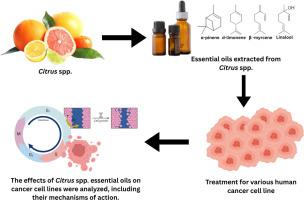
探索柑橘精油对多种人类癌细胞系的抗癌潜力
传统的癌症治疗,如化疗和放疗,仍然是主要的治疗方法,但往往与严重的毒性和患者生活质量下降有关。这些限制增加了人们对天然产物作为新型抗癌化合物和潜在的辅助先导物来源的兴趣。天然化合物,特别是那些从植物中提取的化合物,在历史上对抗癌药物的发现做出了重大贡献,近60%的批准药物来自天然来源。在药用植物中,柑橘属植物因其丰富的生物活性代谢物而备受关注,包括黄酮类、柠檬酮、香豆素和精油。柑橘精油尤其富含单萜烯,如d-柠檬烯、β-蒎烯和月桂烯,它们对各种人类癌细胞具有强大的细胞毒性、抗增殖和促凋亡作用。新出现的证据表明,这些化合物可以调节涉及细胞凋亡、氧化应激和肿瘤进展的多个分子靶点,这表明它们具有良好的生物活性和与未来治疗发展潜力的机制相关性。本文综述了柑橘精油的化学成分、提取方法和抗癌机制,重点介绍了柑橘精油的分子作用模式及其未来转化和治疗研究的前景。
本文章由计算机程序翻译,如有差异,请以英文原文为准。
求助全文
约1分钟内获得全文
求助全文
来源期刊
Phytomedicine Plus
Medicine-Complementary and Alternative Medicine
CiteScore
3.70
自引率
0.00%
发文量
178
审稿时长
81 days
期刊介绍:
 求助内容:
求助内容: 应助结果提醒方式:

 京公网安备 11010802042870号


