
Theviridoside, Alcesefoliside, and Cycloolivil as natural compounds: Discovery of new HMG-CoA reductase, alpha glucosidase inhibitors and anti-gastric potential
IF 1.3
4区 化学
Q4 CHEMISTRY, ANALYTICAL
Chinese Journal of Analytical Chemistry
Pub Date : 2026-05-01
Epub Date: 2026-01-03
DOI:10.1016/j.cjac.2026.100693
引用次数: 0
Abstract
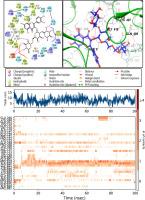
One of the deadliest and most prevalent cancers in the world is gastric cancer, also known as stomach cancer. According to GLOBOCAN 2018 data, stomach cancer ranks third globally in terms of cancer mortality, behind colorectal and lung cancer. Gastric cancer is the fifth most prevalent type of cancer overall. Gastric cancer is one of the most well-known and dangerous tumors, with a poor prognosis and a high total mortality rate from malignant progression. Additionally, Alpha-glucosidase inhibitors are widely used oral antidiabetic medications that regulate the breakdown of carbohydrates into simple sugars that the intestines can absorb. HMG CoA reductase and α-glucosidase were inhibited in this study by Theviridoside, Alcesefoliside, and Cycloolivil molecules, with IC50 values of 1.70 ± 0.03 and 26.71 ± 1.04 µM for Theviridoside, 0.98 ± 0.01 and 4.35 ± 0.06 µM for Alcesefoliside, and 6.27 ± 0.02 and 41.20 ± 0.87 µM for Cycloolivil, respectively. The anti-cancer properties of the compounds were assessed using the SNU1 (IC50: 65.32 ± 2.70, 76.31 ± 1.44 and 20.52 ± 1.25 µM), AGS (IC50: 61.35 ± 2.73, 89.46 ± 1.06 and 11.76 ± 0.63 µM), and MKN45 (IC50: 56.71 ± 0.98, 83.50 ± 2.62 and 14.87 ± 1.12 µM) cell lines, respectively. The binding affinity and interactions of theviridoside, alcesefoliside, and cycloolivil against HMG-CoA reductase and α-glucosidase were assessed by using computational methods such as MM/GBSA calculations, molecular modeling, and molecular dynamics (MD) simulations. Moreover, their activity against three gastric cancer cell lines, SNU1, AGS, and MKN45 was evaluated. Their interactions and affinities with multiple surface receptor proteins, such as CD44, estrogen receptor, and EGFR, were investigated using computational methods. Based on the results, these compounds can form strong interactions with the target enzymes and receptors. Therefore, Alcesefoliside, theviridoside, and cycloolivil can effectively inhibit the activity of these enzymes and cancer cell lines.
毒苷、Alcesefoliside和Cycloolivil作为天然化合物:发现新的HMG-CoA还原酶、α葡萄糖苷酶抑制剂和抗胃潜能
胃癌是世界上最致命、最普遍的癌症之一,也被称为胃癌。根据GLOBOCAN 2018的数据,胃癌在癌症死亡率方面排名全球第三,仅次于结直肠癌和肺癌。胃癌是第五大最常见的癌症类型。胃癌是最著名和最危险的肿瘤之一,预后差,恶性进展总死亡率高。此外,α -葡萄糖苷酶抑制剂是一种广泛使用的口服降糖药,它可以调节碳水化合物分解成肠道可以吸收的单糖。对HMG辅酶a还原酶和α-葡萄糖苷酶均有抑制作用,毒藤苷的IC50值分别为1.70±0.03和26.71±1.04µM,毒藤苷的IC50值分别为0.98±0.01和4.35±0.06µM,环橄榄苷的IC50值分别为6.27±0.02和41.20±0.87µM。采用SNU1细胞系(IC50分别为65.32±2.70、76.31±1.44和20.52±1.25µM)、AGS细胞系(IC50分别为61.35±2.73、89.46±1.06和11.76±0.63µM)和MKN45细胞系(IC50分别为56.71±0.98、83.50±2.62和14.87±1.12µM)对化合物的抗癌性能进行了评价。通过MM/GBSA计算、分子建模和分子动力学(MD)模拟等计算方法评估了病毒苷、苜蓿叶苷和环橄榄苷对HMG-CoA还原酶和α-葡萄糖苷酶的结合亲和力和相互作用。此外,我们还评估了它们对三种胃癌细胞株SNU1、AGS和MKN45的活性。使用计算方法研究了它们与多种表面受体蛋白(如CD44、雌激素受体和EGFR)的相互作用和亲和力。结果表明,这些化合物可与靶酶和受体形成强相互作用。因此,Alcesefoliside、theviridoside和cycloolivil可以有效抑制这些酶的活性和癌细胞系。
本文章由计算机程序翻译,如有差异,请以英文原文为准。
求助全文
约1分钟内获得全文
求助全文
来源期刊
CiteScore
3.60
自引率
25.00%
发文量
17223
审稿时长
35 days
期刊介绍:
Chinese Journal of Analytical Chemistry(CJAC) is an academic journal of analytical chemistry established in 1972 and sponsored by the Chinese Chemical Society and Changchun Institute of Applied Chemistry, Chinese Academy of Sciences. Its objectives are to report the original scientific research achievements and review the recent development of analytical chemistry in all areas. The journal sets up 5 columns including Research Papers, Research Notes, Experimental Technique and Instrument, Review and Progress and Summary Accounts. The journal published monthly in Chinese language. A detailed abstract, keywords and the titles of figures and tables are provided in English, except column of Summary Accounts. Prof. Wang Erkang, an outstanding analytical chemist, academician of Chinese Academy of Sciences & Third World Academy of Sciences, holds the post of the Editor-in-chief.
 求助内容:
求助内容: 应助结果提醒方式:

 京公网安备 11010802042870号


