Morpho-molecular Delineation of Odonaticola nonapetalis n. sp. (Apicomplexa: Eugregarinida: Actinocephalidae) Parasitising Brachythemis contaminata (Fabricius, 1793) from West Bengal, India, Including Taxonomic Revision of the Genus Odonaticola
{"title":"Morpho-molecular Delineation of Odonaticola nonapetalis n. sp. (Apicomplexa: Eugregarinida: Actinocephalidae) Parasitising Brachythemis contaminata (Fabricius, 1793) from West Bengal, India, Including Taxonomic Revision of the Genus Odonaticola","authors":"Susobhan Mondal, Biplob Kr. Modak","doi":"10.1007/s11686-025-01192-y","DOIUrl":null,"url":null,"abstract":"<div><h3>Purpose</h3><p>Septate gregarines are widespread in insects but remain largely unexplored in odonates, with only ~ 1% of odonate species investigated and minimal molecular or ultrastructural data available. The present study characterises a septate gregarine parasitising <i>Brachythemis contaminata</i> using modern microscopy and phylogenetic analysis to clarify its taxonomic placement and improve understanding of the genus <i>Odonaticola</i>.</p><h3>Methods</h3><p>Fixation was performed using Schaudinn’s solution, followed by staining with Heidenhain’s haematoxylin; SEM involved glutaraldehyde and osmium tetroxide fixation. SSU rDNA was amplified, sequenced, and analysed using the neighbour-joining method.</p><h3>Results</h3><p>Trophozoites are elongated (321.12 ± 50.63 μm). Epimerite complex (111.58 ± 18.24 μm) comprising an umbrella-shaped epimerite proper bearing nine petaloid spines and a cylindrical diamerite. Gamonts are solitary and elongated (362.13 ± 65.91 μm), with a broadly obpanduriform protomerite featuring an elevated apical zone and a narrowly ovoid deutomerite. Nucleus broadly orbicular to elliptoid (45.48 ± 5.38 μm × 35.06 ± 5.51 μm), containing multiple karyosomes. Both stages exhibit longitudinal epicytic folds (~ 5–6 folds/µm), except the epimerite proper, which has undulating ridges and grooves. Gametocysts are orbicular (360.78 ± 31.32 μm), surrounded by a thick ectocyst, and dehisce by simple rupture. Oocysts are tetrahedral (7.13–8.82 μm), with projections bearing terminal sucker-like structure. Phylogenetic analysis places <i>Odonaticola nonapetalis</i> n. sp. as an independently branching lineage within Actinocephalidae (bootstrap = 88%), with a long terminal branch (0.050), indicating strong divergence.</p><h3>Conclusion</h3><p>Combined morphological and molecular data support the recognition of <i>Odonaticola nonapetalis</i> n. sp. as a novel species and justify an emended diagnosis of the genus <i>Odonaticola</i>.</p><h3>Graphical Abstract</h3><div><figure><div><div><picture><source><img></source></picture><span>The alternative text for this image may have been generated using AI.</span></div></div></figure></div></div>","PeriodicalId":6932,"journal":{"name":"Acta Parasitologica","volume":"71 3","pages":""},"PeriodicalIF":1.5000,"publicationDate":"2026-05-02","publicationTypes":"Journal Article","fieldsOfStudy":null,"isOpenAccess":false,"openAccessPdf":"","citationCount":"0","resultStr":null,"platform":"Semanticscholar","paperid":null,"PeriodicalName":"Acta Parasitologica","FirstCategoryId":"3","ListUrlMain":"https://link.springer.com/article/10.1007/s11686-025-01192-y","RegionNum":3,"RegionCategory":"农林科学","ArticlePicture":[],"TitleCN":null,"AbstractTextCN":null,"PMCID":null,"EPubDate":"","PubModel":"","JCR":"Q4","JCRName":"PARASITOLOGY","Score":null,"Total":0}
引用次数: 0
Abstract
Purpose
Septate gregarines are widespread in insects but remain largely unexplored in odonates, with only ~ 1% of odonate species investigated and minimal molecular or ultrastructural data available. The present study characterises a septate gregarine parasitising Brachythemis contaminata using modern microscopy and phylogenetic analysis to clarify its taxonomic placement and improve understanding of the genus Odonaticola.
Methods
Fixation was performed using Schaudinn’s solution, followed by staining with Heidenhain’s haematoxylin; SEM involved glutaraldehyde and osmium tetroxide fixation. SSU rDNA was amplified, sequenced, and analysed using the neighbour-joining method.
Results
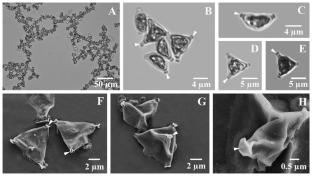
Trophozoites are elongated (321.12 ± 50.63 μm). Epimerite complex (111.58 ± 18.24 μm) comprising an umbrella-shaped epimerite proper bearing nine petaloid spines and a cylindrical diamerite. Gamonts are solitary and elongated (362.13 ± 65.91 μm), with a broadly obpanduriform protomerite featuring an elevated apical zone and a narrowly ovoid deutomerite. Nucleus broadly orbicular to elliptoid (45.48 ± 5.38 μm × 35.06 ± 5.51 μm), containing multiple karyosomes. Both stages exhibit longitudinal epicytic folds (~ 5–6 folds/µm), except the epimerite proper, which has undulating ridges and grooves. Gametocysts are orbicular (360.78 ± 31.32 μm), surrounded by a thick ectocyst, and dehisce by simple rupture. Oocysts are tetrahedral (7.13–8.82 μm), with projections bearing terminal sucker-like structure. Phylogenetic analysis places Odonaticola nonapetalis n. sp. as an independently branching lineage within Actinocephalidae (bootstrap = 88%), with a long terminal branch (0.050), indicating strong divergence.
Conclusion
Combined morphological and molecular data support the recognition of Odonaticola nonapetalis n. sp. as a novel species and justify an emended diagnosis of the genus Odonaticola.
Graphical Abstract
The alternative text for this image may have been generated using AI.
期刊介绍:
Acta Parasitologica is an international journal covering the latest advances in the subject.
Acta Parasitologica publishes original papers on all aspects of parasitology and host-parasite relationships, including the latest discoveries in biochemical and molecular biology of parasites, their physiology, morphology, taxonomy and ecology, as well as original research papers on immunology, pathology, and epidemiology of parasitic diseases in the context of medical, veterinary and biological sciences. The journal also publishes short research notes, invited review articles, book reviews.
The journal was founded in 1953 as "Acta Parasitologica Polonica" by the Polish Parasitological Society and since 1954 has been published by W. Stefanski Institute of Parasitology of the Polish Academy of Sciences in Warsaw. Since 1992 in has appeared as Acta Parasitologica in four issues per year.

 求助内容:
求助内容: 应助结果提醒方式:

 京公网安备 11010802042870号


