
Sustaining low-cost PM2.5 monitoring networks in South-Asian Countries: technical challenges and solutions
IF 9.7
1区 环境科学与生态学
Q1 ENVIRONMENTAL SCIENCES
Environment International
Pub Date : 2026-05-01
Epub Date: 2026-04-25
DOI:10.1016/j.envint.2026.110275
引用次数: 0
Abstract
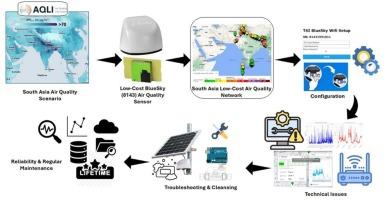
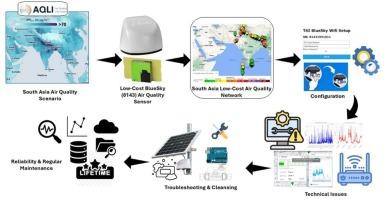
The need to monitor South Asia’s air quality stems from its significant negative effects on human and environmental health. Traditional, regulatory-grade air quality monitoring systems have proven costly to operate and very difficult to maintain in most South-Asian countries. Low-cost sensor (LCS) networks have been touted as a viable alternative, but the challenges to sustain them have not been evaluated or thoroughly documented. The acceptance of such monitors, specifically by regulatory agencies, across South-Asian countries is still lacking. Lack of acceptance is due to prevailing myths (especially, in the regulatory circles of South-Asian countries) about their accuracy, precision, consistency, dependability, maintenance, and calibration concerns. The present study fills that knowledge gap through a systematic multi-country empirical analysis while also providing evidence-based solutions to enhance the longevity of LCS across diverse operational environments. Specifically, this study describes strategies and maintenance plans for operating large LCS networks of TSI BlueSky (8143) Sensors across several South-Asian countries, with a focus on problems caused by power outages, power surges, weather conditions, and continued exposure to high amounts of dust and pollution. The article provides further support that incorporating LCS networks into the regulatory framework can facilitate the enforcement of environmental regulations and legislation against polluters. The goal is to develop a more reliable and long-lasting air quality monitoring system that will assist regional environmental regulatory authorities in reducing air pollution-related health hazards and consequent socio-economic disruptions.
在南亚国家维持低成本PM2.5监测网络:技术挑战和解决方案
监测南亚空气质量的必要性源于其对人类和环境健康的重大负面影响。在大多数南亚国家,传统的管制级空气质量监测系统已被证明操作成本高昂,而且很难维护。低成本传感器(LCS)网络被吹捧为一种可行的替代方案,但维持它们的挑战尚未得到评估或彻底记录。南亚各国对这种监测仪的接受程度,特别是监管机构的接受程度仍然不足。缺乏接受度是由于对其准确性、精密度、一致性、可靠性、维护和校准问题的普遍误解(特别是在南亚国家的监管界)。本研究通过系统的多国实证分析填补了这一知识空白,同时还提供了基于证据的解决方案,以提高LCS在不同作战环境中的寿命。具体来说,本研究描述了在几个南亚国家运营TSI蓝天(8143)传感器大型LCS网络的策略和维护计划,重点关注由停电、电涌、天气条件以及持续暴露于大量灰尘和污染造成的问题。该条款进一步支持将LCS网络纳入监管框架可以促进针对污染者的环境法规和立法的执行。目标是建立一个更可靠和持久的空气质量监测系统,以协助区域环境管理当局减少与空气污染有关的健康危害和由此造成的社会经济中断。
本文章由计算机程序翻译,如有差异,请以英文原文为准。
求助全文
约1分钟内获得全文
求助全文
来源期刊
Environment International
环境科学-环境科学
CiteScore
21.90
自引率
3.40%
发文量
734
审稿时长
2.8 months
期刊介绍:
Environmental Health publishes manuscripts focusing on critical aspects of environmental and occupational medicine, including studies in toxicology and epidemiology, to illuminate the human health implications of exposure to environmental hazards. The journal adopts an open-access model and practices open peer review.
It caters to scientists and practitioners across all environmental science domains, directly or indirectly impacting human health and well-being. With a commitment to enhancing the prevention of environmentally-related health risks, Environmental Health serves as a public health journal for the community and scientists engaged in matters of public health significance concerning the environment.
 求助内容:
求助内容: 应助结果提醒方式:

 京公网安备 11010802042870号


