
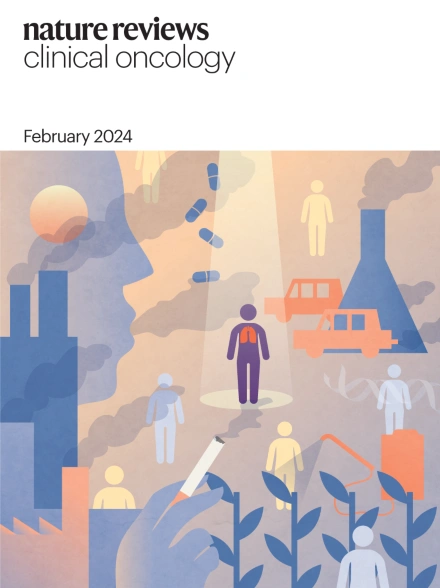
Emerging trends in the global burden of colorectal cancer.
IF 82.2
1区 医学
Q1 ONCOLOGY
引用次数: 0
Abstract
Globally, colorectal cancer (CRC) is the third most frequently diagnosed cancer and the second leading cause of cancer-related deaths, although these epidemiological patterns show substantial geographical variation. In this Review, we discuss the emerging global patterns of CRC incidence, which historically has been the highest among Western, high-income countries but is now increasing globally beyond these regions. This rise has mainly been driven by early-onset CRC - that is, cancers diagnosed in individuals aged <50 years. A birth cohort effect beginning with individuals born in the 1960s indicates that factors beyond genetic susceptibility or changes in screening practice underlie this increase. A changing landscape of established and emerging risk factors occurring worldwide has been proposed to underlie these epidemiological trends in CRC. Hypothesized risk factors include dietary and lifestyle aspects, shifts in the gut microbiota and the rise in environmental contaminants associated with the rapid urbanization occurring globally. Substantial advances in the characterization of genomic and epigenomic profiles of CRCs as well as their gut microbiomes not only hold potential for providing insight on the aetiology of this disease but could also be leveraged for early detection and interception strategies. The under-representation of non-Western populations in these studies, however, greatly limits progress and, if not addressed, could widen the existing gaps in global CRC prevention and control.全球结直肠癌负担的新趋势。
在全球范围内,结直肠癌(CRC)是第三种最常诊断的癌症,也是癌症相关死亡的第二大原因,尽管这些流行病学模式显示出很大的地理差异。在这篇综述中,我们讨论了正在出现的全球结直肠癌发病率模式,历史上在西方高收入国家发病率最高,但现在在这些地区以外的全球范围内正在增加。这种上升主要是由早发性CRC驱动的,即年龄<50岁的个体诊断出的癌症。从20世纪60年代出生的个体开始的出生队列效应表明,遗传易感性或筛查实践变化之外的因素是这种增加的基础。在世界范围内发生的现有和新出现的危险因素的不断变化的格局已被提出作为CRC这些流行病学趋势的基础。假设的风险因素包括饮食和生活方式方面,肠道微生物群的变化以及与全球快速城市化相关的环境污染物的增加。CRCs基因组和表观基因组特征及其肠道微生物组特征的实质性进展不仅有可能提供对该病病因的深入了解,而且还可以用于早期检测和拦截策略。然而,这些研究中非西方人群的代表性不足,极大地限制了进展,如果不加以解决,可能会扩大全球结直肠癌预防和控制方面的现有差距。
本文章由计算机程序翻译,如有差异,请以英文原文为准。
求助全文
约1分钟内获得全文
求助全文
来源期刊
CiteScore
99.40
自引率
0.40%
发文量
114
审稿时长
6-12 weeks
期刊介绍:
Nature Reviews publishes clinical content authored by internationally renowned clinical academics and researchers, catering to readers in the medical sciences at postgraduate levels and beyond. Although targeted at practicing doctors, researchers, and academics within specific specialties, the aim is to ensure accessibility for readers across various medical disciplines. The journal features in-depth Reviews offering authoritative and current information, contextualizing topics within the history and development of a field. Perspectives, News & Views articles, and the Research Highlights section provide topical discussions, opinions, and filtered primary research from diverse medical journals.
 求助内容:
求助内容: 应助结果提醒方式:

 京公网安备 11010802042870号


