Maruf Mia, Rezwanul Islam, Ibrahim Hossain, Sultana Bedoura
{"title":"Effect of sunlight and dark conditions on Green-synthesized silver nanoparticles from banana peel extract","authors":"Maruf Mia, Rezwanul Islam, Ibrahim Hossain, Sultana Bedoura","doi":"10.1007/s13204-026-03163-9","DOIUrl":null,"url":null,"abstract":"<div>\n \n <p>This study explores the green synthesis of silver nanoparticles (AgNPs) using Champa banana peel extract under sunlight and dark conditions, emphasizing how synthesis environments influence nanoparticle properties and functional performance. UV–Vis spectroscopy confirmed AgNP formation, showing a sharper absorption peak at 430 nm for sunlight synthesis and a broader, red-shifted peak at 450 nm for dark synthesis, indicating size and aggregation differences. FTIR identified hydroxyl and carbonyl groups as key in Ag⁺ reduction and nanoparticle stabilization. TEM revealed smaller, spherical, well-dispersed AgNPs in sunlight, while dark-synthesized particles were larger and aggregated. AgNP-coated cotton fabrics showed higher values for dark-synthesized samples (1.7 mV) compared to sunlight (1.3 mV), attributed to more continuous nanoparticle networks. Antimicrobial assays showed sunlight-synthesized AgNPs strongly inhibited <i>Escherichia coli</i> (99%), whereas dark-synthesized particles were highly effective against <i>Staphylococcus aureus</i> (99.99%). A key contribution of this work is the systematic comparison of sunlight- and dark-mediated synthesis conditions combined with DFT and TD-DFT calculations using benzoic acid and pyrogallol as model ligands, providing mechanistic insight into Ag⁺ reduction and ligand-to-metal charge transfer processes. These findings demonstrate that synthesis conditions critically tailor AgNP morphology, electronic properties, and functional performance, offering a sustainable strategy for designing antimicrobial coatings and conductive textile-based nanomaterials.</p>\n </div>","PeriodicalId":471,"journal":{"name":"Applied Nanoscience","volume":"16 3","pages":""},"PeriodicalIF":3.6740,"publicationDate":"2026-04-29","publicationTypes":"Journal Article","fieldsOfStudy":null,"isOpenAccess":false,"openAccessPdf":"","citationCount":"0","resultStr":null,"platform":"Semanticscholar","paperid":null,"PeriodicalName":"Applied Nanoscience","FirstCategoryId":"5","ListUrlMain":"https://link.springer.com/article/10.1007/s13204-026-03163-9","RegionNum":4,"RegionCategory":"工程技术","ArticlePicture":[],"TitleCN":null,"AbstractTextCN":null,"PMCID":null,"EPubDate":"","PubModel":"","JCR":"Q1","JCRName":"Engineering","Score":null,"Total":0}
引用次数: 0
Abstract
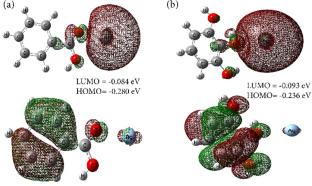
This study explores the green synthesis of silver nanoparticles (AgNPs) using Champa banana peel extract under sunlight and dark conditions, emphasizing how synthesis environments influence nanoparticle properties and functional performance. UV–Vis spectroscopy confirmed AgNP formation, showing a sharper absorption peak at 430 nm for sunlight synthesis and a broader, red-shifted peak at 450 nm for dark synthesis, indicating size and aggregation differences. FTIR identified hydroxyl and carbonyl groups as key in Ag⁺ reduction and nanoparticle stabilization. TEM revealed smaller, spherical, well-dispersed AgNPs in sunlight, while dark-synthesized particles were larger and aggregated. AgNP-coated cotton fabrics showed higher values for dark-synthesized samples (1.7 mV) compared to sunlight (1.3 mV), attributed to more continuous nanoparticle networks. Antimicrobial assays showed sunlight-synthesized AgNPs strongly inhibited Escherichia coli (99%), whereas dark-synthesized particles were highly effective against Staphylococcus aureus (99.99%). A key contribution of this work is the systematic comparison of sunlight- and dark-mediated synthesis conditions combined with DFT and TD-DFT calculations using benzoic acid and pyrogallol as model ligands, providing mechanistic insight into Ag⁺ reduction and ligand-to-metal charge transfer processes. These findings demonstrate that synthesis conditions critically tailor AgNP morphology, electronic properties, and functional performance, offering a sustainable strategy for designing antimicrobial coatings and conductive textile-based nanomaterials.
期刊介绍:
Applied Nanoscience is a hybrid journal that publishes original articles about state of the art nanoscience and the application of emerging nanotechnologies to areas fundamental to building technologically advanced and sustainable civilization, including areas as diverse as water science, advanced materials, energy, electronics, environmental science and medicine. The journal accepts original and review articles as well as book reviews for publication. All the manuscripts are single-blind peer-reviewed for scientific quality and acceptance.

 求助内容:
求助内容: 应助结果提醒方式:

 京公网安备 11010802042870号


