{"title":"Innovative water treatment for azole degradation: a short review of processing techniques and performances","authors":"Shaoqing Zhang, Fei Gao, Wenli Wang, Qifeng Liu","doi":"10.1007/s11696-025-04540-4","DOIUrl":null,"url":null,"abstract":"<div><p>Ensuring clean water quality is crucial for human health and environmental sustainability. The persistence of azole compounds—a class of antifungal agents (e.g., fluconazole, ketoconazole, miconazole)—in aquatic systems presents significant challenges to water quality management due to their endocrine-disrupting effects, contribution to antibiotic resistance, and resistance to conventional degradation. This review systematically examines recent advances in azole removal technologies, including UV photolysis, UV-Fenton, anode oxidation, photocatalysis (using metal oxides like TiO<sub>2</sub> and ZnO), ozonation, electrochemical oxidation, and adsorption. Key findings show that vacuum UV (VUV) and UVC-enhanced photolysis achieve complete (100%) degradation of certain azoles, while the UV-Fenton process degrades over 80% of miconazole under optimized conditions. Boron-doped diamond (BDD) anode oxidation demonstrates exceptional efficacy, eliminating 100% of Imazalil, tebuconazole, and penconazole within 60 min. Photocatalytic degradation using TiO<sub>2</sub> achieves > 80% ketoconazole removal, attributed to enhanced charge separation and production of reactive oxygen species. Ozonation was proven to be a highly effective process is effective for some recalcitrant azoles, such as 99.1% removal of climbazole, while biodegradation shows species-dependent variability, with fluconazole exhibiting negligible removal. Adsorption and electrochemical oxidation also show high efficiency (70–95%) but need optimization for cost-effectiveness. Despite these advances, the combined use of processes, like hybrid photolysis-adsorption systems, remains unexplored. Further research should focus on understanding the degradation mechanisms, pathways, scalability over the life cycle, and developing standardized evaluation protocols across different water matrices. This works a roadmap for advancing azole remediation technologies to support sustainable water resource management.</p><h3>Graphical abstract</h3><div><figure><div><div><picture><source><img></source></picture><span>The alternative text for this image may have been generated using AI.</span></div></div></figure></div></div>","PeriodicalId":513,"journal":{"name":"Chemical Papers","volume":"80 3","pages":"2063 - 2082"},"PeriodicalIF":2.5000,"publicationDate":"2026-01-09","publicationTypes":"Journal Article","fieldsOfStudy":null,"isOpenAccess":false,"openAccessPdf":"","citationCount":"0","resultStr":null,"platform":"Semanticscholar","paperid":null,"PeriodicalName":"Chemical Papers","FirstCategoryId":"92","ListUrlMain":"https://link.springer.com/article/10.1007/s11696-025-04540-4","RegionNum":4,"RegionCategory":"化学","ArticlePicture":[],"TitleCN":null,"AbstractTextCN":null,"PMCID":null,"EPubDate":"","PubModel":"","JCR":"Q2","JCRName":"Engineering","Score":null,"Total":0}
引用次数: 0
Abstract
Ensuring clean water quality is crucial for human health and environmental sustainability. The persistence of azole compounds—a class of antifungal agents (e.g., fluconazole, ketoconazole, miconazole)—in aquatic systems presents significant challenges to water quality management due to their endocrine-disrupting effects, contribution to antibiotic resistance, and resistance to conventional degradation. This review systematically examines recent advances in azole removal technologies, including UV photolysis, UV-Fenton, anode oxidation, photocatalysis (using metal oxides like TiO2 and ZnO), ozonation, electrochemical oxidation, and adsorption. Key findings show that vacuum UV (VUV) and UVC-enhanced photolysis achieve complete (100%) degradation of certain azoles, while the UV-Fenton process degrades over 80% of miconazole under optimized conditions. Boron-doped diamond (BDD) anode oxidation demonstrates exceptional efficacy, eliminating 100% of Imazalil, tebuconazole, and penconazole within 60 min. Photocatalytic degradation using TiO2 achieves > 80% ketoconazole removal, attributed to enhanced charge separation and production of reactive oxygen species. Ozonation was proven to be a highly effective process is effective for some recalcitrant azoles, such as 99.1% removal of climbazole, while biodegradation shows species-dependent variability, with fluconazole exhibiting negligible removal. Adsorption and electrochemical oxidation also show high efficiency (70–95%) but need optimization for cost-effectiveness. Despite these advances, the combined use of processes, like hybrid photolysis-adsorption systems, remains unexplored. Further research should focus on understanding the degradation mechanisms, pathways, scalability over the life cycle, and developing standardized evaluation protocols across different water matrices. This works a roadmap for advancing azole remediation technologies to support sustainable water resource management.
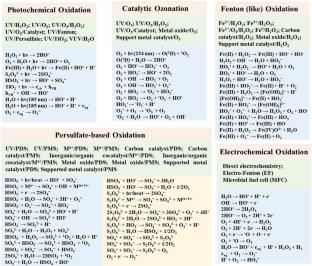
Graphical abstract
The alternative text for this image may have been generated using AI.
Chemical PapersChemical Engineering-General Chemical Engineering
CiteScore
3.30
自引率
4.50%
发文量
590
期刊介绍:
Chemical Papers is a peer-reviewed, international journal devoted to basic and applied chemical research. It has a broad scope covering the chemical sciences, but favors interdisciplinary research and studies that bring chemistry together with other disciplines.

 求助内容:
求助内容: 应助结果提醒方式:

 京公网安备 11010802042870号


