Ludger Klimek, Roland Buhl, Randolf Brehler, Eckard Hamelmann, Marcus Joest, Kristin aufm Kampe, Stephanie Korn, Sabine Lampert, Norbert Mülleneisen, Christian Taube, Jordis Trischler, Christian Vogelberg, Florian Schmitz, Marek Lommatzsch
{"title":"Position paper on the documentation of biologic therapies for severe asthma","authors":"Ludger Klimek, Roland Buhl, Randolf Brehler, Eckard Hamelmann, Marcus Joest, Kristin aufm Kampe, Stephanie Korn, Sabine Lampert, Norbert Mülleneisen, Christian Taube, Jordis Trischler, Christian Vogelberg, Florian Schmitz, Marek Lommatzsch","doi":"10.1007/s40629-026-00368-w","DOIUrl":null,"url":null,"abstract":"<div><h3>Background</h3><p>Biologics are the first-line treatment for patients with severe, inadequately controlled asthma. They can lead to a significant reduction in (or even complete avoidance of) exacerbations, a reduction in the need for systemic glucocorticoids with their many side effects, and a marked improvement in asthma control and lung function in severe asthma. Due to the high annual costs of biologic therapy, there is legitimate interest among health insurances in guideline- and approval-compliant as well as cost-effective use of biologics in severe asthma. On the other hand, there is also legitimate interest among treating physicians in prescribing these biologics without risk of insurer repayment demands.</p><h3>Methodology</h3><p> Using an analysis of the literature and regulatory approvals, the evidence for treatment with currently approved biologics for severe asthma—omalizumab, mepolizumab, reslizumab, benralizumab, dupilumab, tezepelumab, and depemokimab— was documented, and supplemented by the clinical experiences of the authors.</p><h3>Results</h3><p>Based on the guideline recommendations and approvals, recommendations are made for the use of the aforementioned biologics in the German healthcare system. In a joint effort by various professional associations (AeDA, DGP, BdP, GAN, DGAKI, GPP, GPA), documentation forms were created for all biologics approved for severe asthma, which can serve as a basis for documentation. Forms were developed both for the initiation of biologic therapy and for the documentation of biologic treatment responses in severe asthma.</p><h3>Conclusion</h3><p>The new documentation forms concisely summarize all key points related to biologic prescription in severe asthma on a single page, serving both to ensure guideline-compliant and approval-compliant prescription and to avoid drug repayment demands.</p></div>","PeriodicalId":37457,"journal":{"name":"Allergo Journal International","volume":"35 3","pages":"65 - 76"},"PeriodicalIF":0.0000,"publicationDate":"2026-04-15","publicationTypes":"Journal Article","fieldsOfStudy":null,"isOpenAccess":false,"openAccessPdf":"https://link.springer.com/content/pdf/10.1007/s40629-026-00368-w.pdf","citationCount":"0","resultStr":null,"platform":"Semanticscholar","paperid":null,"PeriodicalName":"Allergo Journal International","FirstCategoryId":"1085","ListUrlMain":"https://link.springer.com/article/10.1007/s40629-026-00368-w","RegionNum":0,"RegionCategory":null,"ArticlePicture":[],"TitleCN":null,"AbstractTextCN":null,"PMCID":null,"EPubDate":"","PubModel":"","JCR":"Q3","JCRName":"Medicine","Score":null,"Total":0}
引用次数: 0
Abstract
Background
Biologics are the first-line treatment for patients with severe, inadequately controlled asthma. They can lead to a significant reduction in (or even complete avoidance of) exacerbations, a reduction in the need for systemic glucocorticoids with their many side effects, and a marked improvement in asthma control and lung function in severe asthma. Due to the high annual costs of biologic therapy, there is legitimate interest among health insurances in guideline- and approval-compliant as well as cost-effective use of biologics in severe asthma. On the other hand, there is also legitimate interest among treating physicians in prescribing these biologics without risk of insurer repayment demands.
Methodology
Using an analysis of the literature and regulatory approvals, the evidence for treatment with currently approved biologics for severe asthma—omalizumab, mepolizumab, reslizumab, benralizumab, dupilumab, tezepelumab, and depemokimab— was documented, and supplemented by the clinical experiences of the authors.
Results
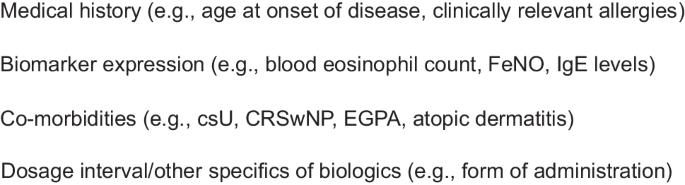
Based on the guideline recommendations and approvals, recommendations are made for the use of the aforementioned biologics in the German healthcare system. In a joint effort by various professional associations (AeDA, DGP, BdP, GAN, DGAKI, GPP, GPA), documentation forms were created for all biologics approved for severe asthma, which can serve as a basis for documentation. Forms were developed both for the initiation of biologic therapy and for the documentation of biologic treatment responses in severe asthma.
Conclusion
The new documentation forms concisely summarize all key points related to biologic prescription in severe asthma on a single page, serving both to ensure guideline-compliant and approval-compliant prescription and to avoid drug repayment demands.
期刊介绍:
Allergo Journal International is the official Journal of the German Society for Applied Allergology (AeDA) and the Austrian Society for Allergology and Immunology (ÖGAI). The journal is a forum for the communication and exchange of ideas concerning the various aspects of allergy (including related fields such as clinical immunology and environmental medicine) and promotes German allergy research in an international context. The aim of Allergo Journal International is to provide state of the art information for all medical and scientific disciplines that deal with allergic, immunological and environmental diseases. Allergo Journal International publishes original articles, reviews, short communications, case reports, and letters to the editor. The articles cover topics such as allergic, immunological and environmental diseases, the latest developments in diagnosis and therapy as well as current research work concerning antigens and allergens and aspects related to occupational and environmental medicine. In addition, it publishes clinical guidelines and position papers approved by expert panels of the German, Austrian and Swiss Allergy Societies.
All submissions are reviewed in single-blind fashion by at least two reviewers.
Originally, the journal started as a German journal called Allergo Journal back in 1992. Throughout the years, English articles amounted to a considerable portion in Allergo Journal. This was one of the reasons to extract the scientific content and publish it in a separate journal. Hence, Allergo Journal International was born and now is the international continuation of the original German journal. Nowadays, all original content is published in Allergo Journal International first. Later, selected manuscripts will be translated and published in German and included in Allergo Journal.

 求助内容:
求助内容: 应助结果提醒方式:

 京公网安备 11010802042870号


