
Controlled Oxidation of MXene for Regulating Tribochemistry at Sliding Interfaces

IF 19.9 1区 材料科学 Q1 CHEMISTRY, MULTIDISCIPLINARY
Zheng Wang, Liguo Qin, Mingqing Sun, Chunli Liu, Juan Su, Jiawei Pan, Zhenjiang Cao, Yi Zhang, Shan Lu, Miao Zhang, Mulong Jiang, Qi Zhang, Kai Xi, Guangneng Dong
{"title":"Controlled Oxidation of MXene for Regulating Tribochemistry at Sliding Interfaces","authors":"Zheng Wang, Liguo Qin, Mingqing Sun, Chunli Liu, Juan Su, Jiawei Pan, Zhenjiang Cao, Yi Zhang, Shan Lu, Miao Zhang, Mulong Jiang, Qi Zhang, Kai Xi, Guangneng Dong","doi":"10.1002/adfm.75468","DOIUrl":null,"url":null,"abstract":"MXenes have emerged as promising solid lubrication additives due to their lamellar architectures and intrinsically low shear strength. During sliding, the role of MXene oxidation in tribochemical processes remains unclear. Here, we demonstrate that controlled oxidation provides an effective materials engineering strategy to regulate the interfacial tribochemistry of MXene. By precisely tuning the hydrogen peroxide (H<sub>2</sub>O<sub>2</sub>) to MXene ratio, oxidized MXene (oMXene) with uniform surface oxidation while preserving the layered structure is obtained. Under high contact pressures and elevated sliding velocities, oMXene undergoes friction-induced decomposition accompanied by interfacial reconstruction, leading to the in situ formation of a robust dual-phase tribofilm consisting of highly graphitized carbon and titanium-based oxides. This tribochemical reconstruction fundamentally alters the dominant interfacial shear and load-bearing mechanisms, thereby resulting in pronounced and durable reductions in friction and wear in steel-steel contacts. These findings establish controlled oxidation as a key parameter governing MXene interfacial reconstruction and offer a rational pathway for the design of high-performance lubrication additives.","PeriodicalId":112,"journal":{"name":"Advanced Functional Materials","volume":"40 1","pages":""},"PeriodicalIF":19.9000,"publicationDate":"2026-04-17","publicationTypes":"Journal Article","fieldsOfStudy":null,"isOpenAccess":false,"openAccessPdf":"","citationCount":"0","resultStr":null,"platform":"Semanticscholar","paperid":null,"PeriodicalName":"Advanced Functional Materials","FirstCategoryId":"88","ListUrlMain":"https://doi.org/10.1002/adfm.75468","RegionNum":1,"RegionCategory":"材料科学","ArticlePicture":[],"TitleCN":null,"AbstractTextCN":null,"PMCID":null,"EPubDate":"","PubModel":"","JCR":"Q1","JCRName":"CHEMISTRY, MULTIDISCIPLINARY","Score":null,"Total":0}
引用次数: 0

Abstract

MXenes have emerged as promising solid lubrication additives due to their lamellar architectures and intrinsically low shear strength. During sliding, the role of MXene oxidation in tribochemical processes remains unclear. Here, we demonstrate that controlled oxidation provides an effective materials engineering strategy to regulate the interfacial tribochemistry of MXene. By precisely tuning the hydrogen peroxide (H2O2) to MXene ratio, oxidized MXene (oMXene) with uniform surface oxidation while preserving the layered structure is obtained. Under high contact pressures and elevated sliding velocities, oMXene undergoes friction-induced decomposition accompanied by interfacial reconstruction, leading to the in situ formation of a robust dual-phase tribofilm consisting of highly graphitized carbon and titanium-based oxides. This tribochemical reconstruction fundamentally alters the dominant interfacial shear and load-bearing mechanisms, thereby resulting in pronounced and durable reductions in friction and wear in steel-steel contacts. These findings establish controlled oxidation as a key parameter governing MXene interfacial reconstruction and offer a rational pathway for the design of high-performance lubrication additives.

Abstract Image

MXene的可控氧化对滑动界面摩擦化学的调节
由于其片状结构和固有的低剪切强度,MXenes已成为有前途的固体润滑添加剂。在滑动过程中,MXene氧化在摩擦化学过程中的作用尚不清楚。在这里,我们证明了控制氧化提供了一种有效的材料工程策略来调节MXene的界面摩擦化学。通过精确调节过氧化氢(H2O2)与MXene的比例,得到了表面氧化均匀且保持层状结构的氧化MXene (oMXene)。在高接触压力和高滑动速度下,oMXene经历摩擦分解并伴随着界面重建,导致原位形成坚固的双相摩擦膜,该摩擦膜由高度石墨化的碳基和钛基氧化物组成。这种摩擦化学重构从根本上改变了主要的界面剪切和承载机制,从而显著持久地减少了钢-钢接触中的摩擦和磨损。这些发现确立了可控氧化是控制MXene界面重建的关键参数,并为高性能润滑添加剂的设计提供了合理的途径。
本文章由计算机程序翻译,如有差异,请以英文原文为准。
求助全文
约1分钟内获得全文 求助全文
来源期刊
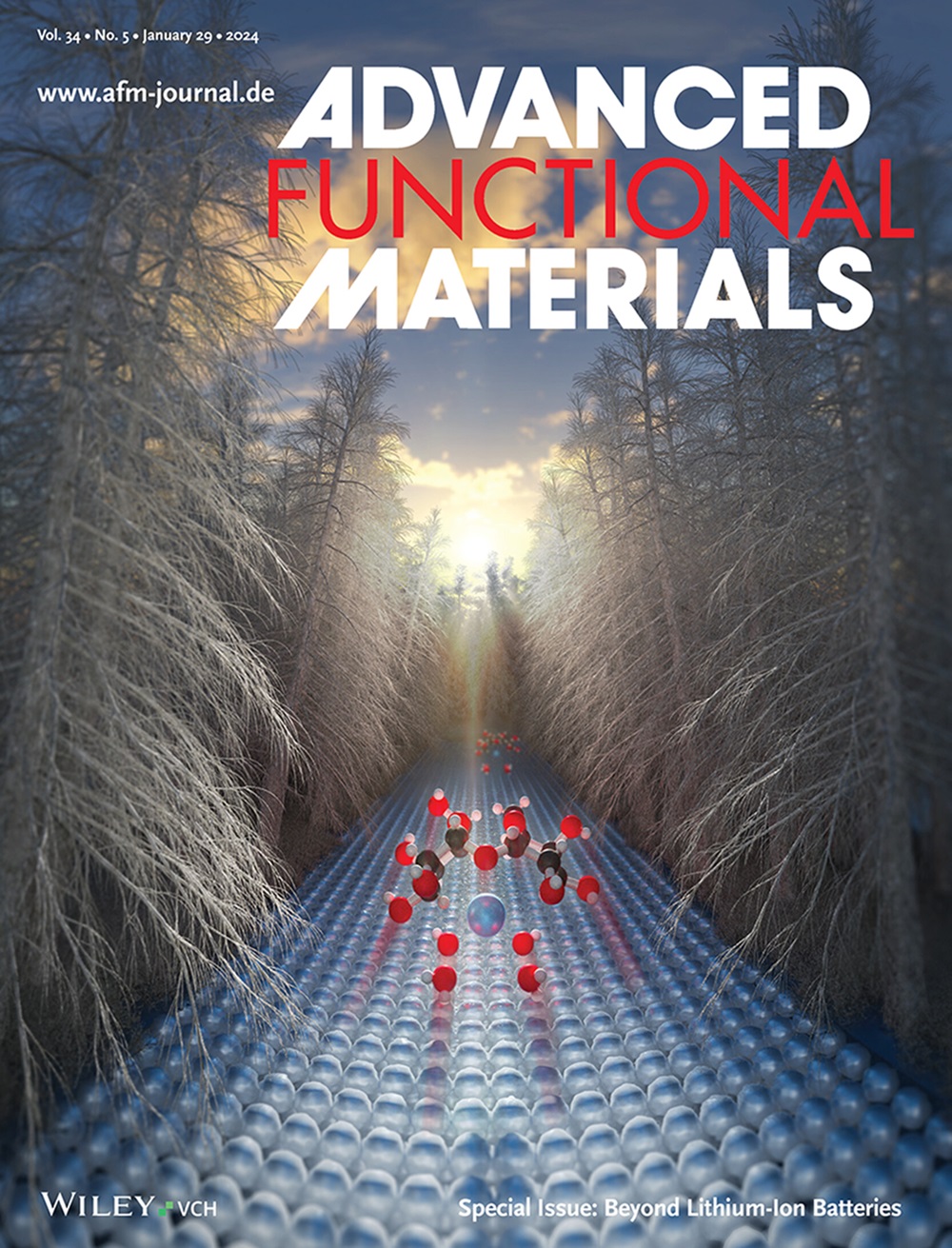
Advanced Functional Materials
Advanced Functional Materials 工程技术-材料科学:综合
CiteScore
29.50
自引率
4.20%
发文量
2086
审稿时长
2.1 months
期刊介绍: Firmly established as a top-tier materials science journal, Advanced Functional Materials reports breakthrough research in all aspects of materials science, including nanotechnology, chemistry, physics, and biology every week. Advanced Functional Materials is known for its rapid and fair peer review, quality content, and high impact, making it the first choice of the international materials science community.

×
引用
GB/T 7714-2015
复制
MLA
复制
APA
复制
导出至
BibTeX EndNote RefMan NoteFirst NoteExpress
×
提示
您的信息不完整,为了账户安全,请先补充。
现在去补充
×
提示
您因"违规操作"
具体请查看互助需知
我知道了
×
提示
确定
请完成安全验证×
copy
已复制链接
快去分享给好友吧!
我知道了
右上角分享
点击右上角分享
0
联系我们:info@booksci.cn Book学术提供免费学术资源搜索服务,方便国内外学者检索中英文文献。致力于提供最便捷和优质的服务体验。 Copyright © 2023 布克学术 All rights reserved.
京ICP备2023020795号-1
ghs 京公网安备 11010802042870号
Book学术文献互助
Book学术文献互助群
群 号:604180095
Book学术官方微信
小红书


