
EXPRESS: Brand Performativity and Consumers’ Cultivation of Identity Value
IF 10.4
1区 管理学
Q1 BUSINESS
引用次数: 0
Abstract
How do brands provide identity value to consumers? The marketing literature provides three primary answers to this key managerial question: by building brand communities; by forging anthropomorphized relations whereby consumers regard brands as relationship partners; and by following cultural branding principles. This article argues that these three conceptual frameworks have often misdiagnosed the sources of the identity value that consumers derive from brands. Accordingly, it proposes that brand performativity is an unrecognized explanatory factor that underlies these extant theorizations. Drawing on sociological theories of performativity, it conceptualizes brand performativity as an arrangement of discourses, practices, material resources, normative standards, metrics, and goals that coalesce as a script that consumers can use to cultivate identity value through brand-mediated experiences. Through an analysis of CrossFit, it demonstrates that a theoretical sensitivity to brand performativity provides a fuller picture of how brands generate consumer identity value. It explains how this conceptualization revises strategic implications that follow from the aforementioned theorizations, especially for brands implementing more extensive modes of performativity. It closes with a discussion of the broader applicability of brand performativity framework and how it can help marketing managers transcend the conventional product versus service brand and functional versus expressive branding strategy distinctions.EXPRESS:品牌表现力与消费者认同价值的培养
品牌如何为消费者提供身份价值?市场营销文献为这个关键的管理问题提供了三个主要答案:建立品牌社区;通过建立人格化的关系,消费者将品牌视为关系伙伴;并遵循文化品牌原则。本文认为,这三种概念框架往往误诊了消费者从品牌中获得的身份价值的来源。因此,它提出品牌绩效是一个未被认识到的解释因素,是这些现有理论的基础。借鉴表演性的社会学理论,它将品牌表演性概念化为话语、实践、物质资源、规范标准、指标和目标的安排,这些安排合并为一个脚本,消费者可以通过品牌介导的体验来培养身份价值。通过对CrossFit的分析,它证明了对品牌绩效的理论敏感性提供了品牌如何产生消费者身份价值的更全面的图景。它解释了这种概念化如何修正上述理论所带来的战略含义,特别是对于实施更广泛的表演模式的品牌。最后讨论了品牌绩效框架的更广泛适用性,以及它如何帮助营销经理超越传统的产品与服务品牌、功能与表达品牌战略的区别。
本文章由计算机程序翻译,如有差异,请以英文原文为准。
求助全文
约1分钟内获得全文
求助全文
来源期刊
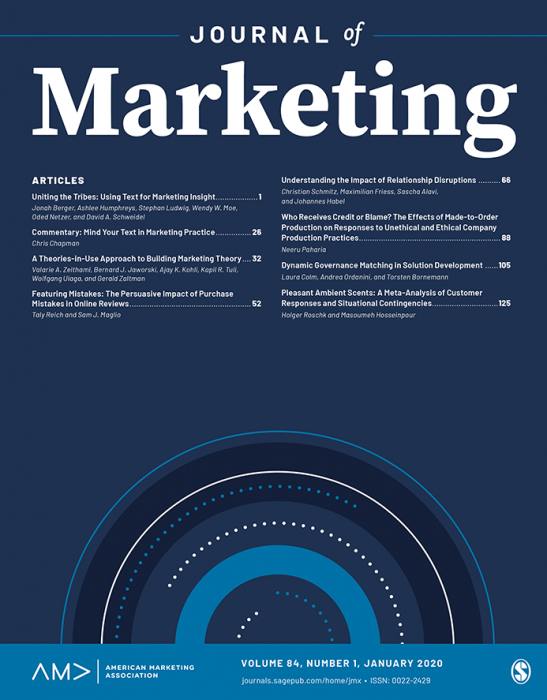
Journal of Marketing
BUSINESS-
CiteScore
24.10
自引率
5.40%
发文量
49
期刊介绍:
Founded in 1936,the Journal of Marketing (JM) serves as a premier outlet for substantive research in marketing. JM is dedicated to developing and disseminating knowledge about real-world marketing questions, catering to scholars, educators, managers, policy makers, consumers, and other global societal stakeholders. Over the years,JM has played a crucial role in shaping the content and boundaries of the marketing discipline.
 求助内容:
求助内容: 应助结果提醒方式:

 京公网安备 11010802042870号


