
Integrating siRNA targeting PKM2 with photodynamic therapy to induce tumor energy collapse

Q1 Engineering
Smart Materials in Medicine Pub Date : 2026-01-01 Epub Date: 2026-04-09 DOI:10.1016/j.smaim.2026.04.001
Rourou Miao , Ran Luo , Jiahui Cao , Wen Li , Yiqiu Fu , Xinyi Wang , Wen Zhang , Liu Yu , Meitong Ou , Lin Mei
{"title":"Integrating siRNA targeting PKM2 with photodynamic therapy to induce tumor energy collapse","authors":"Rourou Miao ,&nbsp;Ran Luo ,&nbsp;Jiahui Cao ,&nbsp;Wen Li ,&nbsp;Yiqiu Fu ,&nbsp;Xinyi Wang ,&nbsp;Wen Zhang ,&nbsp;Liu Yu ,&nbsp;Meitong Ou ,&nbsp;Lin Mei","doi":"10.1016/j.smaim.2026.04.001","DOIUrl":null,"url":null,"abstract":"<div><div>Tumor cells exhibit an exceptionally high demand for energy to sustain uncontrolled proliferation and predominantly rely on glycolysis, rendering them vulnerable to energy-targeting interventions. However, metabolic plasticity often enables adaptive compensation, thereby limiting the efficacy of conventional metabolic starvation strategies. Herein, we present a synergistic therapeutic strategy that integrates siRNA targeting pyruvate kinase M2 (PKM2) with photodynamic therapy (PDT) to induce tumor energy collapse. A cationic polymer–chlorin e6 (Ce6) nanocomplex was constructed by conjugating Ce6 to fourth-generation polyamidoamine (PAMAM), enabling efficient encapsulation and intracellular delivery of PKM2-specific siRNA (siPKM2/CPN). siRNA targeting PKM2 effectively suppressed glycolytic flux, reduced ATP production, and impaired mitochondrial oxidative phosphorylation, thereby inducing severe energy deprivation in tumor cells. Notably, PKM2 knockdown sensitized tumor cells to PDT by amplifying reactive oxygen species generation and exacerbating mitochondrial dysfunction. Mechanistically, the combined treatment activated the mitochondrial apoptotic pathway, as evidenced by increased mitochondrial membrane permeabilization, cytochrome <em>c</em> (Cyt <em>c</em>) release, and caspase-3 activation, ultimately leading to enhanced tumor cell apoptosis. This dual-targeting strategy effectively overcomes tumor metabolic adaptability and highlights metabolic modulation as a promising approach for the next-generation combination cancer therapy.</div></div>","PeriodicalId":22019,"journal":{"name":"Smart Materials in Medicine","volume":"7 ","pages":"Pages 132-143"},"PeriodicalIF":0.0000,"publicationDate":"2026-01-01","publicationTypes":"Journal Article","fieldsOfStudy":null,"isOpenAccess":false,"openAccessPdf":"","citationCount":"0","resultStr":null,"platform":"Semanticscholar","paperid":null,"PeriodicalName":"Smart Materials in Medicine","FirstCategoryId":"1085","ListUrlMain":"https://www.sciencedirect.com/science/article/pii/S2590183426000062","RegionNum":0,"RegionCategory":null,"ArticlePicture":[],"TitleCN":null,"AbstractTextCN":null,"PMCID":null,"EPubDate":"2026/4/9 0:00:00","PubModel":"Epub","JCR":"Q1","JCRName":"Engineering","Score":null,"Total":0}
引用次数: 0

Abstract

Tumor cells exhibit an exceptionally high demand for energy to sustain uncontrolled proliferation and predominantly rely on glycolysis, rendering them vulnerable to energy-targeting interventions. However, metabolic plasticity often enables adaptive compensation, thereby limiting the efficacy of conventional metabolic starvation strategies. Herein, we present a synergistic therapeutic strategy that integrates siRNA targeting pyruvate kinase M2 (PKM2) with photodynamic therapy (PDT) to induce tumor energy collapse. A cationic polymer–chlorin e6 (Ce6) nanocomplex was constructed by conjugating Ce6 to fourth-generation polyamidoamine (PAMAM), enabling efficient encapsulation and intracellular delivery of PKM2-specific siRNA (siPKM2/CPN). siRNA targeting PKM2 effectively suppressed glycolytic flux, reduced ATP production, and impaired mitochondrial oxidative phosphorylation, thereby inducing severe energy deprivation in tumor cells. Notably, PKM2 knockdown sensitized tumor cells to PDT by amplifying reactive oxygen species generation and exacerbating mitochondrial dysfunction. Mechanistically, the combined treatment activated the mitochondrial apoptotic pathway, as evidenced by increased mitochondrial membrane permeabilization, cytochrome c (Cyt c) release, and caspase-3 activation, ultimately leading to enhanced tumor cell apoptosis. This dual-targeting strategy effectively overcomes tumor metabolic adaptability and highlights metabolic modulation as a promising approach for the next-generation combination cancer therapy.
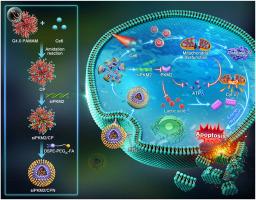
Abstract Image

结合靶向PKM2的siRNA和光动力疗法诱导肿瘤能量崩溃
肿瘤细胞表现出异常高的能量需求,以维持不受控制的增殖,并主要依赖糖酵解,使它们容易受到能量靶向干预。然而,代谢可塑性往往使适应性补偿,从而限制了传统的代谢饥饿策略的功效。在此,我们提出了一种协同治疗策略,将靶向丙酮酸激酶M2 (PKM2)的siRNA与光动力治疗(PDT)相结合,以诱导肿瘤能量崩溃。通过将Ce6与第四代聚胺酰胺(PAMAM)偶联,构建了阳离子聚合物-氯e6 (Ce6)纳米复合物,实现了pkm2特异性siRNA (siPKM2/CPN)的高效包封和细胞内递送。靶向PKM2的siRNA有效抑制糖酵解通量,减少ATP的产生,损害线粒体氧化磷酸化,从而在肿瘤细胞中诱导严重的能量剥夺。值得注意的是,PKM2敲低通过增加活性氧的产生和加剧线粒体功能障碍,使肿瘤细胞对PDT敏感。从机制上讲,联合治疗激活了线粒体凋亡途径,线粒体膜通透性、细胞色素c (Cyt c)释放和caspase-3活化增加,最终导致肿瘤细胞凋亡增强。这种双重靶向策略有效地克服了肿瘤代谢适应性,并突出了代谢调节作为下一代联合癌症治疗的有前途的方法。
本文章由计算机程序翻译,如有差异,请以英文原文为准。
求助全文
约1分钟内获得全文 求助全文
来源期刊
Smart Materials in Medicine
Smart Materials in Medicine Engineering-Biomedical Engineering
CiteScore
14.00
自引率
0.00%
发文量
41
审稿时长
48 days

×
引用
GB/T 7714-2015
复制
MLA
复制
APA
复制
导出至
BibTeX EndNote RefMan NoteFirst NoteExpress
×
提示
您的信息不完整,为了账户安全,请先补充。
现在去补充
×
提示
您因"违规操作"
具体请查看互助需知
我知道了
×
提示
确定
请完成安全验证×
copy
已复制链接
快去分享给好友吧!
我知道了
右上角分享
点击右上角分享
0
联系我们:info@booksci.cn Book学术提供免费学术资源搜索服务,方便国内外学者检索中英文文献。致力于提供最便捷和优质的服务体验。 Copyright © 2023 布克学术 All rights reserved.
京ICP备2023020795号-1
ghs 京公网安备 11010802042870号
Book学术文献互助
Book学术文献互助群
群 号:604180095
Book学术官方微信
小红书


