
Deorphanization of the odorant receptor CsepOR1 identifies a biphasic behavioral modulator in Coccinella septempunctata (Coleoptera: Coccinellidae).
IF 3.8
1区 农林科学
Q1 AGRONOMY
引用次数: 0
Abstract
BACKGROUND The seven-spot ladybird beetle, Coccinella septempunctata, is a key predatory natural enemy widely deployed for biological control of agricultural pests. Olfaction is crucial for prey location and searching, yet the molecular mechanisms of chemoreception in this species remain largely unknown. RESULTS Antennal transcriptome analysis identified a repertoire of 24 odorant receptors (ORs), of which CsepOR1 exhibited the highest expression level in the antennae. Quantitative real-time polymerase chain reaction (qPCR) analysis confirmed that CsepOR1 is predominantly expressed in female antennae. Heterologous expression of CsepOR1 in Drosophila T1 neurons, combined with single sensillum recordings, revealed narrow tuning to butyl salicylate among 362 tested odorants. Y-tube olfactometer assays demonstrated that butyl salicylate acts as a strong attractant for female C. septempunctata at low doses (10 μg) but becomes repellent at higher doses (100 μg). Predation assays further showed that 10 μg of butyl salicylate significantly enhances predation efficiency in female ladybirds, whereas higher doses inhibit it. CONCLUSION These results represent the first deorphanization of a key odorant receptor in C. septempunctata and identify butyl salicylate as a dose-dependent behavioral modulator with strong potential for applications in conservation biological control. © 2026 Society of Chemical Industry.气味受体CsepOR1的去孤儿化鉴定了七星瓢虫(鞘翅目:瓢虫科)的双相行为调节剂。
七星瓢虫(Coccinella七星瓢虫)是一种被广泛应用于农业害虫生物防治的重要掠食性天敌。嗅觉对于猎物的定位和搜索是至关重要的,然而这个物种的化学接受的分子机制在很大程度上仍然未知。结果触角转录组分析鉴定出24个气味受体,其中CsepOR1在触角中表达量最高。定量实时聚合酶链反应(qPCR)证实CsepOR1主要在雌性触角中表达。CsepOR1在果蝇T1神经元中的异源表达,结合单感觉器记录,揭示了362种测试气味物质对水杨酸丁酯的狭窄调谐。y管嗅觉试验表明,水杨酸丁酯在低剂量(10 μg)下对七星瓢虫有较强的引诱作用,在高剂量(100 μg)下产生驱避作用。捕食实验进一步表明,10 μg水杨酸丁酯显著提高雌性瓢虫的捕食效率,而较高剂量则抑制其捕食效率。结论本研究首次实现了七星瓢虫关键气味受体的去孤异化,确定了水杨酸丁酯是一种剂量依赖性行为调节剂,在保护生物防治中具有很大的应用潜力。©2026化学工业协会。
本文章由计算机程序翻译,如有差异,请以英文原文为准。
求助全文
约1分钟内获得全文
求助全文
来源期刊
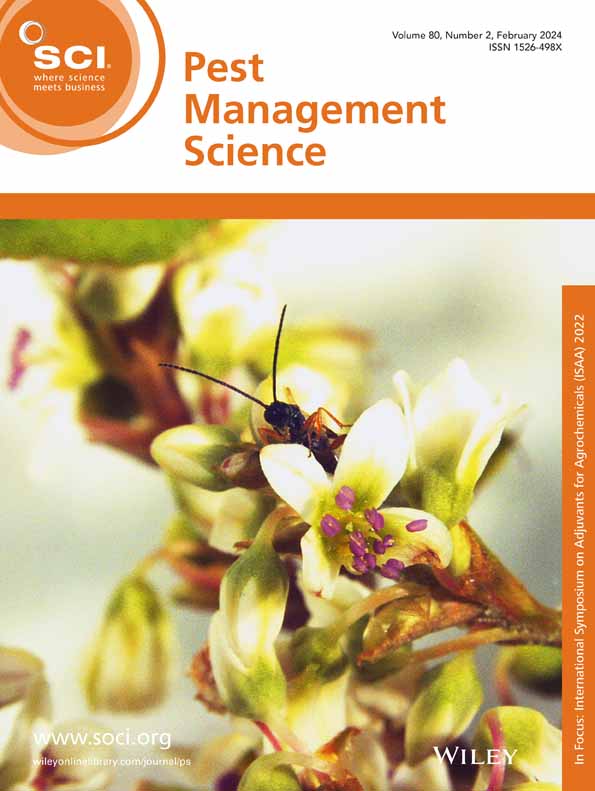
Pest Management Science
农林科学-昆虫学
CiteScore
7.90
自引率
9.80%
发文量
553
审稿时长
4.8 months
期刊介绍:
Pest Management Science is the international journal of research and development in crop protection and pest control. Since its launch in 1970, the journal has become the premier forum for papers on the discovery, application, and impact on the environment of products and strategies designed for pest management.
Published for SCI by John Wiley & Sons Ltd.
 求助内容:
求助内容: 应助结果提醒方式:

 京公网安备 11010802042870号


