{"title":"Low Biomass, High Impact: Mosses and Lichens Dominate Mercury Sequestration in the Alpine Forest","authors":"Yiyuan Xu, , , Wei Yuan, , , Weibin Ma, , , Nantao Liu, , , Longyu Jia, , , Meiqing Sun, , , Hui Zhang, , , Che-Jen Lin, , , Xun Wang*, , and , Xinbin Feng, ","doi":"10.1021/acs.est.6c01878","DOIUrl":null,"url":null,"abstract":"<p >Mosses and lichens are commonly employed as bioindicators of atmospheric mercury (Hg) pollution. In this study, we conducted an integrated assessment of Hg cycling in mosses and lichens in an alpine coniferous forest. Results show that these nonvascular plants constitute a significant and previously overlooked sink for atmospheric Hg in alpine forest ecosystems. Our findings reveal a marked increase in Hg concentration in mosses and lichens with height along the forest vertical canopy profile, accompanied by a progressive negative shift in Δ<sup>199</sup>Hg values. These trends indicate that microhabitat conditions strongly regulate Hg accumulation and potential re-emission in epiphytic communities. Strikingly, although mosses and lichens represent only 1.4% of total forest biomass, they account for 40% of the vegetation Hg pool. Moreover, the contributions from mosses and lichens in litterfall and throughfall deposition together have already exceeded the contribution from leaf litterfall and direct atmospheric rainfall Hg deposition. This study necessitates the need to integrate mosses and lichens into global assessments of atmospheric Hg, as their omission leads to substantial underestimation of forest Hg sinks.</p>","PeriodicalId":36,"journal":{"name":"环境科学与技术","volume":"60 16","pages":"12233–12244"},"PeriodicalIF":12.2000,"publicationDate":"2026-04-28","publicationTypes":"Journal Article","fieldsOfStudy":null,"isOpenAccess":false,"openAccessPdf":"","citationCount":"0","resultStr":null,"platform":"Semanticscholar","paperid":null,"PeriodicalName":"环境科学与技术","FirstCategoryId":"1","ListUrlMain":"https://pubs.acs.org/doi/10.1021/acs.est.6c01878","RegionNum":1,"RegionCategory":"环境科学与生态学","ArticlePicture":[],"TitleCN":null,"AbstractTextCN":null,"PMCID":null,"EPubDate":"2026/4/17 0:00:00","PubModel":"Epub","JCR":"Q1","JCRName":"ENGINEERING, ENVIRONMENTAL","Score":null,"Total":0}
引用次数: 0
Abstract
Mosses and lichens are commonly employed as bioindicators of atmospheric mercury (Hg) pollution. In this study, we conducted an integrated assessment of Hg cycling in mosses and lichens in an alpine coniferous forest. Results show that these nonvascular plants constitute a significant and previously overlooked sink for atmospheric Hg in alpine forest ecosystems. Our findings reveal a marked increase in Hg concentration in mosses and lichens with height along the forest vertical canopy profile, accompanied by a progressive negative shift in Δ199Hg values. These trends indicate that microhabitat conditions strongly regulate Hg accumulation and potential re-emission in epiphytic communities. Strikingly, although mosses and lichens represent only 1.4% of total forest biomass, they account for 40% of the vegetation Hg pool. Moreover, the contributions from mosses and lichens in litterfall and throughfall deposition together have already exceeded the contribution from leaf litterfall and direct atmospheric rainfall Hg deposition. This study necessitates the need to integrate mosses and lichens into global assessments of atmospheric Hg, as their omission leads to substantial underestimation of forest Hg sinks.
期刊介绍:
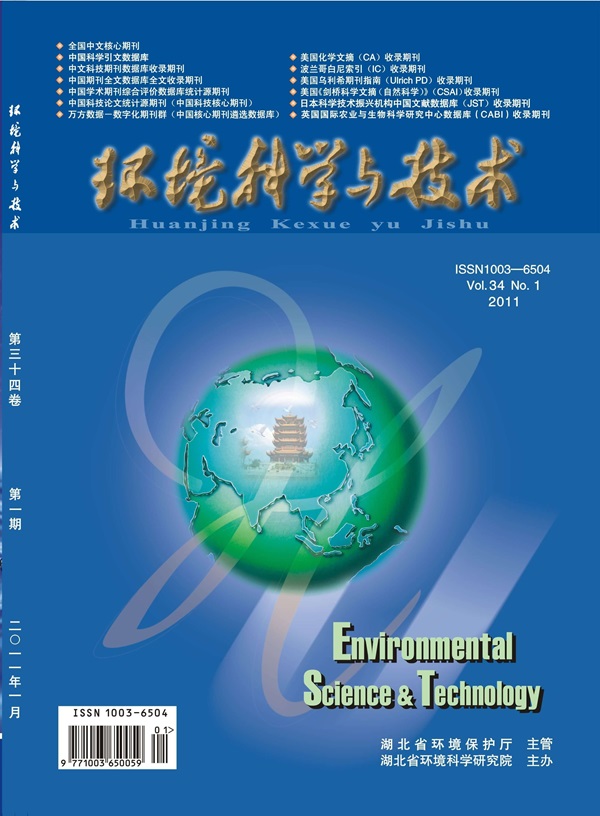
Environmental Science & Technology (ES&T) is a co-sponsored academic and technical magazine by the Hubei Provincial Environmental Protection Bureau and the Hubei Provincial Academy of Environmental Sciences.
Environmental Science & Technology (ES&T) holds the status of Chinese core journals, scientific papers source journals of China, Chinese Science Citation Database source journals, and Chinese Academic Journal Comprehensive Evaluation Database source journals. This publication focuses on the academic field of environmental protection, featuring articles related to environmental protection and technical advancements.


 求助内容:
 应助结果提醒方式:


 京公网安备 11010802042870号


